 08/10 ,2026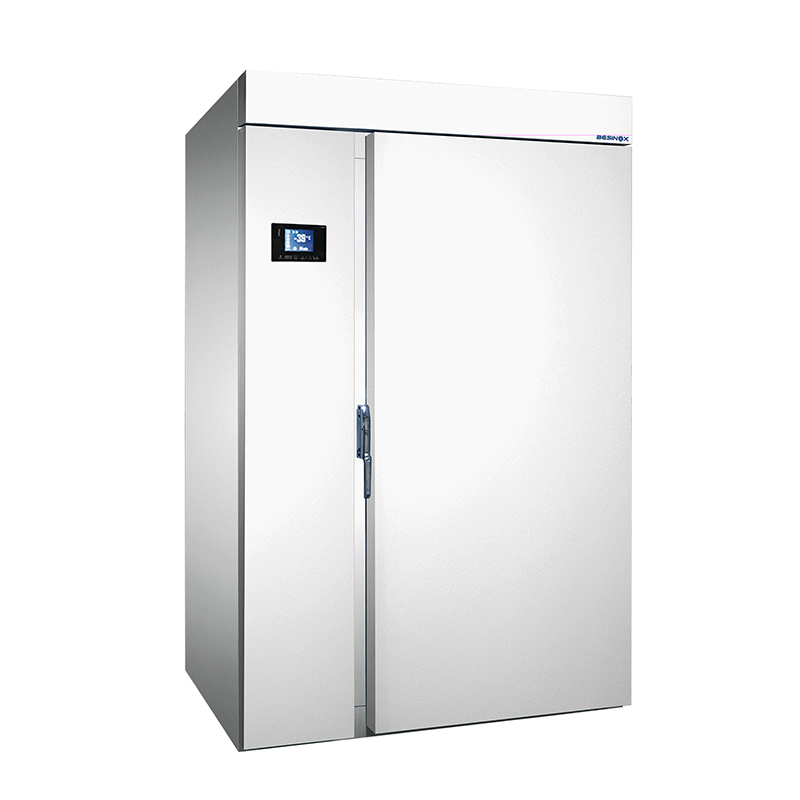
A commercial blast chiller can extend food shelf life by cooling cooked food quickly and reducing the time it stays in the danger zone. Rapid cooling helps limit the growth of bacteria after cooking. Restaurants, bakeries, hospitals, hotels, and catering businesses use this equipment to protect food quality. Better temperature control also helps reduce waste and keep meals safe during cooked food storage. However, a blast chiller does not sterilize food or replace good hygiene practices. This article explains how blast chilling supports food safety and how a commercial blast chiller manufacturer such as BEU can help businesses choose the right system.
Yes. A blast chiller can extend food shelf life when food is cooled, packed, stored, and handled correctly. It rapidly lowers the food temperature, slows microbial growth, protects texture and flavor, and helps businesses store prepared meals for longer. The actual shelf life depends on the food type, cooling time, storage temperature, packaging, local regulations, and the use of a documented HACCP plan.
Large pots and deep containers cool slowly in a normal refrigerator. A blast chiller uses strong cold airflow to remove heat from food at a faster rate. This helps cooked food pass through the bacterial danger zone quickly.
Bacteria can multiply quickly when food remains warm. Rapid cooling reduces the time available for microbial growth. This supports safer food handling and longer storage.
Fast cooling can help preserve the color, texture, moisture, and flavor of many foods. It can also reduce moisture loss and prevent some foods from becoming dry or overcooked.
Food businesses can prepare meals in larger batches, cool them safely, and serve them later. This can reduce labor during busy service hours and lower food waste.
Many food safety systems identify the range from 41 F to 135 F as a high-risk temperature range. In this range, bacteria may grow quickly. In the United States, a common cooling rule is to reduce food from 135 F to 70 F within 2 hours, then from 70 F to 41 F or below within the next 4 hours.
Local health rules may differ. Food businesses should follow their local food code and record cooling temperatures. A blast chiller helps meet these targets, but operators must still use clean containers, correct portion sizes, and a calibrated thermometer.
There is no single shelf life for every food. Blast chilling improves the cooling process, but it does not determine the final storage period by itself. Shelf life also depends on the ingredients, acidity, water content, packaging, storage temperature, and handling methods.
| Food type | Typical refrigerated storage period | Important controls |
|---|---|---|
| Cooked meat and poultry | About 3 to 4 days in many food service systems | Cool quickly, use clean containers, and keep at 41 F or below |
| Soups, sauces, and stews | About 3 to 4 days in many food service systems | Use shallow pans or portion containers for even cooling |
| Cooked rice and pasta | About 3 to 4 days when handled correctly | Cool quickly because warm, wet foods can support bacterial growth |
| Prepared vegetables | About 3 to 5 days, depending on the recipe | Protect against moisture loss and cross-contamination |
| Vacuum-packed meals | May last longer under a validated process | Requires proper packaging, storage, labeling, and HACCP controls |
These periods are general guidance, not a guarantee. A food business should validate its own process. The phrase "how long does food last after blast chilling" should always be answered with the food type and the complete storage procedure.
After cooling, food must move into a reliable cold storage system. A blast chiller is not a replacement for a cold room, reach-in refrigerator, or freezer. If food becomes warm again after chilling, bacterial growth may continue and the shelf life may become shorter.
A standard refrigerator is designed to keep cold food cold. It may not have enough airflow or cooling power to cool a large amount of hot food safely. A blast chiller is built for rapid temperature reduction.
| Feature | Blast chiller | Standard refrigerator |
|---|---|---|
| Main purpose | Rapidly cool hot or warm food | Maintain the temperature of already chilled food |
| Cooling speed | High airflow and strong refrigeration capacity | Usually slower when hot food is placed inside |
| Food safety support | Helps food meet controlled cooling targets | May not cool deep containers quickly enough |
| Batch production | Suitable for restaurants, catering, and central kitchens | Better for daily storage and small amounts of chilled food |
| Food quality | Can better protect texture, moisture, and flavor | Slow cooling may cause moisture loss or quality changes |
Hot food can raise the internal temperature of a refrigerator. This may affect other stored products. It can also make the hot food cool too slowly. Deep containers make this problem worse because heat remains in the center.
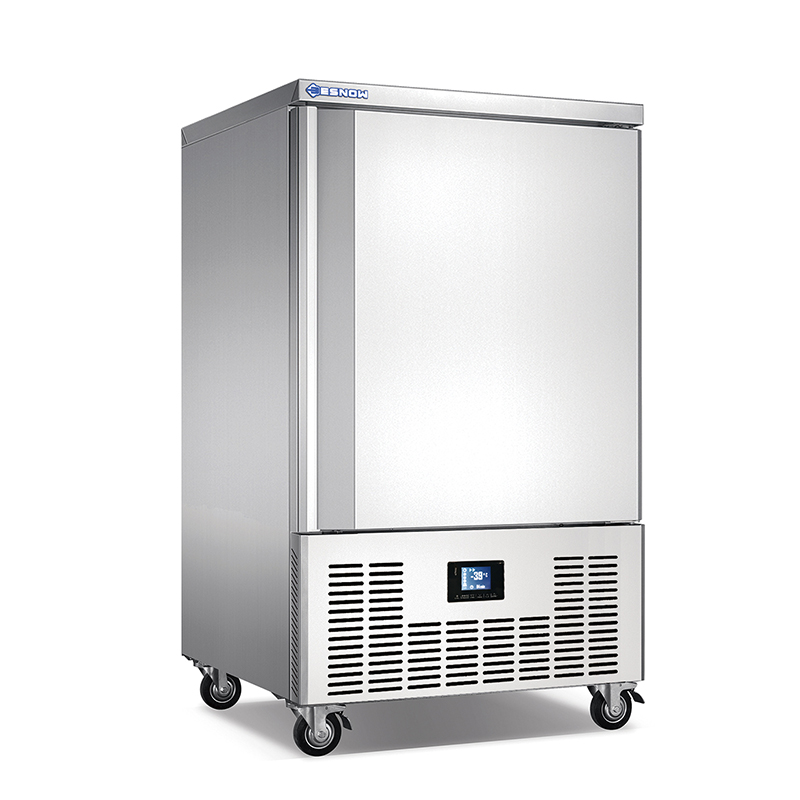
A blast chiller uses cold air circulation around the product. Many models also include a core temperature probe. The probe checks the center of the food, which is often the slowest area to cool.
Safe blast chilling requires more than placing a hot pan inside the machine. Follow a clear process from cooking to final storage.
Cooking complete -> Divide food into shallow portions -> Load the blast chiller -> Set the cooling program -> Check the core temperature -> Label and pack -> Move to cold storage -> Record the batch
Confirm that the food has reached its required cooking temperature. Keep the product protected from dust, dirt, and contact with raw ingredients.
Place food in shallow pans or smaller containers. A thin layer allows heat to leave the food faster than a deep pot.
Leave space between trays. Do not block the air outlets. An overloaded cabinet may cool unevenly.
Use a soft cooling cycle for delicate items and a stronger cycle for dense foods. A commercial blast chiller for catering should offer adjustable time and temperature settings.
Insert the probe into the thickest part of the food. Do not rely only on the cabinet air temperature.
Use food-grade containers. Add the product name, preparation date, cooling date, use-by date, and staff initials when required.
Transfer the cooled food to a refrigerator or cold room. Keep the storage temperature stable and monitor it regularly.
Keep a cooling log with the start time, finish time, product temperature, equipment number, and operator name. These records support a HACCP plan.
| Record item | Example |
|---|---|
| Product | Chicken soup |
| Start temperature | 165 F |
| Start time | 2:00 PM |
| Target temperature | 41 F or below |
| Finish time | 5:30 PM |
| Core temperature | 39 F |
| Storage location | Chilled food room 1 |
Blast chilling is useful for many products that are cooked in advance or produced in batches. It is common in restaurants, hotels, hospitals, schools, bakeries, and food factories.
Dense products, thick sauces, large meat portions, and high-moisture foods may cool slowly in the center. These products need shallow containers, enough air space, and careful probe placement.
Some delicate products may suffer from ice crystals or surface drying if the cooling cycle is too strong. Operators should test the process and adjust the program for each product.
The best commercial blast chiller for restaurants depends on daily production, tray size, kitchen space, and the required cooling speed. A commercial blast chiller manufacturer should provide clear technical information and support for installation and operation.
Estimate the amount of food cooled during one production cycle. Choose a cabinet that can handle the required number of trays without overloading.
Make sure the machine matches your existing pans. Correct spacing supports even airflow.
Ask for tested cooling data under a stated food load. Cooling results can change with product thickness and starting temperature.
A probe gives a better view of the food temperature than the cabinet display alone.
Choose smooth internal surfaces, removable parts, easy-to-clean door seals, and accessible service components.
Review compressor power, insulation, refrigerant type, standby settings, and daily operating hours.
Verify electrical specifications, refrigerant rules, food safety requirements, and installation conditions before purchase.
BEU develops commercial refrigeration equipment for professional food businesses. As a commercial blast chiller manufacturer, BEU can help buyers compare capacity, cooling performance, cabinet design, control systems, and installation needs. The right model should match the business process rather than only the cabinet size.
Deep food layers trap heat in the center. Use shallow pans or smaller portions.
Too much product can block airflow and increase cooling time.
Repeated door opening raises the cabinet temperature and wastes energy.
The air may be cold while the center of the food is still warm.
Staff may not know when the food was prepared or when it should be used.
Rapid cooling cannot correct contamination caused by poor sanitation.
Blast chilling can support longer storage, but it does not make food safe forever. Use validated use-by dates.
A blast chiller normally cools food to a safe refrigerated temperature. A blast freezer lowers the product temperature far below the freezing point. Some machines combine both functions, but the programs and results are different.
| Point of comparison | Blast chilling | Blast freezing |
|---|---|---|
| Final product condition | Chilled but not frozen | Frozen |
| Main use | Short or medium refrigerated storage | Longer frozen storage |
| Effect on texture | Usually keeps a fresh chilled texture | May change texture after thawing |
| Storage requirement | Refrigerator or cold room | Freezer |
A commercial blast chiller can extend food shelf life by cooling food quickly, reducing microbial growth, and protecting product quality. It is especially useful for batch cooking, catering, meal delivery, and central kitchens. However, the blast chiller is only one part of a complete food safety system. Businesses must also use clean equipment, correct portion sizes, accurate temperature checks, suitable packaging, proper cold storage, and clear use-by dates. By choosing the right equipment from an experienced commercial blast chiller manufacturer such as BEU, food businesses can improve safety, reduce waste, and manage prepared food more efficiently.
Yes. It can extend shelf life when food is cooled rapidly and stored under controlled conditions. It does not remove all bacteria or replace safe food handling.
Many cooked foods are stored for about 3 to 4 days under common refrigerated food service rules. The exact period depends on the recipe, packaging, temperature, handling, and local regulations.
For refrigerated storage, the food core commonly needs to reach 41 F or below. Always follow the equipment instructions and local food safety rules.
It is usually better to use a blast chiller for large quantities of hot food. A normal refrigerator may cool the food too slowly and may raise the temperature of other products.
No. Blast chilling slows bacterial growth. It does not sterilize food. Safe cooking, clean handling, rapid cooling, cold storage, and correct reheating are all required.
The best model depends on batch size, tray dimensions, cooling targets, kitchen space, power supply, cleaning needs, and budget. A supplier such as BEU can help match the machine to the kitchen workflow.
Yes. A commercial blast chiller for catering can cool prepared meals, sauces, desserts, and side dishes before transport or service. The food must remain within the required cold chain during delivery.
Yes. Clean, sealed, food-grade packaging can reduce contamination and moisture loss. Vacuum packaging may provide longer storage under a validated process, but it requires strict temperature and HACCP controls.
To visit Guangzhou BEU Electric Appliance Co., Ltd. (called as BEUEA below) website, you are agreeing the terms and conditions within this policy.
BEUEA respects your privacy and will protect your information remains confidential.
We will not lease, sell, or rent your information to the third party for their independent use under any circumstances.