 08/25 ,2026
 Commercial Blast Chillers for Restaurants: What Should Buyers Consider? A commercial blast chiller is a professional refrigeration appliance that rapidly reduces the temperature of cooked or prepared food before storage. Unlike a standard refrigerator, it uses high-velocity cold air and controlled refrigeration to move food through the temperature danger zone quickly. For restaurants, hotels, catering companies, and central kitchens, this process supports food safety, extends shelf life, improves production planning, and reduces waste. Choosing the right commercial blast chiller manufacturer, such as BEU, requires more than comparing cabinet size and purchase price.

Commercial blast chilling developed from the foodservice industry’s need to prepare food in advance without compromising safety or quality. As restaurants moved toward cook-chill production, sous vide, centralized meal preparation, and high-volume catering, conventional refrigeration became insufficient for rapidly cooling large quantities of hot food.
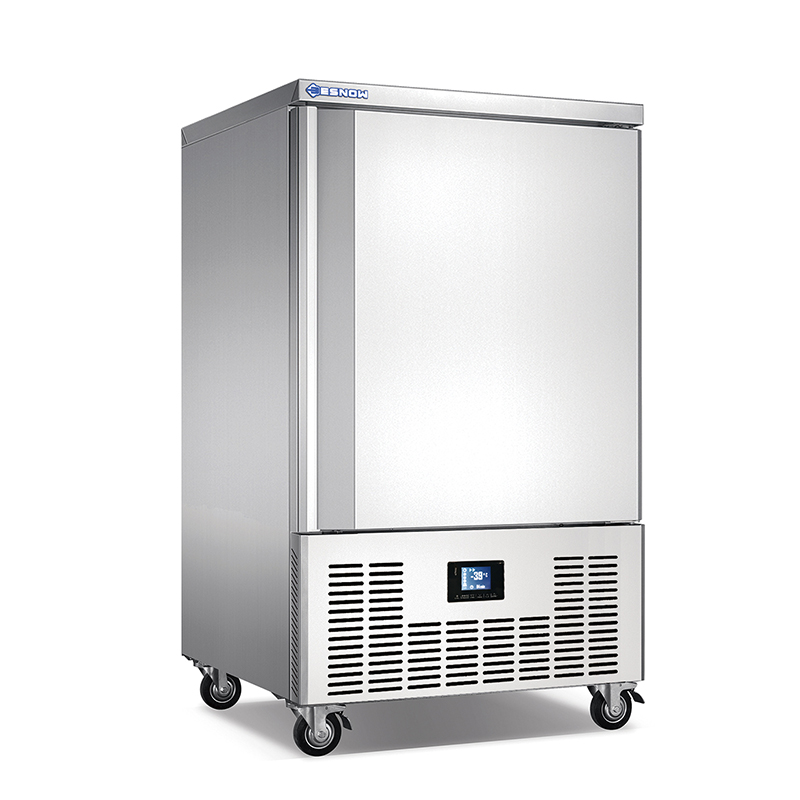
A blast chiller uses an evaporator, fan-assisted air circulation, insulated cabinet, temperature probes, and a refrigeration control system to cool food rapidly. The goal is not simply to make food cold. It is to control the entire cooling cycle and reduce bacterial growth risk.
In practical operation, a blast chiller can help a kitchen:
For buyers researching Commercial Blast Chillers for Restaurants: What Should Buyers Consider?, the central question is whether the equipment matches the kitchen’s production volume, food formats, workflow, and compliance requirements.
A commercial blast chiller combines rapid air movement with low-temperature refrigeration. Hot food is placed inside the cabinet, and the system removes heat through the evaporator coil. Fans circulate cold air evenly around trays or containers.
Many professional units include two operating modes:
Blast chilling reduces the temperature of cooked food quickly, commonly from approximately +90°C to +3°C. The exact cycle time depends on food density, tray depth, load quantity, container material, and starting temperature.
Blast freezing lowers food temperature to a frozen condition, often targeting approximately -18°C at the product core. This mode is useful for long-term storage, but it requires different refrigeration capacity and cycle controls.
A core temperature probe is particularly important. Cabinet air temperature alone does not prove that the center of a dense product has cooled adequately. Buyers should look for:
The best unit is not always the largest or coldest model. Buyers should assess the following factors in sequence.
Nominal capacity is often expressed by the number of GN 1/1 trays, kilograms per cycle, or cabinet volume in liters. However, usable capacity is more important than the headline number.
For example, a restaurant producing 40 kg of cooked food per service should not automatically purchase a 40 kg chiller. The buyer should consider:
A unit rated for 20 kg may be suitable for a small café, while a central kitchen may need a 60 kg, 100 kg, or larger blast chilling system.
Overloading the cabinet can restrict airflow and extend the cooling cycle. In some cases, the outside of a product may appear cold while the core remains above the target temperature.
Ask the manufacturer for test conditions rather than relying only on general claims such as “fast cooling.”
Important specification details include:
A credible technical datasheet should explain whether the stated performance is based on a full load or a partial load. Buyers should also check whether performance is tested at a realistic kitchen ambient temperature, such as 32°C or 38°C, rather than only under ideal laboratory conditions.
The refrigeration system is one of the main factors affecting performance, operating cost, and service life. Review:
Modern commercial equipment may use lower-GWP refrigerants, but regulatory requirements vary by market. Buyers should confirm compliance with local refrigerant regulations and import requirements.
Energy consumption should be evaluated over a typical operating day, not only by maximum electrical input. A unit with better insulation, efficient fans, and intelligent cycle control may reduce total operating costs even if its purchase price is higher.
Food safety should be built into the buying decision from the beginning. Commercial blast chilling supports, but does not replace, a complete HACCP plan.
Depending on the market, buyers may review:
The exact legal cooling limits vary by jurisdiction and food category. A restaurant should always follow the requirements of its local health authority and its approved food safety plan.
For quality verification, buyers can ask whether the manufacturer conducts:
If a supplier mentions testing against ASTM or DIN methods, ask which specific method applies to the component or measurement. ASTM and DIN are not general substitutes for foodservice refrigeration standards; the relevant standard must match the product and test purpose.
A restaurant blast chiller operates in a demanding environment containing moisture, grease, salt, food particles, and frequent cleaning chemicals. Construction quality directly affects hygiene and maintenance.
Look for:
AISI 304 stainless steel is widely used in foodservice equipment because it offers good corrosion resistance. In high-salt or aggressive environments, AISI 316 may be appropriate for selected components, although it is not automatically necessary for every cabinet.
Cleanability is a practical issue. If staff cannot remove a shelf guide or clean the drain properly, the equipment may develop odor, biofilm, or hygiene problems even when the exterior looks professional.
A blast chiller should be evaluated as part of the kitchen process, not as an isolated appliance.
Before ordering, measure:
Placing the unit beside ovens may expose it to excessive heat and increase energy consumption. Placing it far from the preparation area may create manual handling risks and slow production.
A well-designed workflow may follow this sequence:
This process improves traceability and helps managers identify deviations quickly.
Digital controls should be simple enough for busy kitchen staff while providing sufficient information for food safety records.
Useful functions include:
Temperature display accuracy is important, but buyers should distinguish between display resolution and measurement accuracy. A display showing 0.1°C does not necessarily mean the sensor measures temperature with ±0.1°C accuracy. Ask for the stated sensor tolerance and calibration procedure.
For critical applications, buyers may require periodic calibration against a traceable reference thermometer. Calibration records should include the instrument identity, test temperature, measured value, tolerance, date, and technician.
The purchase price is only one part of the investment. A lower-cost unit may become expensive if service response is slow or replacement parts are difficult to source.
Evaluate:
A strong commercial blast chiller manufacturer should provide clear technical documentation and a defined after-sales process. Buyers can request a written service commitment, such as a 24-hour response for technical inquiries, while confirming whether that means remote assistance, dispatch, or on-site repair.
Total cost of ownership includes:
A standard refrigerator is designed to maintain cold temperatures, not to rapidly remove heat from large quantities of hot food. Loading hot trays into it can raise the cabinet temperature and affect other stored products.
A blast chiller is engineered for rapid heat removal and controlled chilling cycles.
A very low cabinet temperature does not guarantee rapid cooling. Airflow, product loading, evaporator capacity, probe placement, and tray configuration are equally important.
The relevant result is the product core temperature, not only the cabinet setpoint.
An oversized unit may consume more energy and occupy valuable kitchen space. If the restaurant rarely fills it, the investment may not produce a reasonable return.
Capacity should be based on peak batch production and the number of cycles required per day.
A digital controller is useful, but it does not replace staff training, calibrated probes, correct loading, sanitation, labeling, and HACCP verification.
Stainless steel grade, thickness, welding quality, insulation, hinges, gaskets, and internal design vary significantly. Buyers should review construction details rather than judging only by appearance.
Consider a 120-seat restaurant that prepares soups, sauces, braised meat, and desserts in advance. The kitchen produces approximately 35 kg of cooked food during afternoon preparation and needs the food ready for evening service.
The buyer compares two options:
| Evaluation factor | Unit A | Unit B |
|---|---|---|
| Rated batch capacity | 20 kg | 40 kg |
| Typical production load | 35 kg | 35 kg |
| Required cycles | 2 | 1 |
| Core probe | Yes | Yes |
| HACCP data logging | No | Yes |
| Installation power | Lower | Higher |
| Workflow impact | More handling | Fewer transfers |
Unit A may have a lower purchase price, but two cycles create additional handling, labor, and scheduling pressure. Unit B may provide better workflow efficiency if the kitchen has adequate electrical capacity and ventilation.
The restaurant should then verify actual cooling performance using its own products. A test batch of thick sauce, cooked chicken, and rice should be evaluated because these foods have different thermal properties. The final decision should be based on measured core temperatures, cycle time, operating cost, cleaning requirements, and service support.
When considering BEU or another commercial refrigeration supplier, buyers should request a complete technical and commercial package rather than a basic quotation.
Ask for:
For export projects, also confirm the plug type, voltage, frequency, pallet dimensions, customs documentation, and language of the user manual.
A professional supplier should be able to explain how its equipment supports food safety, energy management, sanitation, and long-term maintainability. Buyers should be cautious of vague claims such as “best quality,” “fastest cooling,” or “100% safe” without test conditions or supporting documentation.
Before placing an order, confirm the following:
Commercial Blast Chillers for Restaurants: What Should Buyers Consider? The answer includes capacity, validated chilling performance, refrigeration technology, food safety controls, hygiene, installation, energy consumption, service support, and total operating cost.
A blast chiller should be selected according to the restaurant’s real production process—not simply by cabinet volume or purchase price. By comparing core-temperature performance, reviewing standards such as NSF/ANSI 7 and EN 17032, requesting documented testing, and evaluating the complete support package, buyers can make a more reliable investment.
For restaurants assessing Commercial Blast Chillers for Restaurants: What Should Buyers Consider?, BEU can be included in the supplier evaluation alongside other qualified manufacturers. The next step is to prepare a production profile, request technical documentation, and test representative food products before final selection.

To visit Guangzhou BEU Electric Appliance Co., Ltd. (called as BEUEA below) website, you are agreeing the terms and conditions within this policy.
BEUEA respects your privacy and will protect your information remains confidential.
We will not lease, sell, or rent your information to the third party for their independent use under any circumstances.