 11/11 ,2026
To keep a BEU commercial display refrigerator reliable, protect food quality, and reduce avoidable downtime, follow a repeatable routine: record cabinet temperatures, clean interior surfaces, inspect doors and gaskets, clear the condenser, check drainage and airflow, and document faults for prompt service. Whether you are new to refrigeration or managing several stores, this Commercial Display Refrigerator Maintenance Guide for Retail Operators gives you daily, weekly, and monthly actions, practical checks, and escalation steps. Always confirm temperature limits and service intervals in the equipment manual and follow local food-safety rules; for cold-held food, many U.S. operations use 41°F (5°C) or below as the maximum, but applicable local requirements take precedence.

Before cleaning or inspecting a unit, identify its model and serial number, locate the operating manual, and confirm whether the task can be completed by store staff. Electrical repairs, refrigerant work, and sealed-system diagnostics should be handled by qualified service personnel. A Commercial Refrigeration Equipment Manufacturer can help operators identify the correct parts, operating settings, and service procedures for a specific model.
Consistent records help distinguish a one-time door-opening issue from a developing fault. They also give a technician useful evidence instead of relying on memory.
Once the log is in place, short routine checks can catch common problems before they affect product temperature or presentation.
For a quick door-seal screening, close the door on a strip of paper at several points around the gasket. If the strip slides out with little resistance at one location, clean the contact area and repeat the check. This is a screening method, not a calibrated pressure test; replace or service a damaged gasket rather than trying to adjust it beyond the manual’s guidance.
Next, address the condenser, where dust and grease can restrict heat rejection and increase compressor workload. The cleaning interval depends on the store environment, equipment design, and manufacturer instructions. A dusty warehouse or busy food-service area may need more frequent attention than a clean, low-traffic shop.
Do not use high-pressure water, sharp tools, or unapproved chemicals on the coil. If access is difficult or the coil remains clogged, arrange qualified service. A Commercial Refrigeration Equipment Manufacturer can advise on model-specific cleaning access and recommended intervals.
A fixed schedule makes ownership clear, but the manual and actual operating conditions should determine the final intervals. The table below is a starting point, not a substitute for BEU instructions or local regulations.
| Frequency | Retail operator action | Escalate when |
|---|---|---|
| Opening and during the day | Log temperature; check alarms, doors, airflow, and visible leaks. | Temperature remains outside the approved range or an alarm returns. |
| Weekly | Clean interior and glass; inspect the full gasket perimeter, drain area, and vents. | Gasket damage, blocked drainage, or recurring condensation is found. |
| Monthly or as the manual specifies | Inspect the condenser area and clean it if required and safe for trained staff. | Coil access requires panel removal beyond staff authorization or fins are damaged. |
| At the interval in the manual | Arrange qualified preventive maintenance and review operating records. | Cooling performance, energy use, or component noise has changed noticeably. |
When something changes, begin with simple, safe checks. Do not open the refrigeration circuit or attempt electrical repairs. Record what you observe and contact a qualified technician if the issue persists.
Check for doors left ajar, damaged gaskets, blocked airflow, and unusually humid conditions. Some moisture may occur in certain environments, but persistent water, heavy ice, or recurring frost needs investigation. Do not chip ice with a knife or other sharp object.
Check for loose items touching the cabinet, blocked ventilation around the unit, or a dirty condenser if staff are authorized to inspect it. Continuous operation can also signal a component or control issue. If basic checks do not resolve it, record the sound, operating conditions, and display codes, then request service.
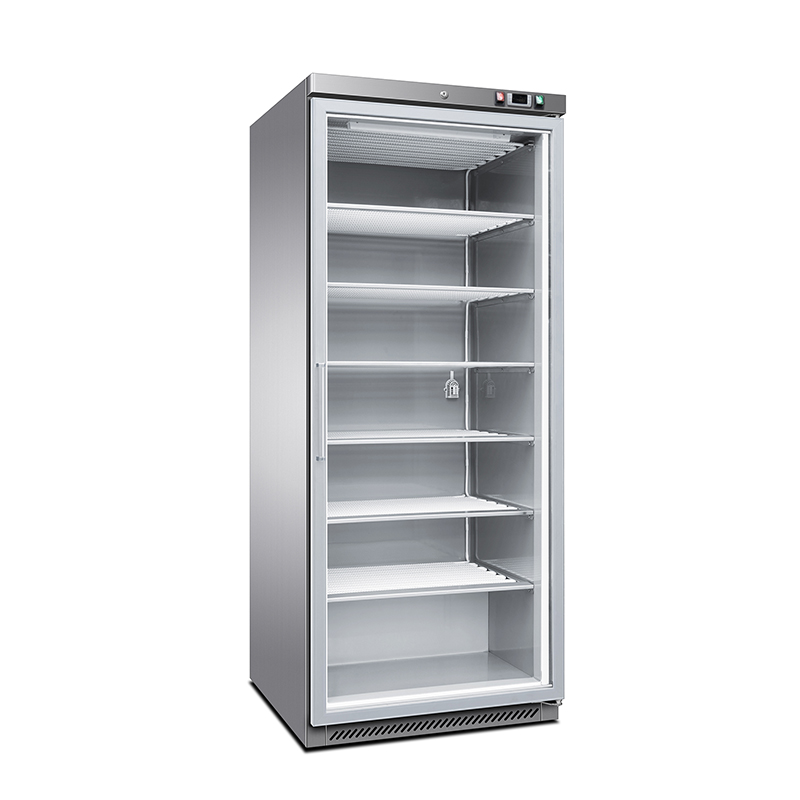
When selecting or maintaining a Commercial glass door refrigerator, ask for the product documentation and certifications applicable to its intended market. NSF/ANSI 7 addresses commercial refrigerators and freezers, while IEC 60335-2-89 covers safety requirements for commercial refrigerating appliances. These standards are not a replacement for the unit’s maintenance manual, local food codes, or qualified repair procedures. Confirm the exact edition and certification scope for the model and jurisdiction.
For temperature instruments, follow the thermometer manufacturer’s calibration and verification instructions and your food-safety plan. If a documented accuracy tolerance is required, specify it in the store procedure—for example, a verification instrument with 0.5°C resolution—and use a suitable reference method. Display resolution alone does not prove measurement accuracy.
Consider an illustrative case: a grocery operator notices that one BEU display case is warmer than neighboring units during the afternoon. The team checks the temperature with a second instrument, finds cartons covering a return-air grille, and reviews the log to confirm the issue began after a restock. Staff clear the airflow path, verify the doors and gasket, and continue monitoring under the store’s food-safety procedure. Because the temperature trend still does not stabilize, the manager records the alarm code and requests qualified service rather than changing controls at random.
This example shows why a reliable process combines observation, verification, correction, documentation, and escalation. It does not promise a particular repair outcome; it helps the technician diagnose the problem and helps the operator manage product safely.
Retail teams can make routine care more consistent with a small, approved maintenance kit:
When contacting BEU or a service provider, share the model, serial number, temperature history, alarm codes, recent cleaning or restocking, and photographs of visible issues where safe. As a Commercial Refrigeration Equipment Manufacturer, BEU can be a source for model-specific documentation and parts guidance; confirm service coverage and response arrangements directly rather than assuming a standard turnaround.
The most effective Commercial Display Refrigerator Maintenance Guide for Retail Operators is one your team can follow consistently: log temperatures, keep airflow clear, clean approved surfaces, inspect the complete door seal, maintain the condenser as instructed, and escalate persistent faults to qualified service. Use BEU documentation for model-specific care, apply local food-safety requirements, and keep records that make trends visible. With these habits, retail operators can protect product quality, preserve presentation, and make better-informed maintenance decisions for every Commercial glass door refrigerator in the store.

To visit Guangzhou BEU Electric Appliance Co., Ltd. (called as BEUEA below) website, you are agreeing the terms and conditions within this policy.
BEUEA respects your privacy and will protect your information remains confidential.
We will not lease, sell, or rent your information to the third party for their independent use under any circumstances.