 11/09 ,2026
A delayed shipment, unclear energy figures, or a refrigerator that cannot hold temperature during a busy trading day can turn a promising order into a costly service problem. This commercial glass door refrigerator buying guide is for importers and distributors evaluating a commercial glass door refrigerator for supermarkets or an energy-efficient glass door merchandiser refrigerator for convenience stores and food retailers. A qualified Commercial Refrigeration Equipment Manufacturer should help you compare a reach-in cooler with a refrigerated display case, check temperature uniformity, and review coefficient of performance (COP), pull-down time, and temperature mapping. The aim is to specify equipment that suits the market, arrives with the right documents, and performs as agreed—not simply to select the lowest quotation.
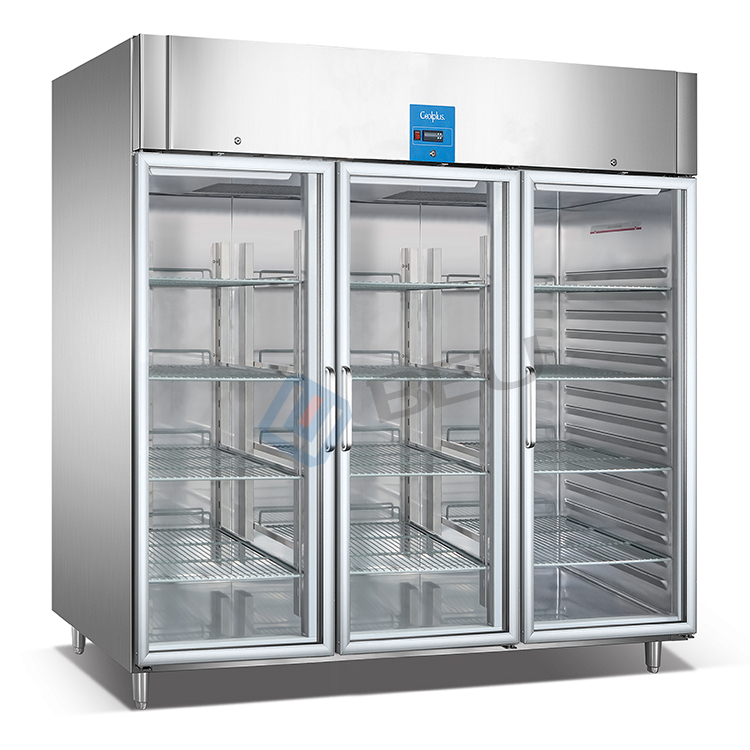
A commercial glass door refrigerator is a powered, insulated cabinet designed to keep chilled products within a specified temperature range while allowing customers or staff to see the contents. Depending on the design, it may be a reach-in merchandiser, a back-bar unit, or a larger multi-door display cabinet. These categories are not interchangeable: door width, shelf layout, airflow, and intended duty cycle affect both capacity and performance.
Start by distinguishing gross volume from net usable volume. Gross volume describes the cabinet’s overall internal space, while usable volume accounts for shelves, evaporator covers, air channels, and other components. Ask the supplier to state which figure appears in the quotation and product data sheet. Also confirm the cabinet’s external dimensions, including door swing or clearance for installation, so the unit fits through the receiving doorway and into its intended position.
For chilled beverages and packaged foods, buyers often request an operating range around +1°C to +5°C. That is a planning range, not a universal setting: the product’s requirements and local food-safety rules determine the correct target. A freezer merchandiser is a different product and may be designed for a range around -18°C to -22°C. Ask for the allowable operating range and the test conditions behind it, rather than relying on a single temperature shown in a brochure.
Temperature uniformity describes how consistently the cabinet holds temperature across its usable space. A sensor near the controller does not prove that every shelf stays within the required range. Temperature mapping uses multiple calibrated probes in representative locations, including upper and lower shelves and areas near the doors, to reveal hot or cold spots. Ask whether reported results were measured with an empty cabinet or a product load, and under what ambient conditions.
Pull-down time is the time required for a cabinet to reach its specified operating condition after start-up or a defined temperature challenge. COP, or coefficient of performance, is the ratio of useful cooling output to the energy input under stated conditions. These measures help compare engineering performance, but only when the test method, ambient temperature, product load, and set point are comparable. A higher advertised COP or shorter pull-down time should be supported by a test report for the actual model.
Before asking for a price, describe where and how the equipment will be used. A beverage cabinet in a convenience store may face frequent door openings and warm air entering from the sales floor. A supermarket dairy cabinet may need a different shelf arrangement and a greater usable capacity. A distribution customer may prioritize carton dimensions, common spare parts, and a consistent model range. These operating details give a manufacturer a basis for recommending the right cabinet rather than quoting a product that merely looks similar.
Record the expected ambient temperature, humidity, daily opening pattern, product type, loading method, target temperature, and hours of operation. If the cabinet will stand beside an oven, in direct sunlight, or in a poorly ventilated recess, disclose that too. Heat rejection and ventilation clearance matter: a condenser that cannot release heat effectively can increase running time and put extra strain on the refrigeration system.
Choose door and glazing features with the store environment in mind. Double-glazed or insulated glass can reduce heat transfer compared with a single pane, while anti-condensation measures—such as heated glass or an appropriate frame heater—can help maintain visibility in humid conditions. Those features can add electrical load, so request the total rated input and energy consumption with the specified anti-condensation system operating. Self-closing doors, replaceable gaskets, and accessible hinges can also reduce maintenance work in high-traffic locations.
Check the refrigeration system as a complete package. Confirm compressor make and model, refrigerant, condenser arrangement, evaporator design, controller type, defrost method, and condensate management. R290 (propane) is an A3 flammable refrigerant, so equipment using it must be designed, labeled, installed, serviced, and transported in accordance with applicable requirements. Do not assume that a refrigerant permitted in one destination is automatically suitable for another; verify local rules and the service capability of the intended market.
1. Build a market requirement sheet. List the destination country, retail application, target temperature, cabinet dimensions, voltage, frequency, plug type, preferred refrigerant, and expected daily operating conditions. Include the required language for labels and manuals. For electrical supply, specify the actual local configuration—for example, 220–240 V and 50 Hz where applicable—rather than assuming one configuration works in every market.
2. Request comparable technical quotations. Send the same requirement sheet to each prospective supplier and ask for a model-specific data sheet, cabinet drawings, wiring diagram, parts list, and written list of deviations. Compare net capacity, rated input, energy consumption, test ambient, temperature range, noise data if relevant, and included accessories. A quote that omits the test conditions behind an energy figure is not directly comparable with one that states them.
3. Verify compliance before placing the order. Identify the electrical, refrigeration, food-contact, labeling, and environmental requirements that apply in the destination market. Depending on the market and product, buyers may need to assess certifications or conformity documentation such as CE, UKCA, UL, or NSF-related requirements; applicability varies by jurisdiction and product category. Ask which exact model and factory the documents cover, and have a qualified local compliance professional confirm acceptance before production.
4. Approve a production sample or pre-production unit. Check actual dimensions, door alignment, gasket contact, shelf loading, lighting, controller operation, drain arrangement, and access for servicing. Test the cabinet under a written protocol: define ambient conditions, set point, loading, door-opening pattern, measurement locations, and test duration. Record probe calibration and results. A sample approval should identify the approved model revision and components so later production can be checked against the same baseline.
5. Agree on factory inspection and acceptance criteria. Put measurable checks into the purchase contract or inspection plan: quantity, model and voltage labels, cosmetic limits, packaging, accessories, and required test records. For refrigeration performance, agree how temperature mapping and pull-down time will be evaluated. Do not accept an unqualified promise such as “fast cooling”; define the starting condition, target, load, ambient temperature, and allowable result. Keep photographs, serial numbers, and signed reports with the order file.
6. Plan shipping and installation as part of the purchase. Confirm carton or crate dimensions, gross weight, palletization, container loading plan, and whether the units ship upright. Ask for handling instructions and advise the installer to follow the manufacturer’s requirements for settling time after transport. Check that the receiving site has adequate ventilation, suitable electrical service, and floor space. Include import duties, inland delivery, installation, and any local inspection costs in the landed-cost calculation.
7. Prepare after-sales support before the first sale. Obtain a parts breakdown with part numbers, warranty terms, troubleshooting guidance, and service contacts. Identify components likely to need replacement over the product’s service life, including door gaskets, fans, controllers, lamps, and refrigeration components. Agree how warranty claims are documented, who pays freight for replacement parts, and whether remote diagnosis or technician training is available. A distributor who can answer these questions promptly is better positioned to protect the retailer’s uptime.
Purchase price alone does not show the cost of operating a cabinet. Request energy use in kWh per 24 hours or kWh per year, together with the test standard or protocol, ambient conditions, set point, and configuration tested. If two suppliers use different methods, treat their figures as indicative rather than ranking one cabinet as more efficient. Where possible, commission or review testing under the same conditions and include heaters, lighting, and defrost cycles in the reported total.
For a simple operating-cost estimate, multiply the measured daily consumption by the number of operating days and the local electricity tariff. For example, a hypothetical cabinet using 4.0 kWh per day over 365 days would consume 1,460 kWh annually; at $0.20 per kWh, that equals $292 per year before demand charges or tariff changes. This is an arithmetic example, not a performance claim for any particular product. Use the supplier’s tested consumption and your customer’s actual tariff to calculate a meaningful comparison.
Build a landed-cost sheet that includes the unit price, tooling or customization, inspection, freight, insurance, duties, customs clearance, inland transport, installation, and initial spare-parts stock. Then compare the total with warranty coverage, service access, and expected energy use. A lower-cost model can become the more expensive choice if its replacement parts take months to arrive or its dimensions do not suit the retailer’s site.
One common error is comparing capacity figures without checking the measurement basis. Another is approving an empty-cabinet temperature test as proof of performance under loaded retail conditions. Ask the supplier to explain the test setup and provide readings from multiple points. Also verify that the controller sensor location and displayed temperature correspond to the product’s actual operating needs.
Condensation is another issue that can be missed in a showroom or factory sample. Request the recommended ambient temperature and humidity limits, then assess whether the anti-condensation design suits the destination. Inspect glass edges, door frames, seals, and cable routing. If the cabinet will operate in humid coastal conditions, clarify maintenance requirements and corrosion protection rather than assuming a standard finish will be sufficient.
Finally, avoid late changes to voltage, refrigerant, door orientation, branding, or packaging after sample approval. Each change can affect compliance, performance, tooling, or shipping. Use a controlled specification and have both parties sign off on revisions. For distributors supplying multiple retailers, confirm that the model code uniquely identifies the correct electrical and refrigeration configuration.
When a supplier’s quotation is technically credible, move the conversation from headline claims to evidence. Ask for model-specific test records, component traceability, production inspection procedures, and a clear explanation of permissible operating conditions. Ask whether the reported temperature uniformity was measured with product simulants, how many sensors were used, and whether door openings were included. These details help you judge whether a result represents a realistic store application.
For a multi-unit order, consider a pilot shipment before committing to a full container. A distributor could install a small batch in representative stores, track service calls and energy readings for several weeks, and collect feedback from store staff. Record cabinet serial numbers, ambient conditions, loading patterns, and any faults. The pilot does not replace formal certification or laboratory testing, but it can reveal packaging, installation, or usability issues before they affect a larger order.
BEU can be included in your supplier evaluation alongside other qualified manufacturers. Share the destination-market requirements and intended application, then ask for a written model proposal, supporting documents, customization scope, lead time, warranty details, and spare-parts plan. A clear, itemized response makes it easier to assess whether the offer matches your commercial and technical requirements.
The strongest sourcing decision connects product specification, compliance, logistics, and service support. Before issuing a purchase order, confirm the final model configuration, temperature target, usable capacity, electrical supply, refrigerant, test evidence, approved artwork, packaging, delivery terms, and acceptance criteria in writing. Keep the approved sample record and test protocol available to the factory and inspection team so production can be checked against the same requirements.
If you are comparing suppliers now, ask BEU to review your market, application, and target specification and provide a documented proposal. A dependable Commercial Refrigeration Equipment Manufacturer should be able to explain how its reach-in cooler or refrigerated display case achieves the required temperature uniformity, what its COP and pull-down time data represent, and how temperature mapping was performed. That evidence turns a commercial glass door refrigerator buying guide into a practical procurement decision—and gives your customers a clearer basis for choosing an energy-efficient glass door merchandiser refrigerator.

To visit Guangzhou BEU Electric Appliance Co., Ltd. (called as BEUEA below) website, you are agreeing the terms and conditions within this policy.
BEUEA respects your privacy and will protect your information remains confidential.
We will not lease, sell, or rent your information to the third party for their independent use under any circumstances.