 11/03 ,2026
Warm aisles, rising electricity bills, and fogged doors can make it harder for retailers to keep products visible without overspending. A Commercial Refrigeration Equipment Manufacturer can help match an energy-efficient commercial glass door refrigerator to the store’s traffic, product range, and ambient conditions. When comparing glass door merchandiser energy consumption, check the commercial refrigerator with LED lighting, low-E glass, variable-speed compressor, and automatic defrost—not just the display price. Also consider coefficient of performance (COP), anti-sweat heater operation, and infiltration load, since these affect real-world energy use.

Modern glass door refrigerators are designed to keep chilled or frozen products visible while limiting the energy needed to maintain temperature. A closed door can reduce the exchange of warm, humid room air compared with an open display case, but the total result depends on the cabinet, operating conditions, and how often doors are opened. The sections below explain which features matter, how to compare models, and how to estimate savings without relying on vague efficiency claims.
A refrigerator runs for long hours, so its electricity use affects the operating budget throughout its service life. A store may also have several units, making small differences in daily consumption meaningful when added together. Yet a low purchase price does not necessarily mean a low lifetime cost: compressors, fans, lighting, heaters, defrost cycles, and poor installation can all influence the meter reading.
For a credible comparison, use the manufacturer’s stated energy consumption for the correct product category and test conditions. Compare models with similar capacity, temperature range, door count, and intended use. The U.S. Department of Energy (DOE) sets test procedures and energy conservation standards for covered commercial refrigeration equipment; its framework is a reason to compare like with like rather than treating unrelated models as equivalent.
The compressor moves heat out of the cabinet, so its efficiency and control strategy affect overall consumption. A variable-speed compressor can adjust output to changing cooling demand instead of repeatedly operating at one fixed rate. This may help in stores with changing product loads or ambient temperatures, but the actual benefit depends on the equipment design and operating pattern. Ask for the model’s rated energy use and confirm that its control system maintains the required product temperature.
Electronic controls can coordinate compressor operation, fans, and defrost cycles. A useful control system should provide clear temperature settings and alarms, not simply add features that are difficult to configure. When comparing models, ask how the unit responds to door openings, high room temperatures, and recovery after restocking.
LED lighting typically uses less electricity than older fluorescent lighting and releases less heat inside the cabinet, reducing the amount of heat the refrigeration system must remove. Check whether lights are installed vertically, under shelves, or in the canopy, and whether they switch off or dim when the cabinet is not in active use. Even illumination can also help staff and customers identify products without adding unnecessary lamps.
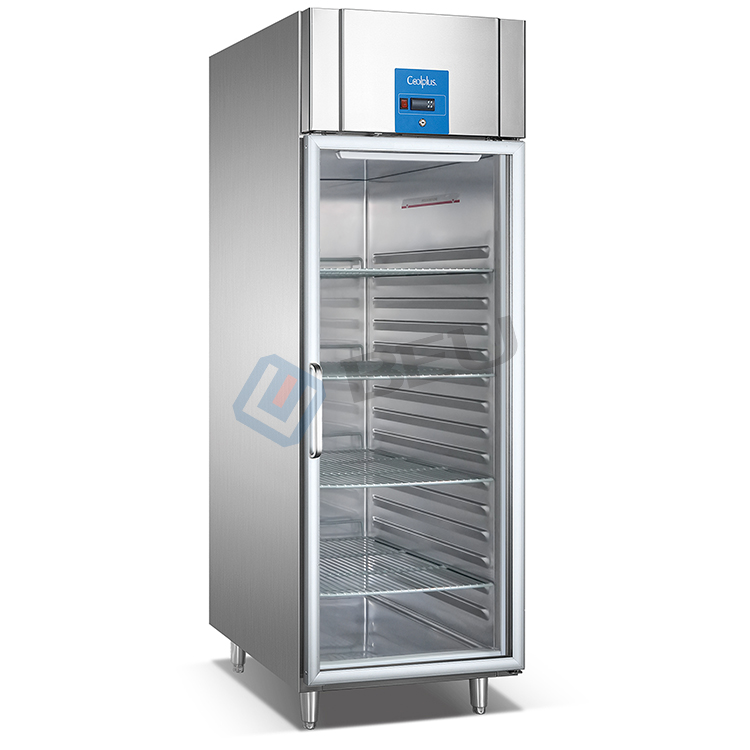
Low-emissivity, or low-E, glass is designed to reduce heat transfer through the glazing. Multiple-pane doors can add insulation, while anti-fog measures help keep products visible in humid conditions. Some units use anti-sweat heaters around doors or frames to prevent condensation. These heaters consume electricity, so ask whether they are controlled by humidity or operating conditions rather than running continuously. Better visibility is useful only if the anti-condensation strategy does not create avoidable energy use.
Damaged gaskets, doors that fail to close, and frequent propping open allow warm air and moisture into the cabinet. That added infiltration load can increase cooling demand and contribute to frost or condensation. Look for replaceable door gaskets, reliable self-closing mechanisms, and hinges suited to the expected traffic. For busy locations, observe how shoppers use the unit during peak periods; a well-designed door that is routinely left open will not deliver its intended operating performance.
Electronically commutated (EC) fan motors can use less electricity than less efficient motor designs, while well-designed airflow helps maintain more even temperatures across shelves. Ask whether fan speed is controlled to match cooling demand and whether the manufacturer provides guidance on loading products without blocking air paths.
Defrost removes ice that can interfere with heat transfer, but unnecessary or poorly timed cycles use energy and may affect product temperatures. Adaptive or demand-based defrost controls initiate cycles based on operating conditions rather than relying only on a fixed schedule. Confirm the defrost method, cycle settings, and recovery behavior for the product temperature range you need.
Energy certification gives buyers a consistent starting point. ENERGY STAR reports that certified commercial refrigerators and freezers are, on average, about 20% more energy-efficient than standard models in the covered categories. That figure is an average across eligible products, not a guaranteed saving for every glass door refrigerator. Check that the exact model and configuration qualify, then compare its published energy consumption with similarly sized alternatives.
Equipment is increasingly designed to coordinate components instead of treating lighting, anti-sweat heaters, fans, and compressors as unrelated loads. For example, a door heater controlled in response to condensation risk may avoid operating at full output when conditions do not require it. Ask suppliers which functions are automatic, which settings can be changed, and whether adjustments affect the unit’s warranty or food-safety performance.
Digital monitoring can make it easier for operators to spot temperature deviations, extended door-open events, or equipment faults. The practical value is faster attention to a problem, not an automatic reduction in energy use. Before paying for connectivity, establish who will review alerts, how quickly staff can respond, and whether the system records energy consumption or only temperature and alarm status.
Refrigerant choice is part of the equipment decision, but it should not be treated as a stand-alone energy rating. The U.S. Environmental Protection Agency’s Significant New Alternatives Policy (SNAP) program evaluates substitutes for ozone-depleting substances and specifies acceptable uses and conditions. Some lower-global-warming-potential refrigerants have flammability or other handling requirements. Ask the supplier to identify the refrigerant, explain applicable safety requirements, and confirm that installation and servicing will follow local codes and manufacturer instructions.
These trends are most useful when the buyer connects each feature to a measurable need: lower rated energy consumption, fewer temperature excursions, reduced unnecessary heater use, or clearer maintenance alerts. A feature list by itself does not establish the energy performance of a complete cabinet.
The main benefit is a better opportunity to control operating cost while keeping products at the required temperature and visible to customers. To illustrate how to evaluate a claim, consider a hypothetical unit that uses 12 kWh per day. If a comparable replacement actually uses 20% less under equivalent operating conditions, the difference is 2.4 kWh per day, or 876 kWh over 365 days. At an assumed electricity rate of $0.15 per kWh, that equals $131.40 in annual electricity-cost savings for one unit. This is an example calculation, not a forecast or a promise of typical savings; use the actual model data and your local tariff.
For a fleet of units, multiply the modeled difference by the number of refrigerators, but account for different schedules and locations. A unit in a hot kitchen, a crowded convenience store, or a sunlit entrance may use more energy than the same model in a cooler, low-traffic space. Evaluate total cost of ownership over the expected service period, including purchase price, energy, maintenance, parts, and downtime.
Follow the installation clearances and ventilation instructions in the product manual. A condenser that cannot reject heat effectively may force the system to work harder. Avoid placing the cabinet beside ovens, direct sunlight, or strong warm-air discharge where practical. Level the unit as directed so doors close correctly, and ensure staff can load products without blocking internal air passages. Commissioning should include checking the operating temperature and confirming that doors, alarms, and controls work as intended.
Train staff to close doors after restocking, avoid leaving them open during deliveries, and keep products within the manufacturer’s loading limits. Do not obstruct return-air openings with cartons or merchandise. Keep the unit away from unnecessary heat sources and report a door that does not seal or close properly. A simple routine for checking displayed temperatures and alarms helps identify problems before they become prolonged losses.
Follow the manufacturer’s maintenance schedule for cleaning the condenser and checking fans, drains, door gaskets, hinges, and controls. Dust or debris on heat-exchange surfaces can restrict airflow and impair heat rejection. Replace damaged seals and investigate repeated frost, water, or temperature alarms rather than repeatedly resetting them. Refrigerant work should be handled by appropriately qualified technicians in accordance with local requirements.
Choose a supplier that can explain the energy data for the exact model, provide installation and service documentation, and help match cabinet capacity to the site. Ask for the rated consumption and the conditions behind it, not an unsupported percentage-saving claim. Verify certification directly in the relevant program’s product listing when applicable, and request written confirmation of the configuration being quoted.
BEU can be included in a buyer’s supplier review alongside other manufacturers. Compare documented specifications, local service access, warranty coverage, spare-parts support, and compliance information rather than relying on brand name alone. A capable Commercial Refrigeration Equipment Manufacturer should be able to discuss the complete system—from low-E glass and COP to anti-sweat heater controls, installation, and maintenance—without presenting one feature as a guarantee of a particular bill reduction.
Energy savings come from the combined performance of the cabinet, compressor, fans, lighting, glazing, door seals, controls, installation, and daily use. Start with comparable, documented energy data; verify that the refrigerator fits the products and site; and maintain the parts that manage airflow and heat transfer. ENERGY STAR’s reported average advantage for certified commercial refrigerators and freezers is a useful benchmark, but the right model’s actual result depends on its category and operating conditions. A careful selection process with a qualified Commercial Refrigeration Equipment Manufacturer can help buyers manage glass door merchandiser energy consumption while maintaining product temperature and visibility.
Sources consulted: ENERGY STAR, commercial refrigerator and freezer program information; U.S. Department of Energy, commercial refrigeration equipment test procedures and energy conservation standards; and U.S. Environmental Protection Agency, Significant New Alternatives Policy program information.

To visit Guangzhou BEU Electric Appliance Co., Ltd. (called as BEUEA below) website, you are agreeing the terms and conditions within this policy.
BEUEA respects your privacy and will protect your information remains confidential.
We will not lease, sell, or rent your information to the third party for their independent use under any circumstances.