Choosing between GN 1/1 and 600 x 400 tray blast chillers is not simply a matter of selecting the larger cabinet. The correct choice depends on tray dimensions, food production workflow, cooling targets, loading habits, kitchen space, cleaning requirements, and long term operating cost.
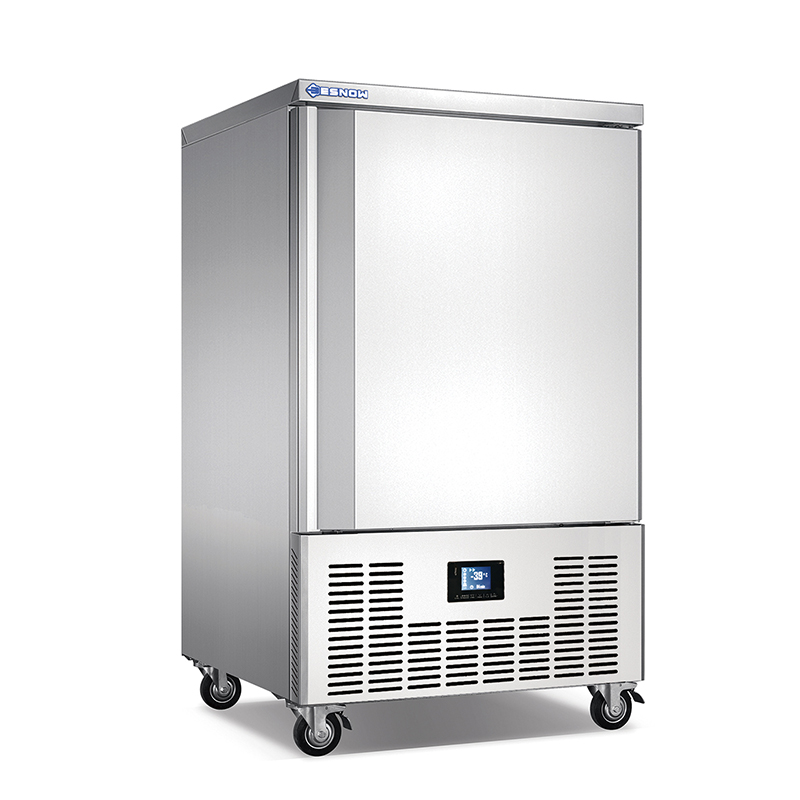
This guide compares both formats from a purchasing and daily operation perspective. It is designed for restaurants, hotels, bakeries, central kitchens, catering companies, hospitals, food factories, and distributors evaluating equipment from a commercial blast chiller manufacturer.
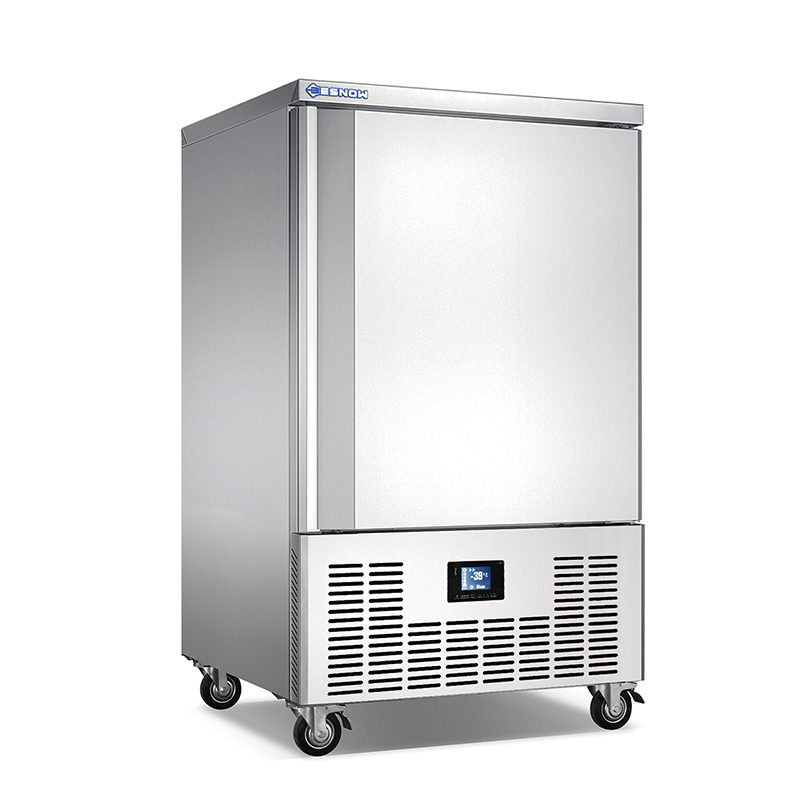

Start with the real difference between GN 1/1 and 600 x 400 trays
GN 1/1 trays normally measure approximately 530 x 325 mm. They are widely used in hotels, restaurants, institutional kitchens, catering operations, and foodservice distribution. GN containers are available in stainless steel, polycarbonate, and other food safe materials.
- Typical external tray footprint: 530 x 325 mm.
- Common depths: 20, 40, 65, 100, 150, and 200 mm.
- Main advantage: strong compatibility with cooking, holding, serving, and refrigeration equipment.
- Common products: sauces, soups, cooked vegetables, meat portions, prepared meals, and buffet food.
- Best workflow: cook in a combi oven, transfer to GN trays, blast chill, store, and regenerate or serve.
GN 1/1 is designed around gastronorm kitchen production
600 x 400 mm trays are common in bakeries, pastry kitchens, food factories, supermarkets, and prepared food production lines. The larger rectangular format is suited to bakery racks, dough handling, pastry production, and high-volume food preparation.
- Typical external tray footprint: 600 x 400 mm.
- Common products: bread, pastry, cakes, pizza bases, dough pieces, bakery fillings, and packaged meals.
- Main advantage: broad working surface and strong compatibility with bakery equipment.
- Common loading method: rack, trolley, or tray-by-tray production handling.
- Best workflow: bake or prepare, cool rapidly, freeze or hold, then pack and distribute.
600 x 400 trays are designed around bakery and production workflows
A cabinet made for GN 1/1 trays may not accept 600 x 400 trays because the tray width, shelf spacing, guide rail position, and door opening are different. A 600 x 400 model may have enough internal volume for GN trays, but that does not mean the rails will support them safely.
Before ordering, confirm the following points with the supplier:
- Usable internal width and depth.
- Tray guide pitch and rail design.
- Maximum tray depth supported.
- Tray loading direction.
- Distance between the tray and evaporator airflow path.
- Compatibility with the customer's existing oven, rack, trolley, and cold room.
The two tray formats are not automatically interchangeable
Compare the core technical parameters before comparing prices
| Parameter |
GN 1/1 blast chiller |
600 x 400 blast chiller |
Purchasing meaning |
| Primary tray format |
GN 1/1, approximately 530 x 325 mm |
600 x 400 mm bakery or production tray |
Select the format that matches the existing production system. |
| Typical application |
Restaurants, hotels, catering, institutional kitchens |
Bakeries, pastry shops, food factories, supermarkets |
The application often matters more than nominal capacity. |
| Loading method |
Tray by tray or GN trolley |
Tray by tray, bakery rack, or production trolley |
Rack compatibility can reduce labor significantly. |
| Cooling target |
Usually from approximately 90 C to 3 C within a controlled cycle |
Usually from approximately 90 C to 3 C, depending on load and product |
Always verify the test standard and product conditions. |
| Freezing target |
Often from approximately 90 C to -18 C for blast freezing models |
Often from approximately 90 C to -18 C for blast freezing models |
Do not assume every blast chiller also provides blast freezing. |
| Tray surface area |
Smaller individual footprint |
Larger individual footprint |
600 x 400 trays can be more productive for flat bakery products. |
| Food depth sensitivity |
Strongly affected by GN tray depth and food thickness |
Strongly affected by tray depth and product thickness |
Shallow loading usually produces faster and more even cooling. |
| Cabinet size |
Commonly compact to medium size |
Commonly medium to large size |
Measure doorways, elevators, service aisles, and installation clearance. |
| Control system |
Time, core probe, temperature, and cycle programs |
Time, core probe, temperature, and cycle programs |
Core temperature control is more reliable than time-only operation. |
| Refrigerant system |
Air cooled or water cooled, depending on model |
Air cooled or water cooled, depending on model |
Ambient temperature and ventilation affect capacity. |
| Power requirement |
Single phase or three phase depending on capacity |
Single phase or three phase depending on capacity |
Confirm voltage, frequency, breaker size, and cable requirements. |
| Cleaning needs |
Interior sanitation, drain cleaning, and gasket inspection |
Interior sanitation, drain cleaning, and gasket inspection |
Easy access to the chamber reduces maintenance time. |
Core parameter comparison table
Manufacturers may state capacity as the number of trays, kilograms per cycle, or cooling performance under a specific test condition. These figures should not be compared without checking the food type, starting temperature, final temperature, tray depth, ambient temperature, and required cycle time.
Ask the supplier for the following information:
- Maximum recommended food load in kilograms.
- Test starting temperature and final core temperature.
- Test duration and ambient temperature.
- Tray type and tray depth used during testing.
- Whether the result is for chilling, freezing, or both.
- Whether the stated capacity is a practical working load or only a maximum chamber load.
Cooling capacity should be evaluated by real product load
A core probe measures the temperature inside the thickest part of the food. This allows the blast chiller to stop or change stages when the product reaches the desired temperature. It reduces the risk of undercooling the center while overcooling the surface.
A suitable control system should provide:
- Core temperature mode.
- Time mode for repeatable products.
- Manual temperature adjustment.
- Automatic end of cycle or holding mode.
- Alarm information for probe failure and abnormal temperature.
- Easy-to-clean probe storage.
- Cycle memory for frequently produced recipes.
Core probe performance is more important than a large display
Evaluate actual use experience, not just the catalog specification
Both tray formats can deliver good results when the cabinet is loaded correctly. A fully packed cabinet with deep food layers can cool more slowly than a smaller load with shallow, evenly distributed products.
In daily use, operators should:
- Start the blast chilling cycle as soon as cooking is complete.
- Spread food evenly instead of creating thick piles.
- Leave space between trays when the manufacturer requires airflow clearance.
- Place the core probe in the thickest or slowest-cooling product.
- Avoid placing hot trays directly against the cabinet walls or evaporator cover.
- Move chilled food to the cold room or refrigerator immediately after the cycle.
Cooling speed depends on loading discipline
GN 1/1 equipment is often easier to integrate into a professional kitchen because the same containers can move between cooking, cooling, storage, transport, and service. This reduces the number of product transfers and can improve food handling consistency.
Typical operational benefits include:
- Fast transfer from combi oven to blast chiller.
- Good compatibility with heated and refrigerated counters.
- Easy portion control using different GN depths.
- Efficient use for sauces, soups, stews, cooked proteins, and vegetables.
- Convenient support for buffet and catering operations.
GN 1/1 operation is usually easier for mixed kitchen menus
The 600 x 400 format offers a larger working surface. This is useful when products need to be laid out in a single layer, such as pastries, dough pieces, cakes, baked goods, and prepared food portions.
Typical operational benefits include:
- More surface area for flat products.
- Better fit with bakery racks and proofing systems.
- Efficient use of production lines based on 600 x 400 trays.
- Fewer tray changes during high-volume production.
- Convenient handling of products that should not be stacked.
600 x 400 operation is usually better for flat and high-volume products
Commercial blast chillers are normally fixed electrical appliances and do not operate on an internal battery. Therefore, battery life is not a meaningful comparison point in the same way it is for portable equipment.
Purchasers should evaluate electrical reliability instead:
- Voltage stability during compressor start-up.
- Correct breaker and cable sizing.
- Protection against phase loss on three phase models.
- Controller memory after a power interruption.
- Restart behavior after power is restored.
- Availability of a backup generator or emergency power plan.
- Alarm notification for high temperature or cycle interruption.
Battery life is not a normal blast chiller specification
A stable blast chiller should produce repeatable results across multiple cycles. Temperature stability is affected by compressor capacity, fan circulation, evaporator design, insulation, door sealing, controller accuracy, and loading practices.
During product testing or acceptance, check:
- Whether the core temperature reaches the target consistently.
- Whether products near the door cool as evenly as products near the rear.
- Whether the cabinet recovers quickly after door opening.
- Whether the compressor and fans operate without abnormal noise or vibration.
- Whether the door gasket seals correctly on all sides.
- Whether condensation drains properly.
- Whether the controller remains accurate after repeated cycles.
Stability includes temperature consistency and mechanical reliability
Understand the advantages and disadvantages of each tray format
- Strong compatibility with standard foodservice equipment.
- Suitable for varied menus and different food depths.
- Easy movement of food in the same GN container from cooking to storage.
- Good choice for restaurants, hotels, catering kitchens, and hospitals.
- Many options for tray material, depth, covers, and transport carts.
- Often easier to install in compact commercial kitchens.
- Simple portion management for sauces, soups, proteins, and prepared meals.
Advantages of GN 1/1 blast chillers
- Smaller tray surface than 600 x 400 equipment.
- May require more trays for large bakery products.
- Less suitable for production lines built around bakery racks.
- Deep GN containers can slow cooling if food is loaded too thickly.
- Tray capacity may appear high while actual kilogram capacity remains limited.
Disadvantages of GN 1/1 blast chillers
- Large surface area for flat bakery and pastry products.
- Good match for bakery racks, trolleys, and production systems.
- Efficient for high-volume, repetitive production.
- Suitable for products that require a single layer or wide spacing.
- Can reduce handling time in centralized food production.
- Useful for bakeries, pastry factories, supermarkets, and food distribution centers.
Advantages of 600 x 400 blast chillers
- Usually requires more floor space and installation clearance.
- May be less convenient for small restaurants with mixed menus.
- Large trays can be heavier when loaded with wet or dense food.
- Existing GN kitchen equipment may not be compatible.
- Large tray depth and dense loading can still create slow cooling at the center.
- Replacement trays and racks may cost more if the facility does not already use this format.
Disadvantages of 600 x 400 blast chillers
Choose according to the purchasing group's main pain points
The most common purchasing mistake is selecting a cabinet based on capacity without checking the current kitchen system. A blast chiller that cannot accept the existing trays, racks, or trolley may create extra labor and require new accessories.
Before purchase, map the complete material flow:
- Cooking equipment outlet size.
- Tray dimensions currently in use.
- Rack and trolley dimensions.
- Distance between oven, blast chiller, cold room, and packing area.
- Door and corridor dimensions.
- Storage location for clean and used trays.
Pain point 1: Existing equipment does not match the new blast chiller
Nominal tray count can be misleading. A cabinet may hold a certain number of shallow trays but produce a slower cycle when loaded with deeper containers or dense food. Buyers should calculate capacity using the actual product weight per cycle.
Use this simple planning method:
- Record the average cooked food weight produced during the busiest period.
- Determine the maximum time allowed before the food must enter refrigerated storage.
- Calculate the number of cycles available during that period.
- Choose a practical working capacity with a safety margin.
- Confirm the result with a product test or supplier demonstration.
Pain point 2: The stated capacity does not reflect actual production
Slow cooling can increase food safety risk and may damage product quality. Large batches of soup, meat, rice, sauces, and prepared meals require careful loading and reliable temperature control.
Reduce this risk by selecting equipment with:
- Appropriate compressor capacity.
- Strong and balanced airflow.
- Accurate core probe control.
- Clear high temperature alarms.
- Easy-to-record cycle data.
- Insulation suitable for the operating environment.
Pain point 3: Slow cooling creates food safety and quality risks
Energy use depends on the compressor, ambient temperature, cycle length, product load, door opening frequency, and whether the cabinet is also used for holding. A larger cabinet is not automatically more expensive per kilogram if it processes the required load efficiently.
Ask for:
- Rated input power.
- Refrigeration capacity.
- Estimated energy use per chilling cycle.
- Cooling performance at the intended ambient temperature.
- Standby and holding power consumption.
- Recommended cleaning and maintenance intervals.
Pain point 4: High operating cost and uncertain energy consumption
Commercial kitchens lose money when a blast chiller is unavailable during production. Buyers should evaluate service response, spare parts availability, remote technical support, warranty terms, and the accessibility of major components.
Important supplier questions include:
- Which components are covered by the warranty?
- How quickly can replacement probes, fan motors, controllers, and door gaskets be supplied?
- Is local service available in the installation region?
- Can the supplier provide installation and commissioning guidance?
- Are wiring diagrams and maintenance manuals included?
- Can the manufacturer perform a sample product cooling test?
Pain point 5: Equipment downtime and weak after-sales support
Compare installation, hygiene, and maintenance requirements
Blast chillers require sufficient ventilation, stable power, floor strength, drainage, and clearance for service access. A cabinet that fits into the available space may still perform poorly if hot air cannot escape or if the door cannot open fully.
- Measure the full cabinet footprint, including handles and service panels.
- Confirm the required clearance around air cooled condenser systems.
- Check floor level and load bearing capacity.
- Verify the electrical voltage and frequency.
- Install a suitable drain when required.
- Keep the equipment away from ovens, steam sources, and direct heat.
- Leave enough space for cleaning and compressor service.
Installation requirements for both formats
GN containers are often used for wet and prepared foods, so spill control and sanitation are important. Operators should clean tray edges, rails, probe surfaces, door gaskets, drains, and chamber corners after each production period.
- Use food safe cleaning chemicals according to the manufacturer's instructions.
- Remove food residue from the probe immediately after use.
- Keep GN trays covered during storage when appropriate.
- Inspect tray corners and handles for trapped food residue.
- Clean the drain and condensate area regularly.
Hygiene considerations for GN 1/1 operations
Bakery and pastry products can create crumbs, flour dust, grease, and sugar residue. These contaminants can affect fans, filters, drains, and door seals if cleaning is neglected.
- Remove crumbs before washing the chamber.
- Clean rack wheels and tray contact points.
- Inspect the evaporator area for flour and grease accumulation.
- Keep raw dough and finished products separated.
- Use tray liners or suitable covers when the product requires them.
Hygiene considerations for 600 x 400 operations
- Clean the condenser or condenser filter according to the service schedule.
- Inspect door gaskets for cracking, gaps, and deformation.
- Check the accuracy of the core probe.
- Confirm that fans run smoothly without unusual noise.
- Check that the drain is not blocked.
- Review temperature alarms and cycle records.
- Arrange professional refrigeration service at the recommended intervals.
Maintenance checks that extend service life
Use a practical selection method for different buyer groups
GN 1/1 is usually the safer choice for operations that prepare many types of food and already use GN equipment throughout the kitchen.
GN 1/1 is suitable for:
- Restaurants with varied menus.
- Hotels with banquet and room service production.
- Catering companies using GN transport containers.
- Hospitals, schools, and care facilities.
- Central kitchens producing sauces, soups, proteins, and vegetables.
- Small and medium kitchens with limited floor space.
Choose GN 1/1 when the operation is a mixed commercial kitchen
The 600 x 400 format is usually the better choice when the facility already operates with bakery trays, bakery racks, or a production line based on a wide rectangular footprint.
600 x 400 is suitable for:
- Retail and wholesale bakeries.
- Pastry shops with high daily output.
- Frozen dough production.
- Food factories using 600 x 400 racks.
- Supermarket central bakeries.
- Prepared food operations with wide, shallow products.
Choose 600 x 400 when bakery production drives the workflow
Some operations use GN containers in the cooking area but require 600 x 400 trays in the bakery or packing area. In this case, a dual-format solution may be considered, but it must be engineered carefully. Mixed rail systems can reduce usable capacity or restrict airflow if the internal arrangement is not designed correctly.
Ask the manufacturer to confirm:
- Whether both tray formats can be loaded at the same time.
- The maximum safe load for each format.
- Whether airflow is uniform with mixed trays.
- Whether dedicated rails or adapters are required.
- How the mixed configuration affects cycle time.
- Whether accessories are included or purchased separately.
Consider a dual-format or customized cabinet when both systems are essential
- If more than 70 percent of current trays are GN 1/1, begin with GN 1/1 models.
- If more than 70 percent of production uses 600 x 400 bakery trays, begin with 600 x 400 models.
- If the food is mostly deep, wet, and portioned, focus on core probe control and practical kilogram capacity.
- If the food is mostly flat, wide, and produced in large batches, focus on tray surface and rack compatibility.
- If floor space is limited, measure the complete installation route before selecting capacity.
- If production changes frequently, prioritize flexible programming and easy tray handling.
- If food safety documentation is important, select a model with reliable temperature recording and alarms.
Use a simple decision checklist
Test the blast chiller before making the final purchase
A product test is more valuable than a brochure comparison. The test should use the same tray format, food type, food weight, tray depth, starting temperature, and target temperature expected in daily production.
Record the following results:
- Starting product temperature.
- Final core temperature.
- Total cycle time.
- Product weight per tray.
- Total product weight per cycle.
- Ambient temperature.
- Power consumption if available.
- Temperature difference between front, center, and rear trays.
Request a product load test
Kitchen staff often identify practical issues that are not visible in technical data. Ask operators to load trays, insert the probe, select a program, remove the trays, clean the chamber, and record the cycle.
Evaluate:
- Door opening effort.
- Tray loading height.
- Controller readability.
- Ease of selecting a cycle.
- Probe placement and cleaning.
- Noise during operation.
- Water drainage and cleaning time.
- Access to racks and handles.
Check usability with real operators
The purchase price is only one part of the investment. A lower priced cabinet can become more expensive if it consumes more energy, requires frequent repairs, wastes labor, or cannot process the actual food load within the required time.
Include these costs in the evaluation:
- Equipment purchase price.
- Tray, rack, trolley, and accessory costs.
- Installation and electrical work.
- Shipping and commissioning.
- Energy consumption.
- Cleaning labor.
- Preventive maintenance.
- Replacement parts.
- Downtime risk.
Review the total cost of ownership
Final recommendation: match the tray ecosystem to the production ecosystem
Choose a GN 1/1 blast chiller when the operation is based on gastronorm containers, mixed menus, cooked food, catering transport, and compact kitchen workflows. Its main strength is compatibility across the entire foodservice system.
Best overall choice for foodservice kitchens
Choose a 600 x 400 blast chiller when the operation is based on bakery trays, wide products, bakery racks, frozen dough, pastry, and repetitive production. Its main strength is surface area and production efficiency.
Best overall choice for bakeries and high-volume production
Regardless of tray format, select a cabinet with verified cooling performance, accurate core probe control, stable electrical operation, strong door sealing, easy cleaning access, and responsive after-sales support. Do not select equipment only because it has more trays or a lower initial price.
BEU can help buyers compare GN 1/1 and 600 x 400 configurations according to product load, tray system, installation conditions, cooling targets, and production volume. As an experienced commercial blast chiller manufacturer, BEU can also support configuration review, technical documentation, and application-based equipment selection.
For the best result, provide BEU with your tray dimensions, average food load, starting and target temperatures, required cycle time, available power supply, and installation space before requesting a quotation. The correct blast chiller is the one that fits the complete workflow, not simply the one with the largest advertised capacity.
Best choice for buyers who need dependable long term operation

 08/24 ,2026