 09/25 ,2026
 If your catering operation struggles with short preparation windows, food waste, inconsistent quality, or food-safety risks, I recommend building a controlled cook–chill workflow around a professional blast chiller. In this guide, we explain How Blast Chillers Help Catering Companies Prepare Food in Advance, including how to select a BEU unit, cool food safely, organize storage, and reheat it efficiently. By following the steps below, catering teams can prepare meals earlier, protect product quality, and serve more customers without increasing unnecessary labor pressure.
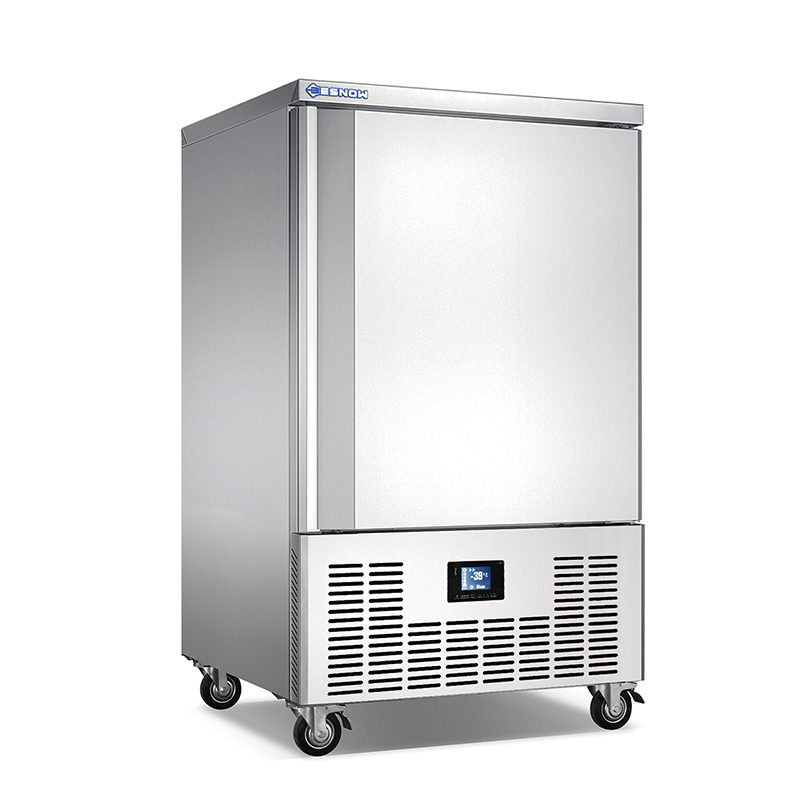
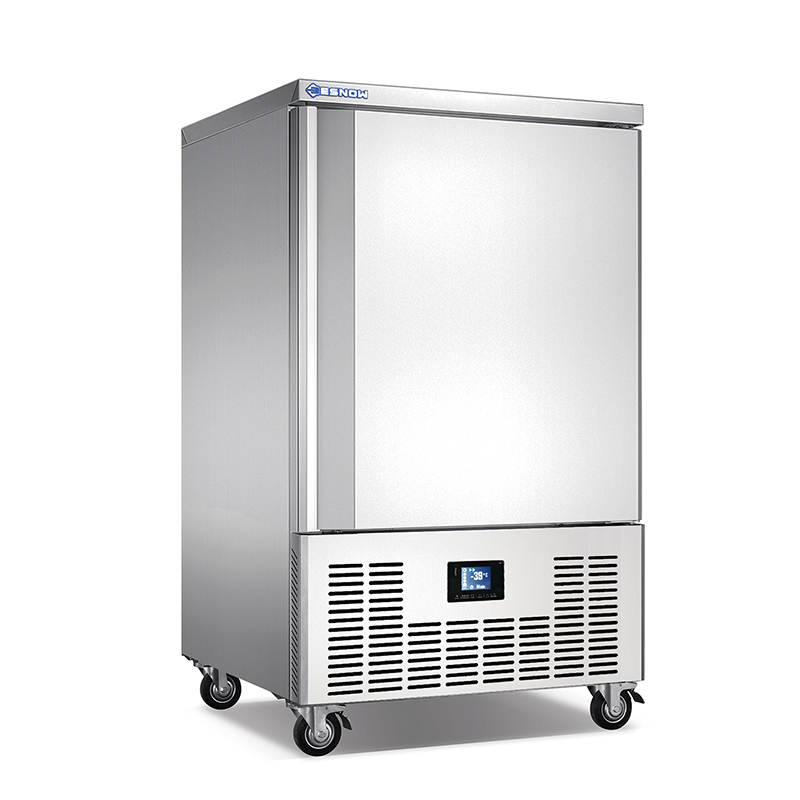
A blast chiller rapidly removes heat from cooked food by circulating low-temperature, high-velocity air around the product. This process reduces the time food spends in the microbiological “danger zone,” where bacteria can multiply quickly.
For catering companies, the main advantage is not simply faster cooling. The real benefit is the ability to separate food production from service time.
With a properly sized BEU blast chiller, a kitchen can:
This is why many operators researching a commercial blast chiller manufacturer focus on cooling performance, probe accuracy, cabinet hygiene, loading capacity, and after-sales support rather than price alone.
The cook–chill process normally includes five connected stages: preparation, cooking, blast chilling, refrigerated storage, and regeneration or service.
Before loading the BEU blast chiller, divide food into shallow pans or suitable containers. Large, deep containers retain heat in the center and can slow the cooling process.
We recommend the following preparation practices:
For liquids such as soup, curry, gravy, or sauce, shallow pans generally provide more efficient heat transfer than deep buckets. For meat and poultry, use a calibrated core temperature probe to verify the thickest section.
Loading technique directly affects cooling performance. A blast chiller cannot compensate for blocked airflow or excessive product loading.
Follow this sequence:
A commercial blast chiller manufacturer should clearly state both the nominal capacity and the expected cooling performance under defined test conditions. A unit rated for 20 kg may perform differently depending on whether the food enters at 90°C, 70°C, or room temperature.
Cooling targets must be established according to local food regulations and the site’s documented HACCP procedures. Common professional references include:
The exact requirement depends on the country, food type, local authority, and company food-safety plan. Operators should verify the applicable regulation rather than relying on a generic internet target.
A BEU system with digital controls and a calibrated core probe helps the operator monitor the actual product temperature instead of estimating cooling progress from cabinet air temperature alone.
Once the required core temperature has been achieved, transfer the product to a hygienic refrigerated storage area without unnecessary delay.
Use a first-in, first-out or first-expired, first-out system. Every container should include:
Keep chilled products within the temperature range specified by your food-safety plan. Many professional kitchens operate chilled storage around 0°C to 5°C, but the correct limit must match local regulations and the product’s validated shelf-life.
This structured process is one of the most practical answers to How Blast Chillers Help Catering Companies Prepare Food in Advance: the catering team creates a reliable production buffer without losing control of traceability.
Blast chilling is not the end of the workflow. Food must be reheated safely and served within the required time.
Before service:
Because the main preparation has already been completed, the kitchen can focus on portioning, presentation, and final quality control instead of producing every component from the beginning.
For banquet kitchens and off-site caterers, demand can change quickly. A BEU blast chiller allows teams to prepare base components one or more production cycles before the event.
This is particularly useful for:
The result is a more predictable production schedule, fewer service bottlenecks, and improved labor allocation.
Rapid chilling can help preserve:
Slow cooling can cause condensation, dehydration, oxidation, and uneven texture. Blast chilling limits these problems by reducing the time food remains warm.
Instead of cooking excess food “just in case,” operators can prepare measured batches, chill them quickly, and use them according to confirmed orders.
A typical monitoring system should track:
| Control Point | Recommended Action |
|---|---|
| Cooking | Record final cooking temperature |
| Loading | Record batch size and product type |
| Chilling | Monitor core temperature |
| Storage | Apply date and batch labeling |
| Reheating | Verify the thickest portion |
| Service | Record holding temperature when required |
| Cleaning | Complete sanitation checklist |
Choosing the right commercial blast chiller manufacturer requires more than comparing cabinet dimensions. We suggest evaluating the following points with BEU or any qualified supplier.
Ask for documented performance data covering:
Do not compare two machines using capacity figures alone. A unit’s real value depends on how consistently it cools the food used in your operation.
Look for food-contact and internal surfaces that are easy to clean. Important design features may include:
Where applicable, request compliance documentation related to NSF/ANSI 7, CE marking, local electrical requirements, and food-contact material regulations. Refrigeration performance may also be evaluated against relevant EN 17032 requirements or equivalent regional standards. ASTM and DIN standards may apply to specific materials, testing procedures, or components, so the supplier should identify the exact standard rather than using a general “international quality” statement.
A professional catering machine should support reliable monitoring. Useful specifications include:
For quality control, request a calibration procedure with resolution of at least 0.1°C where appropriate. A display resolution of 0.01°C does not automatically mean the probe has that measurement accuracy, so always distinguish between resolution and calibrated accuracy.
Even high-performance equipment can produce poor results if the operating procedure is weak.
Problem: The batch exceeds the rated capacity, extending the cooling cycle.
Solution: Weigh typical production batches and compare them with the manufacturer’s tested capacity. If the kitchen produces 80 kg per cycle but the selected unit is designed for 40 kg, divide the operation into validated batches or select a larger model.
Problem: The outside of the food cools while the center remains hot.
Solution: Use shallow pans, maintain airflow gaps, and place the core probe in the slowest-cooling area.
Problem: Staff rely on an uncalibrated probe and record incorrect temperatures.
Solution: Establish a calibration schedule. Conduct routine checks using an approved reference method, document the results, and replace damaged probes immediately.
Problem: Food residue, standing water, and damaged gaskets create hygiene risks.
Solution: Create a cleaning checklist for every shift. Inspect the evaporator area, drain, door seal, shelves, and probe. A supplier offering documented service support and a 24-hour response target can reduce downtime, but the exact response time should be written into the service agreement.
Problem: Different employees use different loading, labeling, and cooling methods.
Solution: Create a one-page standard operating procedure with photographs. Train staff on the same sequence and audit at least one batch per shift. For high-volume operations, a digital HACCP monitoring system can reduce manual recording errors.
To implement a BEU blast chiller in a catering kitchen, use this seven-day preparation plan:
Record the number of meals, average batch weight, peak service time, and available floor space.
List foods that would benefit most from advance preparation, such as soups, sauces, braised meats, cooked grains, and prepared vegetables.
Confirm local regulations, HACCP limits, storage temperatures, reheating temperatures, and maximum holding times.
Compare BEU models based on batch capacity, electrical supply, dimensions, probe control, cleaning access, and after-sales service.
Run the actual foods used by your business. Record start temperature, finish temperature, cycle time, batch weight, and texture after reheating.
Demonstrate loading, probing, labeling, cleaning, data recording, and fault reporting.
Check whether the process reduced labor pressure, improved consistency, and met the required cooling targets. Adjust batch size or cycle settings where necessary.
When we evaluate a commercial blast chiller manufacturer, we look for a combination of engineering, documentation, customization, and service—not just a low purchase price. BEU can be considered for catering operations that need equipment configured around real production conditions, including batch size, cabinet layout, electrical requirements, and workflow.
Before placing an order, request:
For export projects, the buyer should also confirm the required voltage, frequency, plug type, certification, packaging, shipping terms, and customs documentation.
To apply How Blast Chillers Help Catering Companies Prepare Food in Advance in your own operation, take these actions now:
The right BEU blast chiller transforms advance preparation from an improvised workaround into a controlled production system. By combining suitable equipment, accurate temperature monitoring, documented procedures, and regular staff training, catering companies can prepare food earlier, reduce service-day pressure, and deliver more consistent results safely.
To visit Guangzhou BEU Electric Appliance Co., Ltd. (called as BEUEA below) website, you are agreeing the terms and conditions within this policy.
BEUEA respects your privacy and will protect your information remains confidential.
We will not lease, sell, or rent your information to the third party for their independent use under any circumstances.