 10/15 ,2026
 A commercial blast chiller manufacturer can help foodservice operators reduce waste by rapidly lowering the temperature of cooked food, extending safe holding time, protecting food quality, and making batch production more predictable. This guide explains how blast chilling works, how to select the right equipment, and how to build a practical waste reduction process with BEU commercial refrigeration equipment.
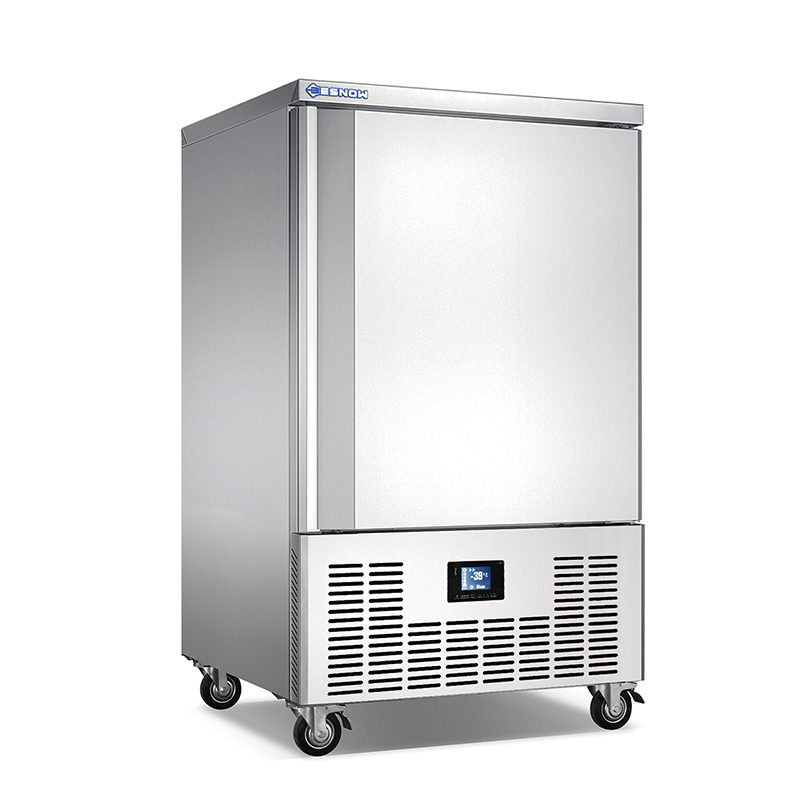
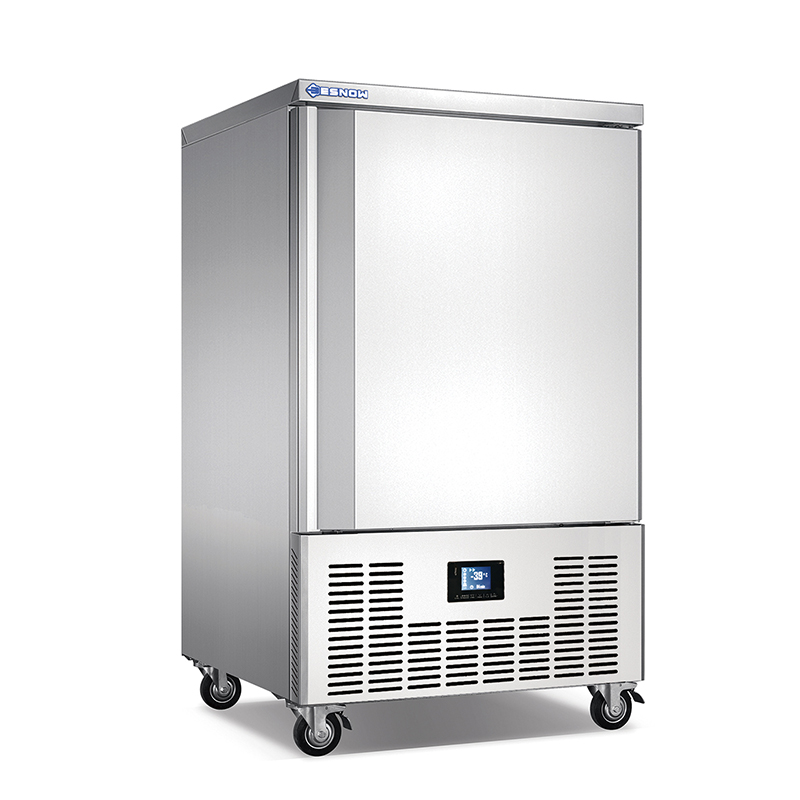
A blast chiller uses high-velocity cold air to remove heat from freshly cooked food much faster than a standard refrigerator. The rapid cooling process moves food through the temperature range where bacteria multiply most quickly.
Instead of placing hot food directly into a refrigerator and waiting several hours for it to cool, kitchen staff use a blast chiller to cool the product quickly and evenly. The food can then be covered, labeled, stored, transported, or used for later service.
A standard refrigerator is designed to maintain the temperature of already chilled food. It is not usually designed to cool large quantities of hot food quickly. Placing hot pans inside a refrigerator can create several problems:
Blast chilling reduces waste in four main ways. First, it lowers the risk of food spoilage caused by slow cooling. Second, it maintains product quality during storage. Third, it allows restaurants and catering operations to prepare food before peak service. Fourth, it provides more accurate control over portions and production quantities.
For example, a hotel kitchen can prepare sauces, soups, cooked proteins, and side dishes during a quiet production period. The food can then be rapidly chilled, labeled with a use-by date, and reheated or served during a busy meal period. This reduces last-minute preparation, inconsistent portions, and emergency disposal.
Foodservice purchasing groups need equipment that supports documented cooling procedures and local food safety requirements. They are usually concerned about cooling speed, core temperature measurement, sanitation, traceability, and staff consistency.
A suitable blast chiller should support repeatable programs and provide clear operating controls. Purchasing teams should confirm that the unit can be used with the food types, container sizes, and cooling procedures required by the operation.
The purchase price is only one part of the investment. Buyers also need to understand how the equipment will reduce food disposal, labor hours, emergency preparation, and product inconsistency.
Useful return on investment measurements include:
Commercial kitchens often have limited back-of-house space. Buyers must consider the unit footprint, door clearance, ventilation, drainage, electrical connection, access routes, and service space before placing an order.
A compact unit may be suitable for a cafe or small restaurant, while a larger roll-in or multi-trolley model may be more appropriate for a central kitchen, hospital, hotel, or catering facility.
Purchasers need to know whether the blast chiller can handle the actual daily production volume. Choosing a unit that is too small creates bottlenecks. Choosing one that is too large increases the initial investment and may reduce operational efficiency.
Capacity should be evaluated using real production details rather than a simple internal volume figure. Consider the number of trays, tray dimensions, food depth, product type, starting temperature, target temperature, and required cooling time.
Commercial buyers need predictable operating costs and dependable service. A low-cost unit may become expensive if it has poor insulation, inefficient refrigeration components, difficult-to-source parts, or limited technical support.
Before purchasing, ask the commercial blast chiller manufacturer about:
Start with the amount of food that must be chilled during the busiest production period. Do not base the purchase only on average daily production. The unit must be sized for the highest realistic workload.
Food depth is important because a deep container cools more slowly than a shallow container. A unit may have sufficient internal volume but still fail to meet the required cooling time if pans are overloaded or food is stacked incorrectly.
Purchasing teams should request a complete technical specification sheet and compare models using the same criteria.
| Cost factor | Questions to ask |
|---|---|
| Equipment price | Does the price include probes, shelves, trays, delivery, and commissioning? |
| Installation | Are electrical work, drainage, ventilation, and site preparation required? |
| Energy | How much power will the unit use during typical daily operation? |
| Maintenance | How often must filters, seals, probes, and refrigeration components be inspected? |
| Downtime risk | How quickly can parts and service support be provided? |
| Waste reduction | How much food and labor cost can the equipment help save each month? |
Prepare the following tools before starting a blast chilling program:
Confirm that the blast chiller is clean, operational, and at the correct starting temperature. Check that the air vents are not blocked and that the door seal closes properly.
Prepare the cooked food immediately after production. Use clean pans that are suitable for rapid heat transfer. Divide large batches into shallow containers whenever possible. A shallow product layer cools more evenly and reduces the time needed to reach the target core temperature.
Record the product name, batch number, preparation time, starting temperature, container size, and staff member responsible for the process. This information supports food safety verification and helps the kitchen identify problems if a batch cools too slowly.
Place pans inside the unit with enough space between them for cold air to circulate. Do not push pans against the evaporator, rear wall, side wall, or air outlets unless the manufacturer's instructions specifically allow it.
Insert the sanitized probe into the thickest or slowest-cooling part of the food. For irregular products, select the area most likely to remain warm. Make sure the probe is not touching the pan, because contact with the metal can produce an inaccurate reading.
If the unit includes multiple probes, use them according to the operating manual. Clean and sanitize the probe before and after every use.
Choose the program recommended for the product type and batch size. A soft chill cycle may be suitable for delicate foods, while a stronger cycle may be needed for dense products or larger loads.
Follow the equipment manufacturer's instructions rather than selecting the coldest possible setting for every product. Excessively aggressive chilling may damage delicate textures, create surface drying, or increase energy use without improving the final result.
Close the door completely and start the cycle. Avoid opening the door repeatedly because warm air enters the cabinet and extends cooling time.
Monitor the core temperature and record the time at regular intervals if required by the kitchen's food safety plan. If the product is not cooling as expected, check the food depth, pan spacing, probe position, door seal, and condenser condition.
When the cycle ends, verify the core temperature with the built-in probe and, where required, an independent calibrated thermometer. Check the thickest part of the product and record the result.
If the food has not reached the required target temperature within the approved time, follow the kitchen's corrective action procedure. Do not simply move the food into a standard refrigerator without investigating the cause of the delay.
Remove the food promptly after the cycle. Cover the containers and apply labels that include:
Transfer the food to a clean storage refrigerator or freezer according to the approved storage plan. Arrange products using first-in, first-out rotation so that older batches are used before newer batches.
Remove food debris and condensation after each production period. Clean the interior surfaces, door gasket, probe, drain area, and removable accessories according to the equipment manual.
Record the cycle result, any deviations, corrective actions, and maintenance concerns. Consistent records help managers measure waste reduction and identify training needs.
Use sales history, reservations, occupancy levels, event schedules, and seasonal demand to determine production quantities. A blast chiller does not eliminate waste if the kitchen continues to prepare excessive quantities without demand planning.
Divide production into three categories:
This classification helps the kitchen avoid both underproduction and unnecessary overproduction.
Portion food before it enters storage whenever possible. Individual or service-sized portions cool more consistently, are easier to label, and reduce the risk of repeatedly reheating and cooling the same batch.
Use standardized ladles, scoops, scales, or portioning machines to keep serving sizes consistent. Better portion control reduces plate waste and improves cost control.
Measure waste for several weeks before installing a blast chiller and continue measuring after staff training. Track the following categories:
Compare the results by week and by product category. This gives the purchasing group a clearer view of actual return on investment.
Training should cover pan loading, probe placement, program selection, labeling, storage rotation, cleaning, and corrective actions. Use a written standard operating procedure with photographs or diagrams for common products.
New employees should complete supervised practice before operating the equipment independently. Managers should periodically observe the process rather than relying only on temperature logs.
Overloading blocks airflow and increases cooling time. It may also cause uneven results, with the outside of the product becoming cold while the center remains too warm.
Avoid this mistake by following the rated capacity, maintaining tray spacing, and dividing large batches into additional cycles when necessary.
Deep food layers retain heat in the center. Use shallow containers and spread food evenly. If a product cannot be divided, confirm that the blast chiller is designed for that product and container format.
A storage refrigerator may not remove heat quickly enough from large hot batches. It can also raise the cabinet temperature and affect nearby food. Use the blast chiller for rapid cooling before moving the product to normal refrigerated storage.
Repeated door opening introduces warm, humid air and reduces cooling performance. Organize the batch and place the probe before starting the cycle so that the door can remain closed.
Improper placement can restrict circulation and create uneven cooling. Follow the recommended loading diagram and keep the air path clear.
A probe touches food directly and can transfer contamination between batches. Clean and sanitize it before and after each use. Store it in a clean, protected location.
Without records, staff cannot prove that the process was completed correctly or identify recurring problems. Record the starting temperature, completion temperature, cycle time, product name, and corrective action when required.
Dirty condensers, damaged door gaskets, blocked drains, and inaccurate probes can reduce performance. Schedule regular inspections and repair problems before they affect food safety or production capacity.
After implementation, review the process using measurable indicators rather than relying on general impressions.
Different foods require different handling. Soups, sauces, cooked meat, rice, vegetables, bakery fillings, and desserts may have different cooling rates and quality requirements.
Create a product cooling chart that lists the recommended container, maximum food depth, program, probe location, expected cycle time, storage temperature, and use-by period. Update the chart when recipes, batch sizes, or equipment settings change.
Record service calls, component replacements, cleaning problems, and temperature deviations. A rise in cooling time may indicate a dirty condenser, worn gasket, blocked airflow, refrigerant issue, or probe problem.
Early maintenance protects food quality and prevents a small performance problem from becoming a major production interruption.
BEU can support commercial kitchen buyers who need practical refrigeration equipment for food safety, production planning, and waste reduction. When comparing BEU with other suppliers, evaluate the complete solution, including product capacity, controls, energy performance, installation guidance, cleaning access, spare parts, warranty, and after-sales service.
The best equipment choice is not always the largest or least expensive model. It is the unit that matches the kitchen's workload, available space, production schedule, staff skills, and long-term operating budget.
With the right equipment, disciplined loading, accurate temperature monitoring, and consistent staff training, a blast chiller can turn excess production into planned inventory instead of food waste. A reliable commercial blast chiller manufacturer such as BEU can help commercial kitchens select a suitable system and build a safer, more efficient, and more profitable cooling workflow.
To visit Guangzhou BEU Electric Appliance Co., Ltd. (called as BEUEA below) website, you are agreeing the terms and conditions within this policy.
BEUEA respects your privacy and will protect your information remains confidential.
We will not lease, sell, or rent your information to the third party for their independent use under any circumstances.