 11/02 ,2026
Before choosing a commercial upright refrigerator, buyers need evidence that it can hold safe, even temperatures, recover after frequent door openings, and operate at a reasonable energy cost under realistic conditions. Manufacturers use controlled tests to measure these factors and document results against the model's specifications and applicable requirements.

For purchasing teams comparing suppliers such as BEU, a test report is more useful when it explains the test conditions, sensor locations, sample configuration, and acceptance criteria rather than presenting a single performance number.
Start with the operating requirements for the kitchen, store, laboratory, or food-service site. Confirm the required storage temperature range, expected ambient conditions, loading pattern, door-opening frequency, electrical supply, and installation clearances. Use the product specification and relevant local food-safety, electrical, and energy requirements to set acceptance criteria. Do not assume one temperature limit or test method applies to every product or jurisdiction.
Use the same test conditions when comparing competing models. A refrigerator tested empty in a cool room cannot be fairly compared with one tested under a loaded condition in a warm room. Ask the manufacturer to state whether readings represent air temperature, product-simulant temperature, or both, and whether the reported energy figure includes defrost cycles.
Use calibrated equipment with a suitable measurement range and resolution. Record instrument identification and calibration status before testing. Sensor accuracy, placement, and data-logging intervals can affect the conclusions, so include them in the test record.
Position sensors according to the agreed test plan, not wherever installation is easiest. Include representative upper, middle, and lower shelf locations and areas near the door and return-air path where appropriate. Keep probes from touching cabinet walls, shelves, evaporator surfaces, or one another unless the method specifically calls for surface measurement. Place product-simulant probes inside the simulants when measuring product temperature, and label every channel.
Record the model, serial number, rated voltage and frequency, refrigerant information where available, control settings, and test date. Check for shipping damage, loose parts, blocked vents, damaged door seals, and incorrect installation. Photograph the setup and note the clearance around the refrigerator, because restricted airflow can distort results.
Bring the room to the agreed ambient conditions and record temperature and humidity throughout the test. Install the refrigerator as instructed by the manufacturer, level it, and allow the specified initial operating period. Keep the door closed during stabilization unless the protocol requires otherwise. Record the thermostat or controller setting instead of changing it during a test run.
Place and label the air probes and product-simulant probes at the predefined locations. Load shelves using the agreed amount, spacing, and arrangement. Avoid blocking fans or air outlets unless the test is intentionally evaluating a specified loading condition. Photograph the loaded cabinet so another tester can reproduce the setup.
Close the door and log cabinet air temperature, product-simulant temperature, ambient conditions, and electrical power at the planned intervals. Continue until the cabinet has reached the agreed stable operating condition. Include compressor operation and automatic defrost periods in the record. Report the duration and method used to decide that readings are stable.
For a pull-down test, begin with the cabinet and test load at the defined starting condition. Start synchronized temperature and power logging, close the door, and measure the time required for the selected air and product-simulant locations to reach the acceptance range. State the starting temperatures, load, ambient conditions, and endpoint for each measurement. This helps buyers judge how quickly the unit can prepare newly loaded products for storage.
Once stable operation is established, compare temperatures across all sensor locations over the test period. Report the highest and lowest readings, the variation over time, and whether product-simulant readings remain within the agreed range. For recovery testing, open the door using a consistent duration and frequency, then close it and record how long the cabinet and simulants take to return to the defined range. Use the same door-opening sequence for every model under comparison.
Measure energy over a defined period that represents the agreed operating condition, including normal compressor cycling and defrost where applicable. Record the measurement duration, ambient conditions, loading state, and calculation method. Review the temperature and power logs together: low energy use is not a useful result if temperatures drift outside the required range. Repeat a run if there is a sensor failure, an unplanned door opening, a power interruption, or another event that compromises the test.
A control display usually reports a sensor reading from one location, not the condition of every shelf. Compare the complete logger record across the cabinet. Look for persistent warm zones, excessive swings, and differences between air and product-simulant temperatures. For purchasing decisions, ask whether the test load and sensor positions reflect the way staff will actually store products.
Frequent access can introduce warm, humid air and increase temperature variation. Review the recovery time after each standardized door-opening sequence, as well as the temperatures at the most vulnerable locations. If the site has unusually busy service periods, request a test profile that resembles those conditions rather than relying only on a closed-door test.
Evaluate each measured value against the requirements set before testing. Ask for the raw time-series data, the test method, and an explanation of any readings outside the target range. A pass statement without conditions or supporting data is difficult for a purchasing team to verify.
Energy consumption depends on ambient temperature, loading, door openings, set point, defrost behavior, and test duration. Request readings in a useful unit, such as kilowatt-hours over the stated test period, and confirm whether the figure is measured or calculated. Avoid comparing figures collected under different conditions.
Estimate operating cost using the site's electricity tariff and expected hours of operation. Keep the assumptions visible and compare models at equivalent conditions. Consider service access, replacement parts, warranty terms, and expected maintenance alongside energy use; a single laboratory result cannot describe every cost over the equipment's service life.
During the evaluation, inspect the door seal, hinges, handle, shelves, casters or leveling feet, controller, interior lighting, drainage, and access for cleaning. Confirm that staff can load and unload the unit without blocking airflow. If noise, vibration, or ease of cleaning matters to the site, record those observations using an agreed method rather than treating them as informal impressions.
Ask the supplier for the model-specific technical specification, test report, applicable certification or declaration documents, installation requirements, warranty details, and recommended maintenance schedule. Confirm that documents match the exact model and configuration being quoted. When evaluating BEU or another Commercial Refrigeration Equipment Manufacturer, request clarification when a test report omits ambient conditions, loading details, calibration information, or acceptance criteria.
An empty cabinet may reach its target quickly, but it does not show how product temperatures behave under a realistic load. Test with a documented load or product simulants whenever the intended use involves stored products.
One probe can miss a warm or cold zone, and the display may not represent shelf-wide conditions. Use multiple calibrated sensors and retain the time-series data.
Different ambient temperatures, door cycles, load quantities, sensor positions, or controller settings can make results misleading. Use a shared protocol and document every deviation.
Short tests may miss automatic defrost cycles and normal compressor cycling. Include operating events that matter to the site, and make the measurement period long enough for the agreed evaluation.
Ask for the test method, raw readings, instrument details, and model identification. Treat a result without these details as incomplete evidence, not as a directly comparable guarantee.
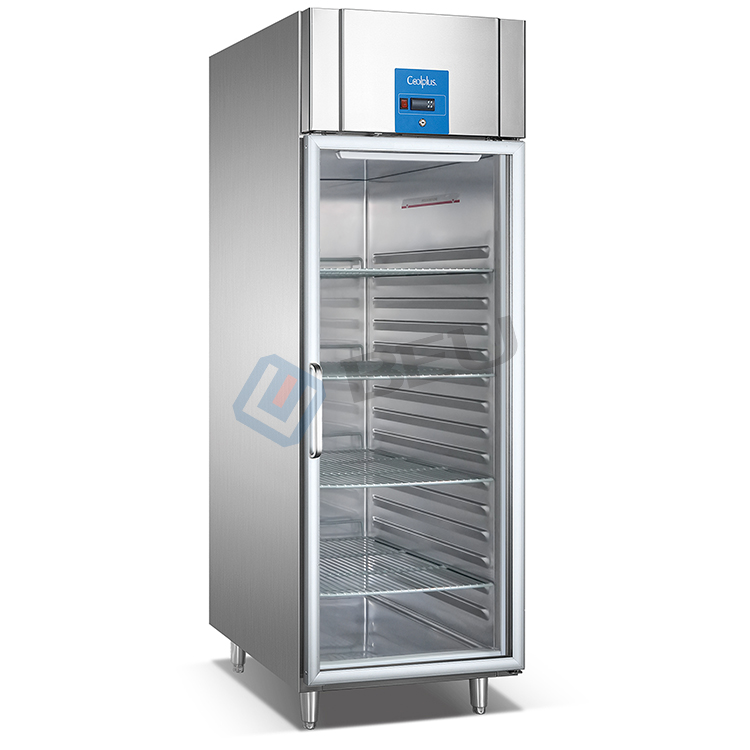
A documented test helps buyers compare performance on evidence rather than marketing claims. Before purchasing a Commercial upright refrigerator, confirm that the test conditions match your operation, review the full report with the supplier, and verify that the model meets your site's requirements.

To visit Guangzhou BEU Electric Appliance Co., Ltd. (called as BEUEA below) website, you are agreeing the terms and conditions within this policy.
BEUEA respects your privacy and will protect your information remains confidential.
We will not lease, sell, or rent your information to the third party for their independent use under any circumstances.