Choosing the right blast freezer for seafood processing requires more than comparing freezer size and purchase price. A commercial blast chiller manufacturer or blast freezer supplier must help you match freezing performance with seafood type, product thickness, production volume, food safety requirements, energy costs, and available space. This guide explains how to select, evaluate, and operate a seafood blast freezer, including the practical purchasing concerns that processing teams face every day.
Start by defining the seafood freezing job
Identify the seafood products you will freeze
Different seafood products require different freezing conditions. A freezer designed for shrimp may not provide the best airflow or loading arrangement for whole fish, fillets, scallops, crab, or squid.
- Whole fish, such as salmon, tuna, cod, and mackerel, require sufficient chamber height and airflow around irregular product surfaces.
- Fish fillets need controlled airflow to reduce dehydration, surface cracking, and uneven freezing.
- Shrimp, scallops, and shellfish are often loaded in trays or cartons and require consistent freezing between layers.
- Squid and octopus may have high moisture content and irregular shapes that increase freezing time.
- Prepared seafood products, such as breaded fillets or seafood meals, may require a specific conveyor or tray arrangement.
- Packaged seafood needs enough air circulation around cartons without allowing cartons to block the evaporator airflow.
Decide whether you need a blast freezer, blast chiller, or both
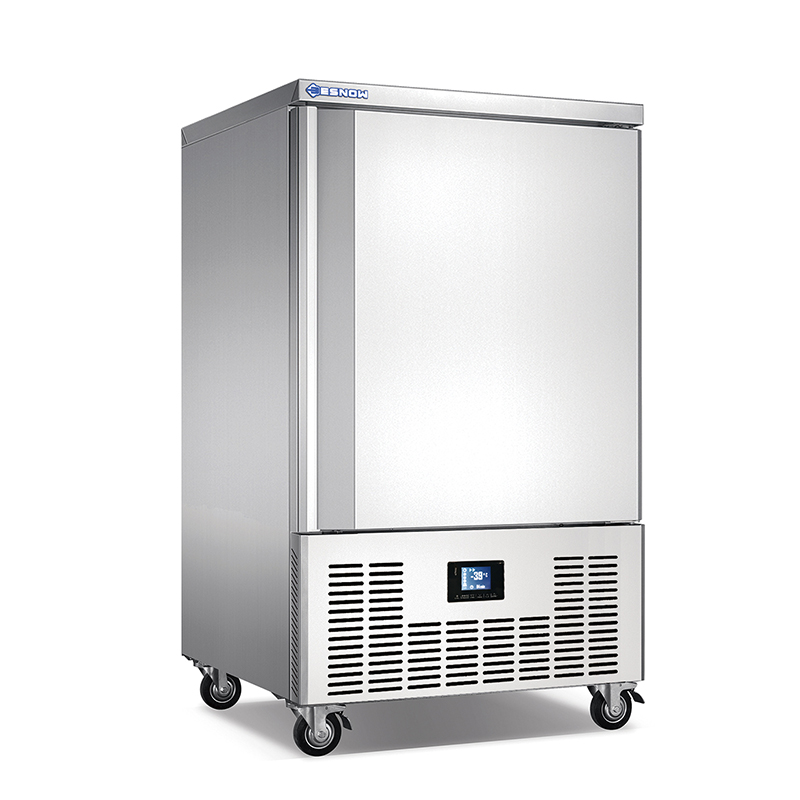
A blast chiller rapidly reduces the temperature of cooked or fresh food, usually to a chilled storage range above freezing. A blast freezer reduces the product temperature to a frozen condition, commonly to -18 C or lower for storage.
- Choose a blast chiller for rapid cooling of cooked seafood, fresh catch, sauces, or prepared meals before refrigerated storage.
- Choose a blast freezer for long-term frozen storage, export products, frozen fillets, shrimp, and packaged seafood.
- Choose a combined blast chiller and blast freezer when the facility handles both chilled and frozen products.
Using a blast chiller when the product must be frozen will not provide adequate storage life. Using a blast freezer for every cooling task may increase energy consumption and operating costs.
Define your target final product temperature
Write down the required temperature of the seafood when it leaves the freezing cycle. The air temperature inside the chamber is not the same as the core temperature of the product.
- Fresh chilled seafood may need to reach approximately 0 C to 4 C, depending on the product and food safety plan.
- Frozen seafood commonly needs a core temperature of -18 C or lower.
- Export or long-term storage products may require lower product temperatures according to customer, country, or certification requirements.
- Products with thick packaging need more time for the center to reach the target temperature.
Calculate capacity and freezing time before comparing models
Measure the required batch capacity
Capacity should be calculated from the actual product load per batch, not only from the internal chamber volume. Overloading a freezer can result in slow freezing, uneven temperatures, excessive frost, and poor product quality.
Use the following information:
- Weight of seafood processed per batch.
- Number of batches required per shift.
- Number of production hours per day.
- Product temperature when loaded.
- Product target temperature when unloaded.
- Product thickness and package dimensions.
- Tray, rack, trolley, or carton arrangement.
- Expected future production growth.
A basic capacity estimate can be calculated as follows:
Required hourly capacity = total daily production divided by available freezing hours per day.
For example, if a plant must freeze 4,000 kg of seafood in 10 operating hours, the freezer system must handle an average of at least 400 kg per hour. Additional capacity should be considered for loading delays, cleaning, defrosting, maintenance, and future production increases.
Understand the difference between air temperature and product core temperature
Many purchasing mistakes occur because buyers select a freezer based on the advertised chamber temperature rather than the actual freezing performance. A chamber may reach -35 C while the center of a thick fish block remains above -18 C.
Ask the manufacturer to provide:
- Test results for the actual seafood product.
- Product inlet and outlet temperatures.
- Core temperature measurement method.
- Freezing time for the planned product thickness.
- Maximum batch weight under the proposed operating conditions.
- Air temperature and airflow data at different chamber locations.
Allow for product loading and unloading time
The freezer capacity must support the complete work cycle. The actual process includes loading, door opening, freezing, temperature verification, unloading, cleaning, and defrosting.
- Record the time needed to load each rack or trolley.
- Record the time needed to reach the target core temperature.
- Record the time needed to unload the product.
- Add cleaning and defrosting time to the daily schedule.
- Compare the total cycle time with the required production rate.
Choose the freezing method that matches product quality goals
Evaluate air blast freezing
Air blast freezing uses high velocity cold air to remove heat from the seafood. It is widely used because it can handle different product shapes, package sizes, trays, and trolleys.
Air blast freezing is suitable when you need:
- Flexible product handling.
- Freezing of different seafood varieties in the same facility.
- Batch production using racks or carts.
- Easy integration with existing processing lines.
- Simple adjustment of time and temperature for different products.
The main purchasing concern is airflow distribution. Poorly designed airflow can cause the product near the evaporator to freeze quickly while the product at the opposite side remains warm.
Evaluate contact plate freezing
Contact plate freezers freeze packaged products between refrigerated plates. They can provide fast and uniform freezing for flat, regularly shaped seafood blocks.
Contact plate freezing may be appropriate for:
- Uniform fish blocks.
- Packaged shrimp blocks.
- Regularly shaped products in standardized cartons.
- High-volume production with limited product variation.
It may be less suitable for irregular products, loose seafood, whole fish, or products that do not maintain consistent package thickness.
Evaluate tunnel or continuous freezing systems
Tunnel and continuous freezers move products through a controlled freezing zone. They can support high production volumes and reduce manual handling.
Consider a continuous system when:
- The production line operates continuously.
- Product dimensions are consistent.
- The required capacity is too high for batch equipment.
- Labor reduction is a major priority.
- The facility can provide sufficient floor space and line integration.
Continuous equipment usually requires a higher initial investment and more detailed installation planning than a batch blast freezer.
Check the technical specifications that affect performance
Review refrigeration capacity and operating temperature
Refrigeration capacity must be sufficient to remove heat from the seafood, packaging, racks, chamber, and air entering during door openings. A unit that is too small may run continuously without achieving the required core temperature.
Ask for the following specifications:
- Rated refrigeration capacity at the stated evaporating temperature.
- Operating chamber temperature range.
- Expected product load at the rated performance.
- Compressor type and refrigerant type.
- Evaporator capacity and design temperature difference.
- Condenser type and ambient temperature rating.
- Electrical power supply and installed power.
- Defrost method and defrost duration.
Examine airflow and temperature uniformity
Airflow affects freezing speed, product dehydration, energy use, and final appearance. The freezer should move air evenly through all loaded trays or cartons without creating excessive air velocity that damages exposed seafood.
Important questions include:
- Is the airflow horizontal, vertical, or cross-flow?
- Can the fan speed be adjusted?
- Are there dead zones inside the chamber?
- Does the rack design allow air to pass between products?
- What temperature difference exists between the warmest and coldest locations?
- Can airflow be tested with a fully loaded chamber?
Inspect the chamber construction
The chamber should be designed for low-temperature operation, frequent washing, and long-term exposure to moisture and salt. Seafood processing environments are particularly demanding because saltwater and organic residue can accelerate corrosion and hygiene problems.
Look for:
- Food-grade stainless steel interior surfaces.
- Rounded internal corners that are easy to clean.
- High-density insulation with minimal thermal bridging.
- Sealed floor and wall joints.
- Non-slip and washable flooring.
- Corrosion-resistant hinges, handles, racks, and fasteners.
- Door gaskets that can be removed and replaced.
- Drainage suitable for washdown operations.
Review controls, alarms, and data recording
A modern seafood blast freezer should provide more than a simple on and off switch. Operators need to know whether the product has reached its required core temperature and whether the equipment is operating within safe limits.
Useful control functions include:
- Programmable time and temperature settings.
- Core temperature probe connection.
- High and low temperature alarms.
- Door-open alarm.
- Compressor and fan fault alarms.
- Defrost control.
- Cycle history and temperature records.
- Password protection for critical settings.
- Remote monitoring or data export, when required.
Follow a step-by-step purchasing process
First step: Document the product and production requirements
Create a written specification before requesting quotations. This prevents suppliers from offering equipment based on incomplete information.
- List every seafood product that will be frozen.
- Record the product weight, shape, thickness, and packaging.
- Record the product temperature at loading.
- Set the target core temperature at unloading.
- Calculate the required batch size and daily output.
- Note the number of operating shifts and available freezing hours.
- Identify seasonal production peaks.
Second step: Measure the available installation space
Measure the full installation area, not only the space where the freezer chamber will stand.
- Available length, width, and ceiling height.
- Doorway and passage dimensions.
- Space for compressor and condenser equipment.
- Service access around electrical and refrigeration components.
- Floor loading capacity.
- Drainage location.
- Electrical panel location.
- Ventilation requirements for the condenser area.
- Space for product staging and trolley movement.
Third step: Request performance data from qualified suppliers
Send the same product and process information to each supplier. This makes quotations easier to compare and exposes unrealistic performance claims.
Request:
- Technical specification sheet.
- General arrangement drawing.
- Freezing test report.
- Product core temperature results.
- Energy consumption estimate.
- Installation requirements.
- Warranty conditions.
- Spare parts list.
- Maintenance schedule.
- References from seafood processing facilities.
Fourth step: Compare total cost of ownership
The lowest purchase price may not be the lowest operating cost. Compare the complete cost over the expected service life.
- Equipment purchase price.
- Freight, installation, and commissioning.
- Electrical and refrigeration installation.
- Energy consumption.
- Water and cleaning requirements.
- Labor required for loading and unloading.
- Maintenance and replacement parts.
- Downtime risk.
- Expected service life.
Fifth step: Conduct a factory or site acceptance test
Before final acceptance, verify that the equipment can freeze the actual product under the agreed conditions.
- Load the freezer using the planned tray, rack, or carton arrangement.
- Place calibrated temperature probes in the warmest expected product locations.
- Record the initial product temperature.
- Start the programmed freezing cycle.
- Record chamber temperature, product core temperature, and cycle time.
- Check the warmest product after the cycle.
- Inspect the product for dehydration, cracking, discoloration, or deformation.
- Confirm that alarms, records, doors, drains, and defrost functions operate correctly.
Prepare the tools and information needed for selection and operation
Required tools for the purchasing assessment
The following tools help the purchasing group validate supplier claims and prepare the installation site:
- Measuring tape or laser distance meter.
- Floor plan and utility layout.
- Platform scale or weighing system.
- Calibrated food temperature probes.
- Data logger for temperature recording.
- Electrical supply survey sheet.
- Product specification sheet.
- Production schedule.
- Cleaning and sanitation procedure.
- Maintenance and spare parts checklist.
- Supplier quotation comparison table.
Required tools for daily operation
- Calibrated core temperature probe.
- Protective gloves and thermal clothing.
- Food-grade racks, trays, or carts.
- Product identification labels.
- Sanitation brushes and approved cleaning chemicals.
- Temperature recording forms or digital monitoring software.
- Door and gasket inspection checklist.
- Flashlight for checking evaporator and chamber surfaces.
Information to include in the request for quotation
Provide complete information to avoid receiving quotations that cannot meet the actual process requirements.
- Product name and seafood type.
- Product dimensions and package dimensions.
- Product weight per tray, carton, rack, or trolley.
- Initial product temperature.
- Target product core temperature.
- Required freezing time.
- Required hourly and daily capacity.
- Ambient temperature around the equipment.
- Available voltage and frequency.
- Cleaning method and hygiene requirements.
- Installation location and access restrictions.
Avoid common seafood blast freezer purchasing mistakes
Do not choose equipment only by chamber volume
A large chamber does not automatically provide high freezing capacity. Performance depends on compressor capacity, evaporator design, fan airflow, product loading pattern, and product thickness.
Always compare rated batch weight and product core temperature results instead of comparing chamber dimensions alone.
Do not confuse air temperature with freezing performance
A very low chamber temperature can create a misleading impression of performance. The seafood must reach the required core temperature, not merely be surrounded by cold air.
Require documented test results using a product that is similar to your own seafood products.
Do not overload trays, racks, or cartons
Products packed too closely together prevent cold air from reaching all surfaces. Overloading can increase freezing time and cause uneven product quality.
- Keep the recommended gap between trays.
- Do not block evaporator air outlets.
- Do not stack cartons beyond the approved height.
- Use the loading pattern provided by the manufacturer.
Do not ignore dehydration and freezer burn
Excessive air velocity, long freezing cycles, poor packaging, and inadequate humidity control can cause weight loss and surface damage. Ask the supplier how the design limits moisture loss and whether the product requires protective packaging or glazing.
Do not overlook cleaning and corrosion
Seafood plants require frequent cleaning. A freezer with difficult-to-clean joints, exposed insulation, weak seals, or non-corrosion-resistant hardware can create hygiene risks and increase maintenance costs.
Inspect all interior surfaces, drains, floor joints, door gaskets, fan guards, racks, and evaporator areas before purchase.
Do not underestimate electrical and installation requirements
Confirm voltage, frequency, phase, installed power, breaker size, cable requirements, condenser ventilation, drainage, and floor loading before placing the order. Installation delays can occur when these details are left until delivery.
Do not buy without after-sales support
Seafood processing operations cannot tolerate long equipment downtime. Confirm the supplier's response time, local service coverage, spare parts availability, warranty exclusions, refrigerant support, and remote troubleshooting capability.
Verify food safety, maintenance, and operating procedures
Control the loading process
- Verify that the freezer is clean and ready for operation.
- Confirm that the evaporator, fans, drain, and door seals are free from ice and debris.
- Arrange the seafood in the approved loading pattern.
- Leave sufficient airflow space between trays, cartons, and racks.
- Insert calibrated core temperature probes into representative products.
- Close the door promptly to minimize warm air entry.
- Start the correct program for the product type and load size.
Monitor the freezing cycle
Operators should monitor both equipment conditions and product temperature. Chamber temperature alone is not enough for process verification.
- Record product batch identification.
- Record loading time and initial product temperature.
- Monitor the core temperature of the thickest or slowest-freezing product.
- Check for unusual compressor noise, fan vibration, or alarm messages.
- Confirm that the door remains closed during the main freezing cycle.
- Release the batch only after the target core temperature is verified.
Complete cleaning and defrosting correctly
Ice accumulation reduces airflow and heat transfer. Cleaning residue can also create food safety risks and damage equipment if unsuitable chemicals are used.
- Remove all products from the chamber.
- Turn off or isolate the equipment according to the operating manual.
- Complete the scheduled defrost cycle.
- Remove ice and residue using approved tools.
- Wash internal surfaces with approved cleaning chemicals.
- Rinse and sanitize according to the plant procedure.
- Inspect door gaskets, drains, fan guards, and evaporator surfaces.
- Allow the chamber to dry or use the approved drying procedure.
- Record the cleaning and maintenance activity.
Schedule preventive maintenance
- Inspect door seals and hinges regularly.
- Clean condenser coils according to the site environment.
- Check evaporator fans and fan guards.
- Inspect refrigerant lines for damage or abnormal frost.
- Verify temperature probes and data loggers.
- Check electrical terminals and safety devices.
- Inspect drains and defrost heaters.
- Replace worn gaskets and damaged corrosion-resistant components.
- Review energy consumption for changes that may indicate a fault.
Make the final selection with a supplier comparison checklist
Compare product performance
- Can the freezer reach the required seafood core temperature?
- Can it handle the required product thickness and packaging?
- Is the quoted freezing time based on real product testing?
- Is temperature uniformity documented?
- Does the freezer maintain performance at the expected ambient temperature?
Compare operating practicality
- Can operators load and unload the equipment safely?
- Are racks, trays, and carts compatible with the chamber?
- Is the door suitable for frequent opening?
- Are controls simple enough for daily production use?
- Can temperature data be recorded for traceability?
Compare hygiene and durability
- Are internal surfaces suitable for seafood processing?
- Can the chamber be cleaned without damaging insulation or controls?
- Are critical parts resistant to salt and moisture?
- Are drains and floor surfaces hygienically designed?
- Are replacement gaskets, sensors, fans, and controls available?
Compare supplier support
- Does the supplier provide installation and commissioning?
- Can the supplier test your actual seafood products?
- Is technical support available after delivery?
- Are manuals and training included?
- Can the supplier provide spare parts throughout the expected service life?
- Does the warranty cover refrigeration, electrical, and control components?
The best blast freezer is not necessarily the largest or the cheapest model. It is the system that reliably reaches the required seafood core temperature, protects product quality, fits the production workflow, supports sanitation, and provides predictable operating costs. By defining the product, calculating the real capacity, testing freezing performance, checking installation conditions, and comparing total ownership costs, purchasing teams can select equipment with greater confidence.
BEU provides practical refrigeration solutions for seafood processing applications and can help users evaluate blast freezer capacity, airflow, chamber design, controls, and installation requirements. When working with a commercial blast chiller manufacturer, provide complete product and production data so the recommended equipment is based on actual processing conditions rather than general specifications.

 09/04 ,2026