 08/24 ,2026
 Learning How to Clean and Maintain a Commercial Blast Chiller helps protect food safety, preserve cooling performance, and reduce unexpected downtime. In this BEU guide, I explain a simple maintenance routine covering shutdown, interior cleaning, sanitization, condenser care, drain inspection, temperature verification, and recordkeeping. By following these steps, kitchen teams can complete routine service efficiently while keeping the blast chiller compliant with HACCP procedures and relevant food-equipment requirements.
A properly maintained blast chiller supports rapid chilling, limits bacterial growth, and extends the service life of compressors, evaporator coils, fans, door gaskets, and temperature probes. Whether you operate a restaurant, central kitchen, hotel, hospital, or food-processing facility, the following process provides a practical cleaning and preventive-maintenance plan.
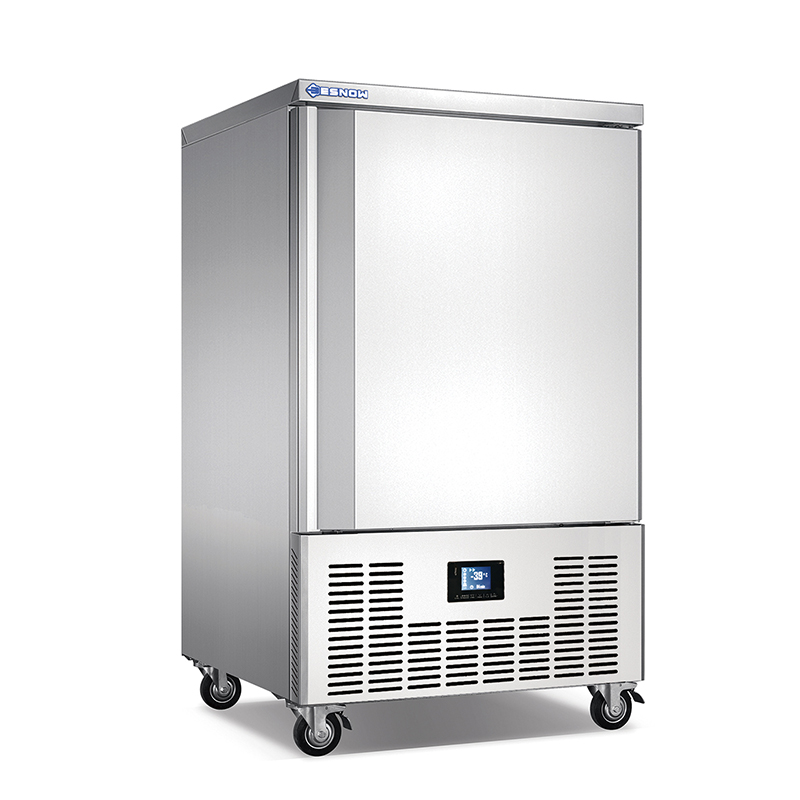
A commercial blast chiller removes heat from cooked food within a controlled time and temperature range. If food residue, ice, grease, or dust accumulates, the equipment may experience:
As a commercial blast chiller manufacturer, BEU designs equipment for professional foodservice environments, but even high-quality equipment requires a documented sanitation and preventive-maintenance program.
The exact chilling target depends on local regulations, the food product, and the operating procedure. Many food businesses use a monitored process that reduces cooked food from approximately 60°C to 21°C within 2 hours, then to 5°C or below within the next 4 hours, where required by local food-safety rules. Always confirm the applicable requirements with your local authority and the equipment manual.
Before starting, prepare all cleaning materials. Having the correct tools reduces downtime and prevents damage to stainless-steel surfaces, electrical components, and refrigeration parts.
Use chemicals according to the manufacturer’s Safety Data Sheet. Never mix chlorine-based products with acidic cleaners, ammonia, or other chemicals.
For food-contact surfaces, select a sanitizer approved for commercial food equipment and verify the concentration with test strips. Cleaning removes soil; sanitizing reduces microorganisms. One cannot replace the other.
Remove all food, trays, racks, and containers from the chamber. Transfer products to another suitable refrigerator or freezer without breaking the cold chain.
Before switching off the unit, record:
This record helps identify performance changes over time. A blast chiller that previously completed a cycle in 90 minutes but now requires 140 minutes may have an airflow, sensor, condenser, or refrigerant-related problem.
Switch the blast chiller to the appropriate shutdown mode and isolate the power supply according to the BEU operation manual and site lockout/tagout procedure.
Do not begin cleaning if:
Only a qualified refrigeration technician should open sealed refrigeration circuits, test refrigerant pressure, replace electrical components, or work on the compressor and control panel.
Take out removable components and place them in a designated washing area. Clean them separately using warm water and a food-safe detergent.
Inspect each item for:
Rinse thoroughly and sanitize according to the chemical supplier’s specified contact time. Allow components to air-dry before reinstalling them.
Remove food particles, packaging fragments, and loose ice manually. If the unit has an automatic defrost function, use the manufacturer-approved cycle.
Do not chip ice from the evaporator with a knife, screwdriver, or metal scraper. Sharp tools can puncture refrigerant tubing and create an expensive refrigeration failure.
Forcing hot water directly onto the evaporator can also cause thermal shock or allow water to enter electrical areas. Use the controlled defrost procedure specified by BEU.
Clean the ceiling, side walls, rear panel, floor, door interior, and tray supports from top to bottom.
Use the following method:
Avoid steel wool, abrasive powders, aggressive acids, and high-pressure spray. These materials can damage stainless-steel passivation, leave metal particles, or force water into fans and control components.
For hygienic design, food-contact areas should be smooth, cleanable, and free from crevices. Facilities may use EN 1672-2 principles for food-processing machinery hygiene and applicable local sanitation rules when reviewing equipment condition.
The door gasket is one of the most frequently overlooked parts of a commercial blast chiller. Grease and food residue can prevent a proper seal.
Clean the gasket by:
Check for tears, compression, hardening, or deformation. A damaged gasket allows warm air and moisture into the cabinet, increasing compressor run time and encouraging ice formation.
A simple paper test can identify poor sealing: close the door on a strip of paper. If the paper slides out easily in several locations, ask a qualified technician to adjust the door or replace the gasket.
Food residue and biofilm can block the drain and cause standing water or odor.
Inspect:
Use a dedicated drain brush to remove buildup. Flush the drain with the method approved by the manufacturer. Do not use corrosive drain chemicals unless BEU specifically permits them.
A blocked drain can cause water to freeze around the evaporator, create slip hazards, and damage nearby components.
The evaporator coil and fan assembly control cold-air circulation inside the chamber. Cleaning should be gentle and controlled.
If the evaporator is heavily iced, repeatedly freezes, or produces uneven airflow, stop using the equipment and contact a qualified refrigeration technician. The cause may include a failed defrost heater, faulty sensor, blocked airflow, refrigerant issue, or door-seal failure.
The condenser rejects heat from the refrigeration system. Dust-clogged fins reduce heat transfer and can cause high-pressure alarms or compressor overheating.
For routine cleaning:
Do not use excessive compressed air if it drives dust deeper into the coil or toward electrical components. In high-dust kitchens, inspect the condenser monthly or more frequently.
As a commercial blast chiller manufacturer, BEU recommends maintaining sufficient clearance around ventilation openings. The exact clearance depends on the model, installation configuration, and technical documentation.
Temperature probes are essential for validating the chilling cycle. Clean the product probe with an approved method before and after use.
Inspect for:
Verify the probe using an ice-point check or another approved calibration method. For higher-risk operations, calibration should be traceable to an ISO/IEC 17025-accredited laboratory or the company’s approved calibration program.
A useful internal tolerance may be ±0.5°C, but the correct acceptance limit must come from the equipment specification, HACCP plan, and local requirements.
| Frequency | Maintenance task | Responsible person |
|---|---|---|
| After each use | Remove food residue, wipe interior, clean probe, check door seal | Kitchen operator |
| Daily | Clean cabinet surfaces, drain area, handles, and gasket | Sanitation team |
| Weekly | Wash racks and trays, inspect drain, check unusual noise or ice | Supervisor |
| Monthly | Clean condenser, inspect fan airflow, review temperature records | Maintenance team |
| Quarterly | Check door alignment, electrical connections, probe performance, and defrost operation | Qualified technician |
| Annually | Complete refrigeration-system inspection and documented preventive maintenance | Authorized service provider |
The schedule should be adjusted for production volume, ambient temperature, dust load, and the operating environment.
Cleaning alone cannot confirm that the blast chiller is operating correctly. After sanitation, restart the unit and verify its performance.
Do not place hot food containers directly against the evaporator or block the air-return path. Overloading the cabinet prevents uniform air circulation and produces misleading temperature results.
For equipment procurement and installation, many commercial refrigeration applications reference NSF/ANSI 7 requirements for commercial refrigerators and freezers. The exact certification status should be confirmed for the specific BEU model and target market rather than assumed for every configuration.
Possible causes include:
Start with cleaning, load arrangement, and gasket inspection. If the condition remains, stop repeated cycles and request technical service. Continuous operation under high load can damage the compressor.
Check the drain opening, hose, trap, cabinet leveling, and defrost procedure. Remove food debris with a drain brush and confirm that the outlet is not kinked.
If water returns after cleaning, the drain may be frozen or incorrectly installed. A qualified technician should inspect the system.
Odor often originates from the drain, gasket folds, evaporator tray, or hidden residue beneath removable panels. Repeat the cleaning process with special attention to these areas.
Never mask the odor with perfume or non-food-safe chemicals.
First check whether the door remains open, the gasket seals correctly, and warm food is being loaded correctly. If ice forms again after a complete approved defrost, the unit may have a defrost, airflow, sensor, or refrigerant problem.
Do not remove persistent ice with sharp tools.
Review the kitchen layout and ventilation. Flour, grease, lint, and airborne oil can rapidly clog condenser fins. Increase inspection frequency, improve extraction, and keep the unit away from heat-producing appliances where possible.
A reliable sanitation program should produce evidence, not just verbal confirmation. Record:
A digital CMMS, HACCP app, or simple controlled checklist can improve traceability. For chemical verification, sanitizer test strips are more reliable than visual estimation.
Use a risk-based sanitation plan aligned with HACCP principles and the applicable food code in your location. Chemical labels, Safety Data Sheets, local occupational-safety requirements, and BEU service documentation should guide the final procedure.
When selecting equipment, businesses should evaluate more than initial purchase price. A dependable commercial blast chiller should provide:
BEU operates as a commercial blast chiller manufacturer serving professional foodservice and commercial refrigeration applications. Before ordering, confirm chamber capacity, voltage, refrigerant type, tray dimensions, chilling performance, ambient operating range, certification requirements, and service coverage for your market.
Before returning a BEU blast chiller to production, I recommend checking the following:
By applying this step-by-step method for How to Clean and Maintain a Commercial Blast Chiller, businesses can reduce contamination risks, stabilize chilling performance, lower avoidable energy use, and extend equipment service life. For operators choosing a commercial blast chiller manufacturer, BEU provides a practical foundation—but consistent cleaning, verified temperatures, and documented preventive maintenance are what keep the system reliable every day.

To visit Guangzhou BEU Electric Appliance Co., Ltd. (called as BEUEA below) website, you are agreeing the terms and conditions within this policy.
BEUEA respects your privacy and will protect your information remains confidential.
We will not lease, sell, or rent your information to the third party for their independent use under any circumstances.