 11/18 ,2026
Choosing the right BEU commercial upright refrigerator capacity starts with your actual inventory—not a guess based on floor space. In this guide, we’ll take you from measuring stock and calculating usable volume to checking kitchen access, airflow, and operating requirements, so you can build a practical shortlist and avoid paying for a unit that is either too small or unnecessarily large.
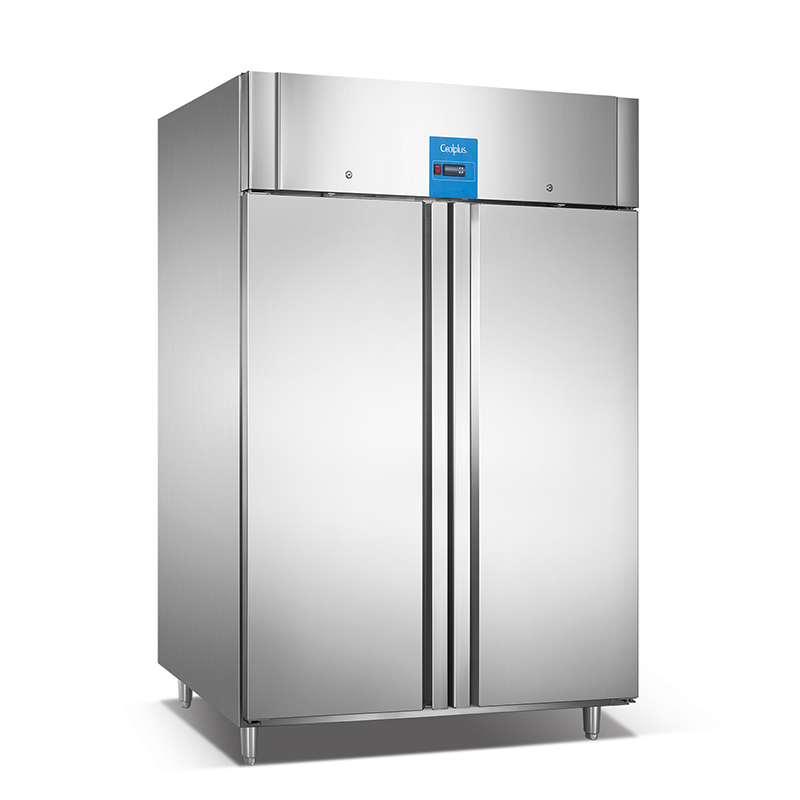
A restaurant, hotel, café, supermarket, and catering kitchen can all need different refrigeration capacity, even if they serve a similar number of customers. The right unit must hold your peak inventory safely while allowing staff to find products quickly and cold air to circulate around them.
As a Commercial Refrigeration Equipment Manufacturer, BEU recommends treating capacity as a working-storage question. A refrigerator’s advertised gross volume is not the same as the space your team can use after shelves, rails, containers, and airflow clearances are accounted for.
List the refrigerated items that will be inside the cabinet at the busiest point in a normal operating cycle. Include ingredients, prepared foods, beverages, backup stock, and any products that must be separated. Record each item’s container dimensions and the number of containers you expect to store.
For boxed or containerized stock, estimate the storage volume for each item as length × width × height, then add the item volumes. Convert all measurements to the same unit before totaling them. A spreadsheet can calculate the results and show the assumptions clearly.
As a preliminary planning allowance, target using about 70–80% of the refrigerator’s listed internal volume for routine stock. The remaining space helps accommodate airflow, shelf layout, access, and changes in inventory. This is a planning range, not a manufacturer guarantee; dense, uniform cartons may pack differently from mixed ingredients in pans.
Simple estimate: Required listed capacity = estimated stock volume ÷ planned fill rate. For example, if your measured stock takes 10 cubic feet and you plan around 75% fill, the initial estimate is about 13.3 cubic feet (10 ÷ 0.75). Treat this as a shortlist figure, then verify shelf dimensions, usable volume, and loading instructions with the supplier.
Use your stock calculation alongside turnover and replenishment. A café receiving daily deliveries may need less reserve capacity than a caterer holding several days of prepared ingredients. A supermarket display operation may prioritize shelf presentation and frequent access, while a back-of-house kitchen may need flexible shelving for pans and ingredient bins.
| Business requirement | What to check | Capacity implication |
|---|---|---|
| Frequent deliveries | Peak stock between deliveries | Size for the delivery cycle plus a reasonable operating buffer |
| Bulk or weekly deliveries | Maximum stock immediately after receiving | Allow for larger peak inventory and carton dimensions |
| Prepared food and GN pans | Shelf pitch, pan compatibility, and product separation | Choose interior geometry that fits the containers, not just the stated volume |
| High staff traffic | Door opening frequency and retrieval time | Consider layout and access as well as total capacity |
| Limited kitchen space | Door swing, loading route, and ventilation clearances | Confirm the cabinet fits the site before selecting a larger model |
Two commercial upright refrigerators with similar stated capacity can have different interior layouts. Ask for the internal width, depth, and height; shelf dimensions; shelf quantity and adjustment range; and the usable space between shelves. Confirm whether the capacity is quoted as gross or net volume and how the manufacturer defines it.
A Commercial Refrigeration Equipment Manufacturer should be able to clarify cabinet drawings, capacity definitions, options, and operating conditions. Request these details before comparing prices; they help you compare like with like rather than relying on a headline volume alone.
Measure the installation area and the complete delivery path: doorway openings, corridors, elevators, turns, and thresholds. Record the cabinet’s height, width, depth, door swing, and any required clearance for ventilation and maintenance. Follow the model’s installation manual for exact clearance requirements; they vary by design.
Also check the electrical supply, plug or hardwire requirements, floor level, ambient conditions, and proximity to heat-producing equipment. A large cabinet that cannot pass through a doorway—or cannot reject heat properly once installed—can create expensive delays and poor operating performance.
For food-service operations in the United States, the FDA Food Code uses 41°F (5°C) or below as the cold-holding limit for many time/temperature control for safety foods. Confirm the current rules adopted by your local authority and the requirements for your specific products and operation. Setpoints, recovery time, and actual product temperature are not interchangeable, so plan to monitor food with an appropriate calibrated thermometer.
Ask the supplier which certifications and test documentation apply to the exact model and the destination market. NSF/ANSI 7 addresses commercial refrigerators and freezers, while UL 471 covers commercial refrigeration equipment safety in applicable contexts. Requirements can differ by country and installation; do not assume a model is certified simply because a standard is mentioned. Verify the certification mark, scope, and documentation for the unit you intend to buy.
For reliability evaluation, request information about temperature uniformity, pull-down and recovery testing, alarms, controller settings, and service access. If a supplier cites ASTM or DIN testing, ask which specific method was used and what the result represents. Standards are useful only when tied to a clearly identified test and product configuration.
A correctly sized refrigerator can reduce daily workarounds: fewer overloaded shelves, less time searching for stock, and more orderly replenishment. An oversized unit may consume unnecessary floor space and energy; an undersized one can lead to frequent restocking, blocked airflow, and product-temperature risk when staff overfill it.
Compare these points across shortlisted models:
As a Commercial Refrigeration Equipment Manufacturer, BEU can help buyers compare configuration and capacity requirements when the inquiry includes the intended use, destination, stock dimensions, and site constraints. Ask for written specifications and confirm that quoted accessories and electrical details match the order.
Customer volume is only an indirect indicator of storage demand. Use actual inventory and delivery schedules to calculate the peak load, then use sales volume as a cross-check.
Request net or usable capacity information and interior drawings. Map your containers onto the shelf dimensions before purchase, including space for airflow and product separation.
Use the busiest normal stock period and account for seasonal demand. If peaks are short, compare the cost of a capacity step-up with a documented replenishment plan rather than automatically buying the largest cabinet.
Measure the site and review the installation manual. If the cabinet will sit near an oven, dishwasher, or direct sunlight, ask the supplier whether the ambient conditions are within the model’s operating limits.
Use a calibrated probe thermometer and a temperature log. Train staff to avoid overloading, minimize unnecessary door opening, and follow your food-safety plan and local requirements.
A qualified Commercial Refrigeration Equipment Manufacturer or distributor can review these documents and flag mismatches before you place an order. Share your measurements and operating profile rather than asking only for a price per unit.
When you follow these steps, you can select a BEU commercial upright refrigerator that fits your inventory, kitchen, and operating routine with fewer surprises. Start today by measuring your busiest stock load and installation route, then send those figures to BEU or your supplier for a specification review. A Commercial Refrigeration Equipment Manufacturer can give you a more useful capacity recommendation when your requirements are documented and specific.

To visit Guangzhou BEU Electric Appliance Co., Ltd. (called as BEUEA below) website, you are agreeing the terms and conditions within this policy.
BEUEA respects your privacy and will protect your information remains confidential.
We will not lease, sell, or rent your information to the third party for their independent use under any circumstances.