 08/26 ,2026
 A reliable commercial blast chiller manufacturer helps restaurants, hotels, bakeries, caterers, and food factories cool cooked food within a controlled time. A commercial blast chiller for restaurants can reduce food temperature faster than a standard refrigerator, while an energy-efficient blast chiller supplier can help control electricity use and operating costs. This matters because slow cooling can increase the time food spends in the bacterial “danger zone,” which the FDA identifies as 41°F to 135°F (5°C to 57°C).

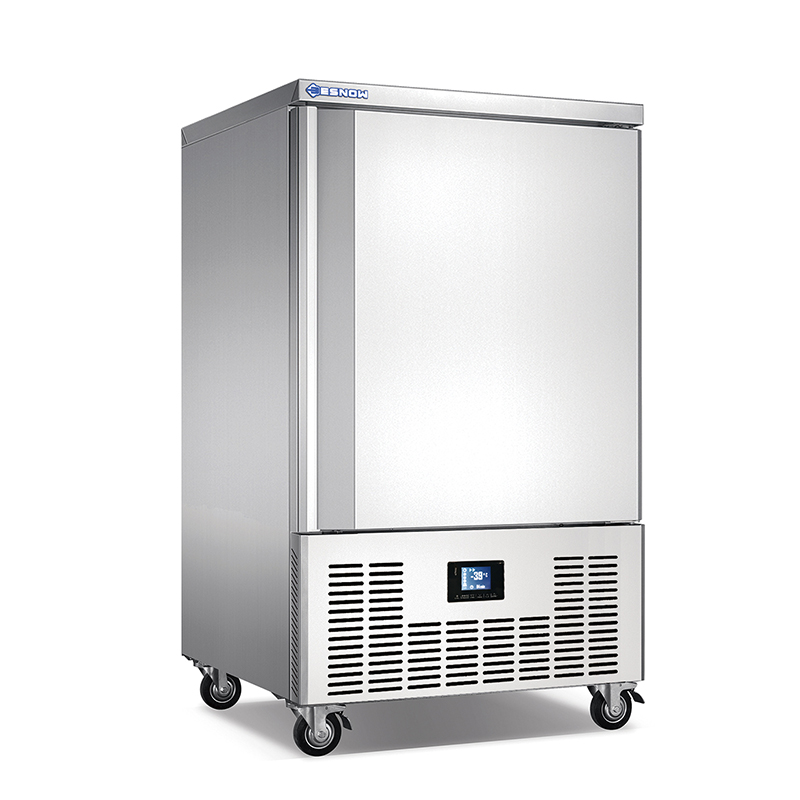
A commercial blast chiller is a professional refrigeration machine that uses high-speed cold air to remove heat from hot or warm food. It is designed for rapid cooling after cooking and before storage.
The main cooling process is called blast chilling. It normally uses:
A standard refrigerator is designed mainly to hold already-cold food. It may not remove heat quickly enough from a large tray of cooked rice, soup, meat, or baked products. A blast chiller is built for this specific cooling task.
Blast chilling: Rapidly reducing the temperature of cooked food, usually to approximately 3°C or 37°F, before refrigerated storage.
Blast freezing: Reducing food temperature to a frozen state, often around -18°C or 0°F for storage. A blast freezer requires a lower operating temperature and a stronger refrigeration system than a blast chiller.
Core temperature: The temperature at the center of the thickest part of the food. This is usually more important than the surface temperature.
Temperature probe: A metal sensor inserted into food to measure the core temperature.
Pull-down time: The time required for food to reach the target temperature.
Holding temperature: The temperature maintained after the cooling cycle is complete.
Cooked food often passes slowly through the temperature range where bacteria can multiply. Large containers, deep pans, thick meat products, and dense sauces are especially difficult to cool safely.
The FDA Food Code 2022 recommends cooling cooked food:
A blast chiller does not replace a food safety plan, but it can make this cooling process more controlled and repeatable.
Rapid cooling can help businesses:
For example, a central kitchen may cook 20 trays of prepared meals in the morning and chill them for delivery later in the day. Without suitable cooling equipment, the food may remain warm for too long. With a blast chiller, staff can use a programmed cycle and verify the result with a probe.
Blast chillers are used in many foodservice and food production environments. The correct machine depends on food type, batch size, tray format, and production schedule.
Restaurants use blast chillers to prepare sauces, soups, cooked meat, rice, pasta, and side dishes before service. This allows chefs to separate production from peak service hours.
A blast chiller may be useful when a kitchen:
Bakeries use blast chillers to cool:
Fast cooling can help protect the shape and texture of delicate products. However, the correct cycle depends on the recipe. A very cold air setting may damage sensitive products if the food is not properly covered or packaged.
Caterers often cook in advance and transport food to another location. A blast chiller can help them cool large batches before refrigerated transportation.
The operator should combine the chiller with:
Central kitchens need repeatable production systems. A blast chiller can support cook-chill operations, meal kits, ready-to-eat meals, and institutional food production.
When comparing a commercial blast chiller supplier for restaurants and central kitchens, ask whether the supplier can provide:
These facilities often prepare food in large quantities and need clear temperature records. A programmable blast chiller with an internal probe can help staff document each cooling cycle.
The equipment should be selected with local food safety rules and the facility’s HACCP plan. Public institutions may also require specific sanitation, electrical, and safety certifications.
A blast chiller provides a defined cooling cycle instead of relying on a general refrigerator. The operator can set a target temperature or use a probe-controlled program.
Food can be cooked during one work period and served later. This can reduce pressure during lunch, dinner, or event service.
A controlled cooling process may help protect food quality and extend refrigerated shelf life when combined with proper packaging, storage, and hygiene. Shelf life is not fixed by the machine alone. It depends on the recipe, ingredients, packaging, storage temperature, and local rules.
Many modern units store temperature data or display the completed cycle. These records can support internal food safety checks.
Rapid cooling can help limit:
The result depends on the food and the selected cycle. A blast chiller is a process tool, not a guarantee that every product will have the same quality.
Choosing the right supplier requires more than comparing the number of trays. Review the complete operating process.
Start with the amount of food produced in one batch.
Record:
For example, a kitchen that needs to cool 120 kg of cooked food in one production cycle may need a different unit from a bakery cooling 30 kg of pastries.
Manufacturers should provide performance information for a stated product load. A capacity figure without food type, tray spacing, starting temperature, or target temperature is difficult to compare.
Common formats include:
Check the tray size, rail spacing, usable internal height, and maximum food depth. A machine may have a high tray count but still be unsuitable if your containers do not fit.
Ask the manufacturer for test conditions, such as:
Do not compare “fast cooling” claims without the test conditions. Cooling 5 kg of shallow vegetables is not the same as cooling 50 kg of dense soup.
The refrigeration system affects pull-down time, energy use, noise, and maintenance.
Review:
The selected refrigerant should comply with current environmental rules in the installation market. The supplier should also provide the refrigerant charge and service information.
Before ordering, confirm:
A machine that does not match the building’s electrical supply can cause installation delays and extra costs.
Useful controls may include:
A probe-controlled cycle is often more useful than a simple timer because food thickness and load weight can change from batch to batch.
Food equipment should be easy to clean. Look for:
Operators should follow the manufacturer’s cleaning procedure. High-pressure water can damage electrical components and refrigeration parts if the cabinet is not designed for it.
The price of a commercial blast chiller depends on more than cabinet size. The following factors can change the purchase cost and total cost of ownership.
A larger cabinet usually requires:
A 3-tray unit and a 40-tray unit serve different production needs, so their prices cannot be compared by cabinet volume alone.
A chiller designed only for positive-temperature cooling may cost less than a unit that also performs blast freezing. Freezing requires a lower operating temperature and additional refrigeration capacity.
Basic timer controls are usually less expensive than systems with:
A more advanced controller may reduce labor and improve records, but the value depends on how often the machine is used.
Stainless steel grade, insulation thickness, door design, shelf structure, and internal finish all affect cost. A unit used in a wet commercial kitchen needs corrosion resistance and a design that supports regular sanitation.
Refrigerant selection, compressor efficiency, insulation, and condenser design influence both purchase price and energy use. Compare the supplier’s rated input power and operating data instead of relying on general claims such as “low energy.”
The final project cost may include:
A low equipment price may not be the lowest installed cost.
Check:
For a busy commercial kitchen, one day of downtime may cost more than a moderate difference in purchase price.
Standards vary by country and product type. Buyers should ask for documents that match the installation market.
Relevant references may include:
Certification should be verified for the exact model, not just the manufacturer’s general product range. Ask for test reports, declarations, certificates, and the applicable standard number.
Correct operation is as important as machine design.
Use clean, shallow containers when possible. Avoid placing very deep or tightly packed food into the cabinet. Large food blocks slow down heat transfer.
Separate products according to the manufacturer’s loading instructions. Do not block the air channels or cover the evaporator airflow.
Insert the probe into the thickest part of the product. For liquid foods, place the probe where the temperature is likely to fall most slowly.
The probe should be:
Overloading can reduce airflow and extend cooling time. If a unit is rated for a particular food load, use that rating as the operating limit unless the manufacturer has approved another process.
After cooling, label the product with:
Move the food to suitable refrigerated storage as soon as the cycle is complete.
Clean food spills promptly. Inspect door gaskets, drains, shelves, probes, and condenser areas. A blocked condenser can increase energy use and reduce cooling performance.
Tray count does not show the actual cooling capacity. Food weight, thickness, moisture, and starting temperature are also important.
A refrigeration system may perform differently in a hot kitchen. Check the manufacturer’s rated ambient temperature and provide adequate ventilation.
A commercial unit needs parts and technical support. Confirm who will repair the machine before placing the order.
A fixed timer may work for a consistent recipe, but it does not prove that the center of the food has reached the required temperature. Use a calibrated probe and keep records.
Include installation, electricity, maintenance, cleaning chemicals, replacement gaskets, probes, and possible downtime when comparing quotations.
Before requesting a quotation, prepare these questions:
A product test using your real recipe is often more useful than a general brochure claim.
A blast chiller uses stronger refrigeration and high-speed airflow to remove heat from warm food quickly. A normal refrigerator is mainly designed to hold food that is already cold.
Many blast chilling processes cool food to approximately 3°C or 37°F. The exact target depends on the product, food safety plan, local regulation, and manufacturer program.
Some models can both chill and freeze. A dedicated blast freezer or combination unit is needed when the product must reach frozen storage temperatures such as -18°C or 0°F.
The time depends on food type, load size, container depth, starting temperature, airflow, and target temperature. A reliable supplier should provide test results under defined conditions rather than one universal time.
Many commercial blast chillers are designed for hot food, but the operator must follow the model’s loading and temperature instructions. Use suitable containers, leave airflow space, and avoid overloading.
It can support a longer and more predictable refrigerated shelf life when combined with proper cooking, hygiene, packaging, storage, and labeling. The equipment itself does not determine a guaranteed shelf life.
Calculate the maximum food weight per batch, food depth, tray format, starting temperature, target temperature, and daily production volume. Then ask the manufacturer to confirm the performance for your actual product.
It may be worthwhile if the restaurant prepares food in batches, uses cook-chill production, experiences heavy service peaks, or loses food because of poor cooling control. Compare the equipment cost with labor savings, reduced waste, and production capacity.
Before selecting a machine, confirm that the commercial blast chiller:
A successful purchase begins with your process, not with a catalogue image. Measure your batch weight, food depth, cooling target, and daily production first. Then compare verified data from each commercial blast chiller manufacturer.
For the next step, contact BEU to discuss your food type, tray size, capacity, voltage, cooling target, and installation conditions. Request a technical quotation, product test, and user guide before placing an order with a custom blast chiller manufacturer for foodservice and food production.
To visit Guangzhou BEU Electric Appliance Co., Ltd. (called as BEUEA below) website, you are agreeing the terms and conditions within this policy.
BEUEA respects your privacy and will protect your information remains confidential.
We will not lease, sell, or rent your information to the third party for their independent use under any circumstances.