 10/12 ,2026
 What Size Blast Chiller Does a Commercial Kitchen Need? The answer depends on the kitchen’s batch weight, food type, cooling target, production schedule, and available space—not simply the cabinet’s internal volume. A blast chiller rapidly reduces the temperature of cooked food, helping a commercial kitchen comply with food-safety procedures, extend shelf life, reduce waste, and prepare meals in advance. As a commercial blast chiller manufacturer, BEU recommends sizing equipment by usable product capacity and cooling performance rather than by tray count alone.
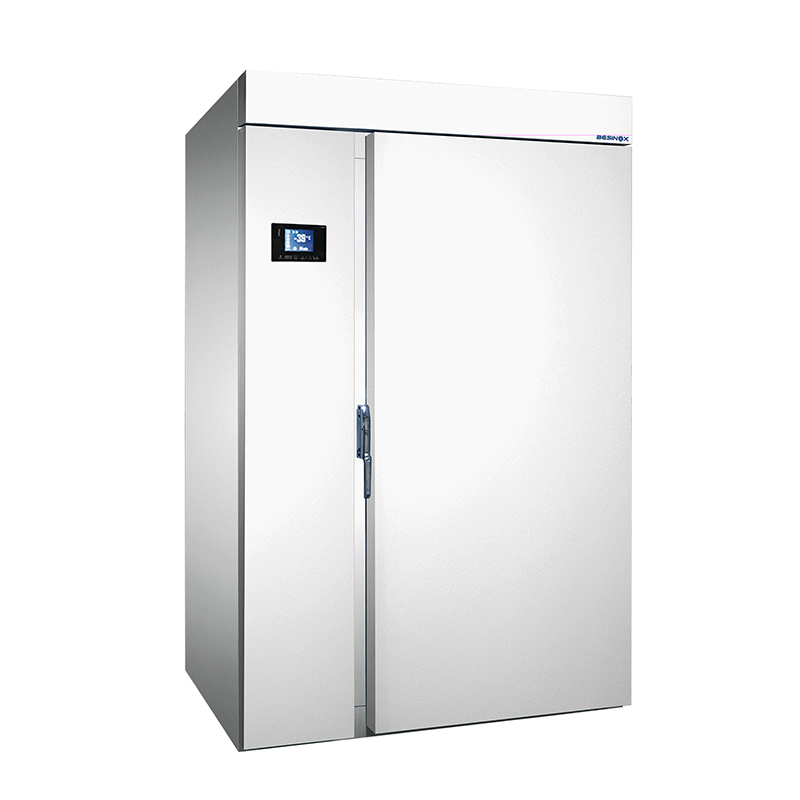
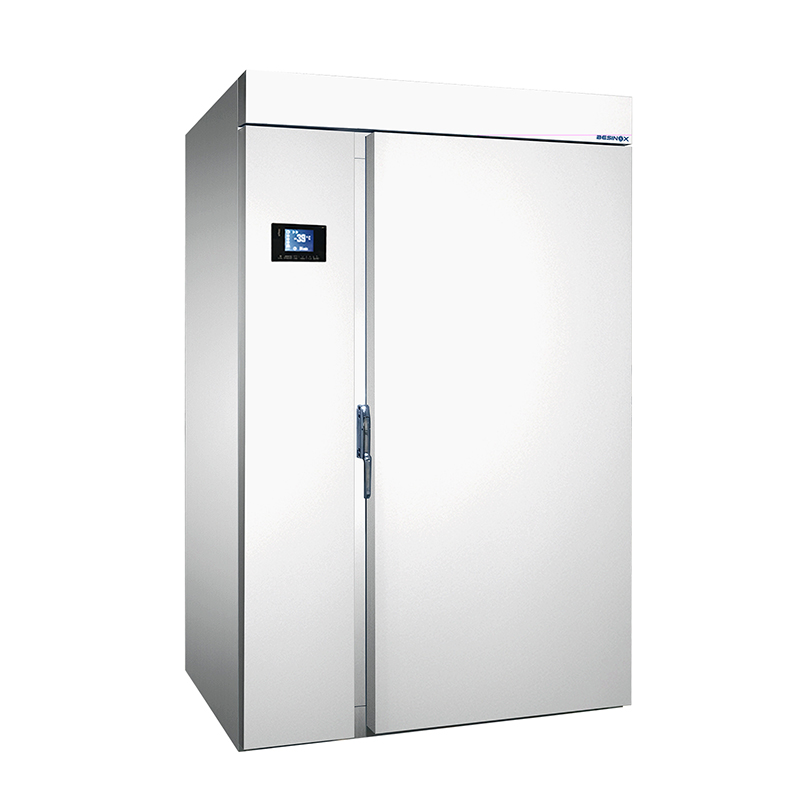
Blast chilling is a controlled rapid-cooling process. Instead of allowing food to cool slowly at room temperature, a blast chiller uses forced cold air and refrigeration capacity to remove heat quickly.
In the United States, the FDA Food Code commonly requires cooked food to cool:
Local health departments may apply different rules, so every operator should confirm the requirements for the jurisdiction where the kitchen operates.
Correct blast chiller sizing helps a kitchen:
An undersized unit may fail to cool the actual batch within the required time. An oversized unit, however, can increase capital cost, energy consumption, and unused floor space.
Blast chilling developed alongside modern institutional foodservice, central kitchens, airline catering, hospitals, hotels, and high-volume restaurant operations. As kitchens began preparing food in larger batches, traditional room-temperature cooling became inefficient and difficult to control.
The cook-chill method introduced a more reliable production cycle:
Today, blast chillers are used in restaurants, bakeries, supermarkets, schools, hospitals, catering facilities, and food manufacturing plants. Modern systems may include electronic controllers, core-temperature probes, programmable cycles, automatic defrosting, alarm functions, and HACCP data logging.
The most reliable answer to What Size Blast Chiller Does a Commercial Kitchen Need? comes from calculating the maximum cooling load during the busiest production period.
Record the largest quantity of hot food that must be chilled in one cycle.
For example:
| Kitchen type | Typical batch to evaluate |
|---|---|
| Small café | 10–20 kg |
| Independent restaurant | 20–40 kg |
| Hotel kitchen | 40–80 kg |
| Central kitchen | 80–200+ kg |
| Catering or institutional facility | 100–500+ kg |
These figures are planning ranges, not universal specifications. The actual requirement depends on the product temperature, pan depth, food density, and required pull-down time.
Use the following calculation:
Required usable capacity = maximum batch weight × growth allowance
A growth allowance of 15–25% is commonly useful. For example, if the largest batch is 40 kg:
40 kg × 1.20 = 48 kg recommended usable capacity
This allows for seasonal demand, menu expansion, and occasional production peaks.
Two blast chillers with the same nominal capacity may not provide identical performance. Check:
A unit advertised as “40 kg” may only achieve that capacity under specific test conditions. Ask the supplier for a documented pull-down test showing the product load, starting temperature, target temperature, ambient condition, and test duration.
Food geometry and composition significantly affect heat transfer.
Dense products such as sauces, stews, rice, mashed potatoes, and meatloaf cool more slowly than thin products spread in shallow pans. Thick containers can also restrict cold-air circulation.
For improved cooling performance:
Capacity per cycle is only one part of the decision. Also calculate the total amount chilled during the day.
For example:
If the kitchen needs 220 kg daily, it may require either:
The correct solution depends on labor availability and the time between cooking and service.
The following table provides a practical starting point for equipment selection:
| Commercial operation | Suggested usable capacity | Typical application |
|---|---|---|
| Small café or bakery | 5–15 kg | Pastry fillings, soups, sauces |
| Small restaurant | 15–30 kg | Daily mise en place and prepared meals |
| Medium restaurant | 30–60 kg | Batch cooking and cook-chill production |
| Hotel or banquet kitchen | 60–120 kg | Large-volume service and event preparation |
| Central production kitchen | 120–300+ kg | Trolley loading and multi-site distribution |
Capacity should be confirmed using the manufacturer’s product test data. Tray quantity alone is not sufficient because a “10-tray” cabinet may have different usable loading limits depending on tray depth, food density, and airflow requirements.
Once the load is calculated, consider the equipment format.
A cabinet unit is often suitable for:
It usually supports sheet pans or gastronorm containers and can fit into a standard back-of-house workflow.
A trolley or roll-in blast chiller is more suitable for:
It reduces manual handling because loaded racks can be moved directly into the cooling chamber.
Large food manufacturers may need a conveyorized or continuous chilling system. This is appropriate when production is constant and the facility has standardized product formats, automated handling, and high daily throughput.
A compact cabinet may look suitable, but its internal usable capacity could be too small for the kitchen’s actual batch load. Always compare:
A standard refrigerator is designed to maintain already-cold food. It is not necessarily engineered to rapidly cool hot food. Blast chillers have higher refrigeration output, stronger forced-air circulation, and controls designed for rapid temperature reduction.
Overloading restricts airflow and increases cooling time. A unit rated for 40 kg should not routinely be loaded with 55 kg simply because the pans physically fit.
A deep container of soup may cool much more slowly than several shallow pans containing the same total weight. Product depth, pan material, and portion size directly influence thermal performance.
The lowest purchase price may create higher operating costs if the unit has poor insulation, inadequate service access, limited controller functionality, or insufficient refrigeration capacity.
A cabinet air-temperature display does not always represent the food’s core temperature. Use a calibrated probe and maintain documented cooling records as part of the kitchen’s HACCP plan.
A reputable commercial blast chiller manufacturer should provide technical documentation rather than relying only on marketing claims. When evaluating BEU or another supplier, request the following information:
Depending on the market, verify applicable requirements such as:
For quality assurance, commercial buyers can also request a documented inspection plan, including 100% visual inspection, functional testing of every controller, and verification of temperature-probe accuracy. If a supplier specifies dimensional tolerances, ask whether critical components are inspected to a defined tolerance such as ±0.01 mm. These details should be confirmed in writing rather than assumed.
A reliable supplier should also provide a defined support process, such as a 24-hour response commitment, service escalation procedure, and spare-parts availability. The exact service terms depend on the contract and region.
Consider a restaurant that prepares:
The maximum daily batch is:
25 + 15 + 10 = 50 kg
With a 20% growth allowance:
50 kg × 1.20 = 60 kg
The restaurant should therefore evaluate a blast chiller with approximately 60 kg of usable cooling capacity, provided the manufacturer’s test data confirms that the unit can cool the food within the required safety window.
The restaurant should also check whether all three products can be loaded together. If the soup is placed in deep containers, it may require separate shallow pans or an additional cycle.
A central kitchen prepares 180 kg of meals between 10:00 a.m. and 2:00 p.m. The facility has four hours for chilling and can operate two cycles.
Required capacity per cycle:
180 kg ÷ 2 cycles = 90 kg
Adding a 20% operating allowance:
90 kg × 1.20 = 108 kg
A trolley blast chiller rated for approximately 110 kg or more may be appropriate, subject to the supplier’s verified test conditions. If the kitchen expects demand to reach 300 kg within the next year, selecting a 120–150 kg system or planning for a second unit may provide better lifecycle value.
As a commercial blast chiller manufacturer, BEU can help buyers compare cabinet dimensions, tray formats, cooling capacity, control systems, and installation requirements. A professional specification should be based on the kitchen’s actual workflow rather than a generic “best size” recommendation.
Before requesting a quotation from BEU, prepare:
This information allows the supplier to recommend a more accurate model and identify possible installation limitations early.
To answer What Size Blast Chiller Does a Commercial Kitchen Need?, confirm these points:
In practical terms, a small commercial kitchen may need a 5–30 kg blast chiller, while medium and high-volume operations often require 30–120 kg or more. The final decision should always be based on verified pull-down performance, maximum batch weight, daily throughput, and the kitchen’s food-safety plan. For an accurate commercial blast chiller specification, contact BEU with your production data and request a capacity recommendation supported by documented testing.

To visit Guangzhou BEU Electric Appliance Co., Ltd. (called as BEUEA below) website, you are agreeing the terms and conditions within this policy.
BEUEA respects your privacy and will protect your information remains confidential.
We will not lease, sell, or rent your information to the third party for their independent use under any circumstances.