 08/31 ,2026
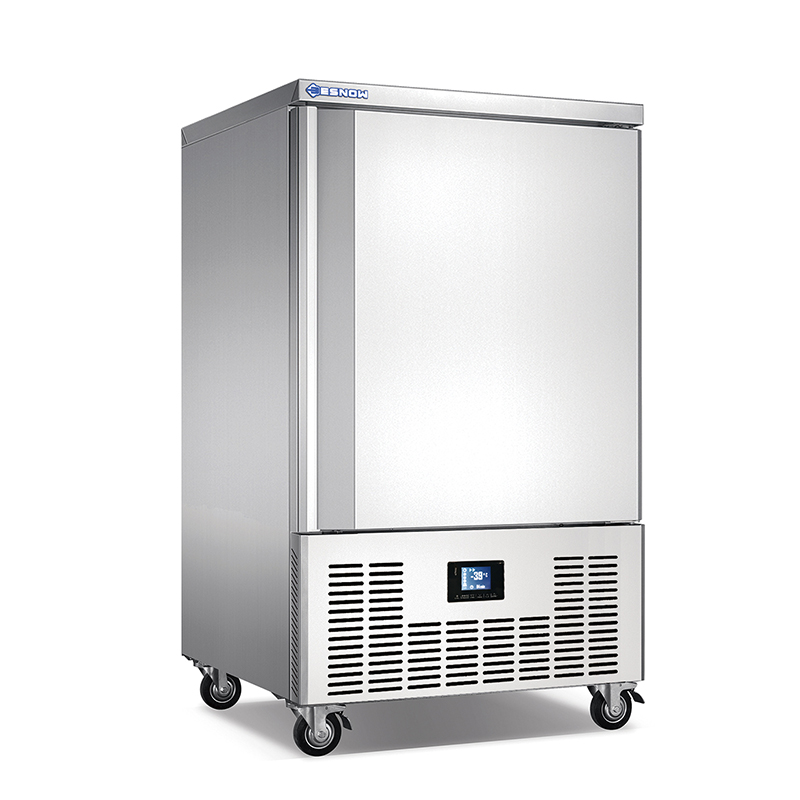
 A blast chiller is a commercial refrigeration system that rapidly reduces the temperature of freshly cooked or prepared food, helping control bacterial growth, preserve texture, and extend safe shelf life. Before choosing a commercial blast chiller manufacturer, food processors, restaurants, bakeries, hospitals, and catering businesses should ask detailed questions about cooling performance, food-safety compliance, energy consumption, service, and total operating cost. Knowing What to Ask a Blast Chiller Manufacturer Before Buying helps protect product quality and prevents expensive equipment mistakes.

Blast chilling developed alongside large-scale food production and professional cold-chain management. Traditional refrigeration cools food gradually. A blast chiller uses high-velocity cold air, controlled evaporator temperature, and forced convection to remove heat quickly from the product core.
In many food-safety systems, the target is to cool cooked food from approximately 57°C to 21°C within 2 hours, followed by cooling from 21°C to 5°C within an additional 4 hours. Exact requirements vary by country, local health authority, product type, and HACCP plan. A qualified manufacturer should help you verify the correct cooling profile for your operation rather than making a generic promise.
Blast chilling is particularly valuable for:
The practical value is significant. Faster heat removal can improve food safety, reduce condensation, protect product texture, and make production scheduling more predictable.
The right questions should cover the complete equipment lifecycle—from product testing and installation to maintenance and end-of-life support.
Do not evaluate a blast chiller only by cabinet size or advertised horsepower. Ask the manufacturer to state its performance under defined test conditions.
Request details such as:
For example, a unit may be described as having a 20-tray capacity, but this does not automatically mean it can cool 20 fully loaded trays within the required time. Ask for a test report showing the actual core temperature curve.
A reliable commercial blast chiller manufacturer should provide performance data based on a defined test method, not only an estimated cooling time.
Food products differ greatly in density, moisture, packaging, and heat retention. A shallow tray of vegetables cools differently from a deep container of soup or a dense meat product.
Ask whether the manufacturer can perform a product simulation or factory acceptance test using:
The test should identify the cold spot, which is the slowest-cooling location in the product. Surface temperature alone is not enough to verify food safety.
Ask for probe accuracy, calibration records, and data-logging intervals. Practical specifications may include temperature recording at 1-minute intervals and sensor accuracy of approximately ±0.5°C, depending on the application. For high-risk production, the manufacturer should explain how the probe is calibrated and whether calibration can be traceable to an accredited laboratory.
A manufacturer’s statement that a machine is “high quality” is not a substitute for certification. Ask for the exact standards and certificates applicable to your market.
Relevant standards and regulations may include:
Ask whether the certificate applies to the exact model you are buying. A certificate for a similar product or a general company certificate may not cover the specific blast chiller configuration.
The internal cabinet must withstand moisture, cleaning chemicals, thermal shock, and repeated food-contact-area sanitation.
Ask about:
For most food-service environments, AISI 304 stainless steel is common. AISI 316 may be more suitable for highly corrosive environments, including certain seafood or saline-processing applications.
Avoid assuming that every stainless-steel component has the same corrosion resistance. Ask the manufacturer to identify the material used for the cabinet, shelves, evaporator housing, fasteners, and drainage components.
The refrigeration circuit directly affects cooling speed, energy use, reliability, and maintenance cost. Ask for a complete refrigeration specification covering:
Modern systems may use electronic expansion valves, variable-speed compressors, or natural refrigerants. The best option depends on local regulations, ambient conditions, technician availability, and your facility’s refrigeration infrastructure.
A suitable supplier should also explain whether the condenser is air-cooled or water-cooled and how much clearance is required around the unit. Poor ventilation can reduce capacity and shorten compressor life.
Purchase price is only one part of the total cost of ownership. Ask for energy data under realistic operating conditions, including full load, partial load, standby, and defrost cycles.
Request:
Compare manufacturers using the same product load and cooling target. A larger compressor does not always mean better performance. An oversized system may increase peak power demand and operating expense.
A useful purchasing calculation is:
Annual energy cost = energy used per cycle × cycles per day × operating days per year × electricity tariff
This calculation makes it easier to compare two blast chillers with different purchase prices.
Temperature traceability is essential for HACCP verification, audits, product release, and root-cause analysis.
Ask whether the BEU blast chiller includes:
A professional system should record the complete cooling cycle rather than displaying only the current cabinet temperature. Ask how long data is retained and whether exported files can be opened in common formats such as CSV or PDF.
If your facility uses an ERP, MES, or HACCP software platform, confirm whether the controller supports the required communication protocol.
A 1,000-liter cabinet may have less practical capacity than a smaller unit if tray spacing, airflow, and product loading are poorly designed. Cooling performance depends on thermal load and air circulation, not volume alone.
A cabinet may reach -10°C while the food core remains above the required target. Always verify the product core using a calibrated probe.
A machine tested at 25°C ambient may perform differently in a hot kitchen or tropical factory. Ask for the maximum operating ambient temperature and performance at your actual site conditions.
The phrase does not identify the grade, thickness, surface finish, or weld quality. Request a material specification and hygienic-design details.
A low-cost unit may have higher energy consumption, limited spare parts, weak insulation, or inadequate after-sales support. Compare the five-year total cost of ownership.
Blast chillers may require dedicated electrical circuits, floor drainage, ventilation clearance, lifting access, and refrigeration service space. Confirm these requirements before signing the purchase order.
When evaluating a commercial blast chiller manufacturer, ask how quality is controlled during production.
Important questions include:
If a supplier mentions testing, ask for the test protocol, acceptance criteria, and records—not only a marketing statement. Depending on the component, relevant verification may include electrical safety testing under EN 60335 requirements, pressure and leak testing for the refrigeration circuit, and calibration traceability to recognized laboratory standards.
The buying process should continue beyond delivery.
Before manufacturing, the supplier should confirm:
During commissioning, the technician should verify:
For regulated or high-risk food production, consider installation qualification, operational qualification, and performance qualification. A validation report should show that the blast chiller repeatedly achieves the required cooling profile under representative loading conditions.
Ask for written information on:
BEU should be able to explain which parts are stocked locally, which parts require international shipment, and how emergency support is managed.
Consider a central kitchen producing 500 chilled meals each day. The buyer initially compares two models based on cabinet size and purchase price.
After asking What to Ask a Blast Chiller Manufacturer Before Buying, the buyer discovers the following:
| Evaluation point | Model A | BEU Model B |
|---|---|---|
| Rated tray capacity | 20 trays | 20 trays |
| Documented full-load cooling test | Not provided | Provided |
| Core probe control | Optional | Standard |
| Data export | No | USB and Ethernet |
| Final inspection | Unclear | Documented checklist |
| Local service response | 72 hours | Target within 24 hours |
| Maximum ambient rating | 32°C | 43°C |
| HACCP temperature records | Manual | Automatic |
Model A has a lower purchase price, but Model B offers better traceability and more suitable performance for a hot production environment. The buyer then conducts a product test using the actual meal trays and confirms that the required core temperature is achieved consistently.
This example demonstrates why What to Ask a Blast Chiller Manufacturer Before Buying is not simply a purchasing checklist. It is a risk-control process that connects equipment specifications with food safety, production capacity, and operating cost.
Before placing an order with BEU or another supplier, obtain written answers to the following:
A blast chiller is a food-safety and production-control asset, not just a cold cabinet. The best purchasing decision depends on verified cooling performance, core-temperature monitoring, hygienic construction, applicable standards, energy efficiency, validation support, and dependable after-sales service.
Use What to Ask a Blast Chiller Manufacturer Before Buying as a structured evaluation method. Ask BEU for product-specific test data, certification documents, installation requirements, lifecycle costs, and service commitments. By comparing evidence instead of relying on cabinet size or marketing claims, buyers can select a blast chiller that supports safer food production, consistent quality, and long-term business value.
To visit Guangzhou BEU Electric Appliance Co., Ltd. (called as BEUEA below) website, you are agreeing the terms and conditions within this policy.
BEUEA respects your privacy and will protect your information remains confidential.
We will not lease, sell, or rent your information to the third party for their independent use under any circumstances.