 09/02 ,2026
Knowing when to replace a commercial blast chiller can protect food quality, reduce repair costs, and keep your kitchen on schedule.
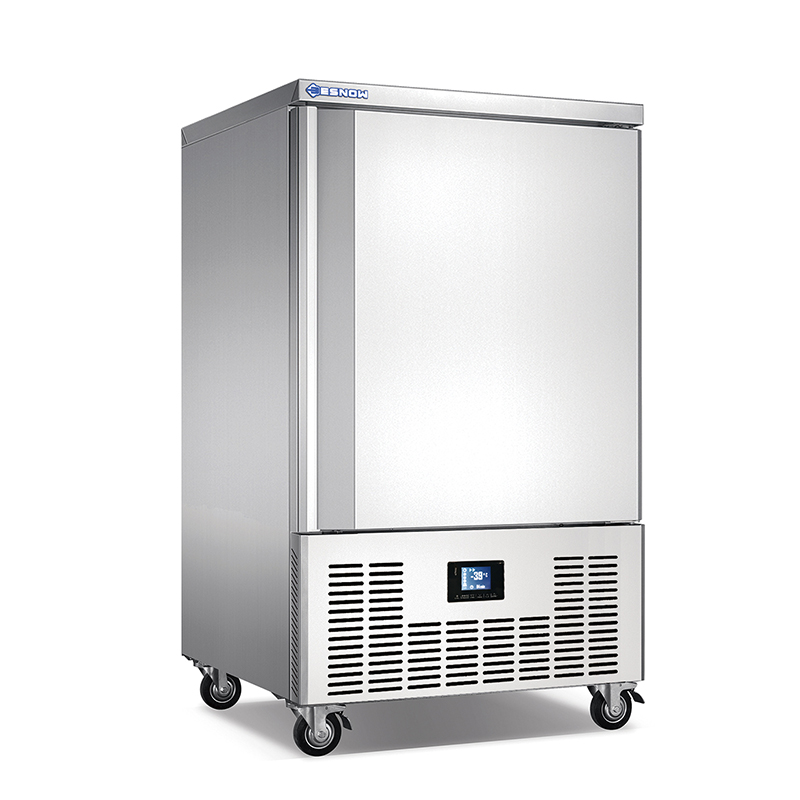
A commercial blast chiller is important refrigeration equipment for restaurants, hotels, catering companies, bakeries, hospitals, and food factories.
When the refrigeration system becomes weak, food may cool too slowly and lose its fresh texture.
Reliable temperature control also supports food safety during busy production periods.
Many businesses delay replacement because the unit still turns on, even when energy use and service costs continue to rise.
Regular checks can help your team maintain HACCP compliance and avoid an unexpected shutdown.
You should replace a commercial blast chiller when it cannot reach the required cooling temperature within the expected time, needs frequent repairs, shows major corrosion, uses much more energy, or no longer meets your food safety and production needs. Many commercial units provide around 8 to 12 years of service, but the actual life depends on usage, cleaning, maintenance, installation quality, and workload. A trained technician should test the unit before you make the final decision.
A blast chiller must remove heat quickly from cooked food. If food remains warm for too long, bacteria can grow and product quality can decline.
Most professional kitchens use a target of about 3 C for chilled food. The exact time and temperature should follow local food safety rules, the food type, and your HACCP plan.
Replacement may be necessary when:
Older equipment may need repeated repairs for the compressor, fan motor, controller, door gasket, or refrigeration circuit.
A single repair may be reasonable. Several repairs in one year can make an old unit more expensive than a new one.
Compare the last 12 months of repair bills with the price of a replacement unit. If repair costs reach about 40 to 50 percent of the cost of new equipment, replacement deserves serious consideration.
A compressor that runs almost all day may indicate a refrigerant leak, blocked condenser, damaged fan, poor insulation, or an aging refrigeration system.
Long run times increase electricity use. They also add wear to the compressor.
A technician should first check the condenser, airflow, refrigerant charge, and door seal. If the main refrigeration parts are worn and repairs are not cost effective, a new blast chiller may provide better reliability.
Uneven cooling can create a food safety risk. The outside of a tray may feel cold while the center remains warm.
This problem may come from a weak evaporator coil, poor air circulation, blocked fan blades, overloading, or incorrect tray spacing.
If the unit has been serviced and still produces uneven results, replacement may be the safer choice.
Small scratches can usually be repaired. Deep corrosion is more serious.
Rust around the cabinet, floor, drain, door frame, or internal panels can allow moisture and dirt to collect. It can also weaken the structure and make cleaning difficult.
Replace the unit when corrosion affects hygiene, insulation, door alignment, or the strength of the cabinet.
A damaged door gasket allows warm air to enter the cabinet. The chiller must then work harder to maintain the set temperature.
Replacing a gasket is often a simple repair. However, a gasket problem may point to a wider issue when the door is bent, the hinges are worn, or the cabinet has shifted.
If the door cannot close evenly after repair, replacement can improve cooling performance and energy efficiency.
Energy costs can reveal problems that are not easy to see. Compare the unit's current electricity use with earlier utility records or with a newer unit of similar capacity.
High energy use may result from:
If cleaning and service do not reduce energy use, a modern commercial blast chiller may lower operating costs.
Some older blast chillers use discontinued controllers, fan motors, sensors, or compressor parts.
When parts are hard to find, repairs may take days or weeks. This can interrupt food production and cause lost sales.
A replacement unit with current parts and local technical support can reduce downtime.
A blast chiller can be in good condition and still be too small for your business.
If your kitchen often loads more trays than the unit can handle, staff may overload the cabinet. Overloading reduces air movement and extends the cooling cycle.
Consider a larger unit when production has grown, new menu items need fast cooling, or the current cabinet creates a daily bottleneck.
A commercial blast chiller commonly lasts about 8 to 12 years when it receives regular maintenance and is used within its design capacity. Some units last longer. Heavy use, poor cleaning, high room temperature, and unstable power can shorten service life.
| Operating condition | Likely effect on service life | Recommended action |
|---|---|---|
| Daily use with regular cleaning | Supports normal service life | Keep a maintenance schedule and record cooling results |
| Heavy use with frequent overloading | Increases compressor and fan wear | Review capacity and consider a larger unit |
| Dirty condenser and poor airflow | Raises operating temperature and energy use | Clean the condenser and inspect ventilation |
| High kitchen temperature | Reduces cooling performance | Improve room ventilation and check installation space |
| Frequent breakdowns after 8 years | Suggests rising ownership costs | Compare repair costs with replacement cost |
| Severe corrosion or insulation damage | May create hygiene and cooling problems | Plan replacement as soon as possible |
The best choice depends on the problem, the age of the unit, and the cost of downtime. A minor sensor or gasket repair may restore performance. A worn compressor or damaged cabinet may not be worth repairing.
| Situation | Repair may be suitable | Replacement may be better |
|---|---|---|
| Door gasket | The gasket is damaged but the door and cabinet are sound | The door frame is bent or the cabinet is badly corroded |
| Temperature sensor | The sensor is faulty and parts are available | Temperature problems continue after sensor replacement |
| Condenser coil | The coil is dirty and can be cleaned | The refrigeration system has several major faults |
| Compressor | The unit is fairly new and the repair is covered or affordable | The unit is old and also needs a fan, controller, or refrigerant repair |
| Cooling capacity | Loading and tray spacing are the main problems | Business production is permanently higher than the rated capacity |
Use this basic calculation before making a decision:
Annual ownership cost = repair cost + energy cost + product loss + downtime cost
Then compare the annual ownership cost of the old unit with the expected cost of a new commercial blast chiller.
For example, an old unit may require 2,000 dollars in repairs, 1,500 dollars in spoiled food, and 1,000 dollars in lost production in one year. Its total avoidable cost is 4,500 dollars before counting extra energy use. A new unit may be the better business decision if it reduces these costs and provides more capacity.
Use a calibrated food thermometer. Record the starting temperature, ending temperature, food weight, tray position, and cooling time.
Do not place hot food in deep containers unless the equipment instructions allow it. Use shallow trays and leave space for air movement.
Look for gaps, cracks, loose hinges, and frost around the door. A simple paper test can show whether the gasket grips the door evenly.
Dust and grease reduce heat transfer. Turn off the unit according to the manufacturer instructions before cleaning or arranging professional service.
List repairs from the last 12 months. Include parts, labor, downtime, and food loss.
A technician can check the compressor, refrigerant pressure, evaporator coil, fan motors, sensors, insulation, and control board.
Flowchart in short form:
Cooling test -> Basic checks -> Technician inspection -> Compare repair cost -> Repair or replace -> Test the new operating process
Choose capacity based on the amount of food cooled per batch. Review tray size, tray spacing, product weight, and daily production.
Do not select a unit only by cabinet size. Check the rated cooling performance under realistic loading conditions.
Ask the commercial blast chiller manufacturer for test data. Confirm the test food, starting temperature, final temperature, load weight, and cooling time.
Clear test information helps you compare different models fairly.
Look for an efficient compressor, good cabinet insulation, a well-designed condenser, and a door gasket that seals evenly.
Lower energy use can reduce operating costs over the equipment life.
The cabinet should have smooth stainless steel surfaces, rounded internal corners, an accessible drain, and removable parts where possible.
Digital temperature records and alarm functions can support HACCP documentation.
A clear controller should show the cabinet temperature and food core temperature when the unit includes a probe.
Useful alarms can warn staff about an open door, high temperature, probe error, or power failure.
Ask about warranty coverage, spare parts, installation support, and response time. A lower purchase price may not be a good value if service is difficult to obtain.
Replace a commercial blast chiller when it cannot provide safe and consistent cooling, needs frequent expensive repairs, uses too much energy, or no longer fits your production volume. A unit that is 8 to 12 years old may still work well if it is maintained properly, but age should be considered together with performance, repair history, food safety, and downtime. Test the equipment, review the total cost, and choose a replacement with the right capacity and service support. A reliable commercial blast chiller manufacturer can help you select equipment that supports safe food production and stable business growth.
Many commercial blast chillers last about 8 to 12 years. Replace the unit earlier if it has serious cooling problems, repeated breakdowns, high energy use, or major corrosion.
Yes. Repair is often suitable for a faulty sensor, door gasket, fan, or dirty condenser. Replacement may be better when the compressor, cabinet, insulation, and control system all show signs of age.
Many food operations aim to cool food to about 3 C. Requirements vary by location, food type, and HACCP plan. Always follow local food safety rules and the equipment instructions.
Common causes include overloading, poor tray spacing, a dirty condenser, blocked airflow, a weak fan, low refrigerant, a damaged door gasket, or a failing compressor.
Compare current utility records with earlier records. You can also ask a technician to measure electrical use and inspect the compressor, condenser, insulation, and door seal.
No. A larger unit may use more space and power. Select a model that matches your normal batch size, peak production, tray format, and available electrical supply.
The best unit has enough batch capacity, stable temperature control, easy cleaning, low energy use, reliable parts, and technical support. Compare tested cooling performance instead of comparing cabinet size alone.
Keep cooling test results, repair invoices, energy records, food loss reports, downtime records, and maintenance notes. These records help you make a clear repair or replacement decision.
To visit Guangzhou BEU Electric Appliance Co., Ltd. (called as BEUEA below) website, you are agreeing the terms and conditions within this policy.
BEUEA respects your privacy and will protect your information remains confidential.
We will not lease, sell, or rent your information to the third party for their independent use under any circumstances.