 09/24 ,2026
 A restaurant can prepare food correctly and still create a serious food-safety hazard during cooling. The problem usually begins when a large batch of soup, sauce, rice, meat, or prepared vegetables is placed in a deep container and transferred directly into a standard refrigerator. The center of the product may remain in the bacterial “danger zone” for hours while the surface appears cold. Under the FDA Food Code 2022, cooked food must generally cool from 135°F (57°C) to 70°F (21°C) within 2 hours and from 70°F to 41°F (5°C) or below within a total of 6 hours. If a restaurant cannot consistently achieve this time-temperature profile, it risks pathogen growth, food waste, failed inspections, customer illness, legal claims, and long-term damage to its brand. This is why Why Restaurants Need Commercial Blast Chillers for Food Safety is not simply an equipment question—it is a core HACCP and operational-control issue.

A reach-in refrigerator is designed primarily to hold food at a safe temperature, not to rapidly remove heat from freshly cooked products. When a hot stockpot is placed inside, several problems can occur:
Large-batch cooking intensifies the problem. A container of chili, gravy, or cooked poultry has limited surface area compared with its volume. Heat must travel from the center to the outside before the refrigeration system can remove it. This thermal lag creates ideal conditions for microorganisms such as Clostridium perfringens and Bacillus cereus to multiply.
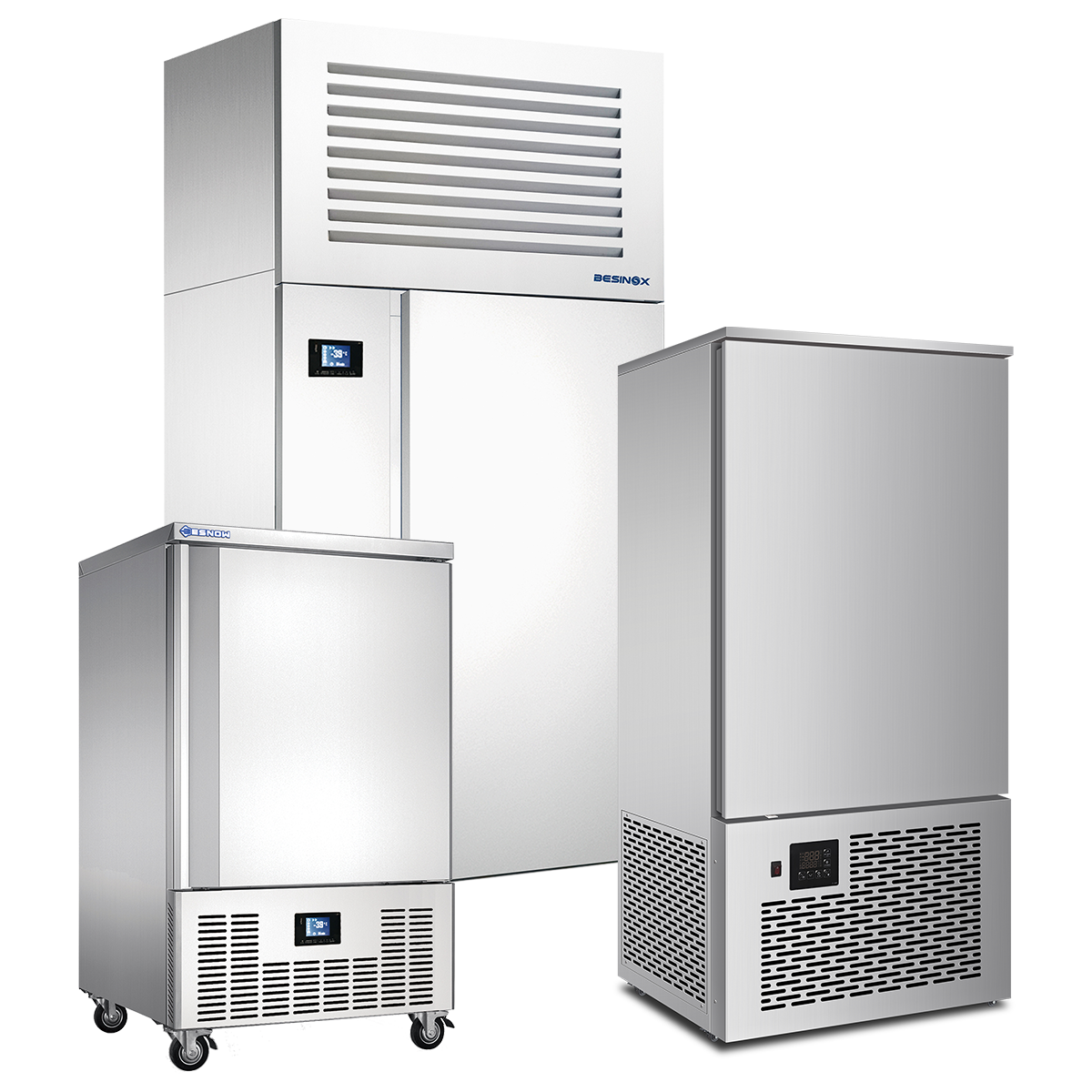
A commercial blast chiller addresses this issue by combining high-capacity refrigeration, forced-air circulation, optimized evaporator design, and calibrated temperature control. Instead of merely storing hot food in a cold cabinet, it actively accelerates heat extraction.
For restaurants evaluating a commercial blast chiller manufacturer, the key question is not only how cold the cabinet becomes. We should also examine pull-down performance, airflow distribution, probe accuracy, insulation, sanitation design, HACCP compatibility, and service support.
Deep pans create a large thermal mass. The outside layer may reach 41°F while the center remains significantly warmer. This is particularly common with:
Using shallow pans helps, but it may not be practical during peak production. A blast chiller provides a more reliable control point.
Restaurants increasingly rely on commissary kitchens, centralized preparation, catering, meal delivery, and sous-vide production. These models improve consistency and labor efficiency, but they also increase the quantity of food requiring rapid cooling.
As menus become more complex and operating hours change, manual cooling methods become difficult to control. What worked for a small café may not work for a high-volume restaurant serving hundreds of portions daily.
Visual inspection is not a food-safety control. A product can feel cool on the surface while remaining unsafe in the center. Effective monitoring requires:
A blast chiller does not replace HACCP procedures, but it makes the critical control point more repeatable and measurable.
Even high-performance equipment cannot cool effectively if staff overload the cabinet or block the evaporator airflow. Common loading errors include:
A commercial unit should be selected according to actual batch size, pan dimensions, product density, and daily production cycles.
BEU should be evaluated as a foodservice refrigeration partner that can align equipment selection with a restaurant’s production workflow. When comparing BEU with other suppliers, we should request model-specific performance data rather than relying on generic claims.
A professional blast chiller may include:
The exact capacity and cycle time depend on the food type, loading temperature, pan configuration, and ambient conditions. For this reason, a responsible commercial blast chiller manufacturer should provide test conditions, not just a headline cooling number.
When discussing BEU equipment, buyers can review the product reference here:
//www.beuea.com/storage/watermark/f_imgs/20260327/689ba2cfe8ea5b4ec6a4ee94e4c5a3e0.png
The same BEU product resource can also support internal purchasing discussions:
//www.beuea.com/storage/watermark/f_imgs/20260327/689ba2cfe8ea5b4ec6a4ee94e4c5a3e0.png
Foodservice equipment should be assessed against the regulations and certification requirements applicable to the installation country. Restaurants should confirm documentation with the supplier, local authority, and project consultant.
The following references are particularly relevant:
For quality verification, buyers should ask whether testing and inspection procedures follow recognized methods such as ISO 9001 quality-management controls, calibrated temperature instrumentation, and documented factory inspection. ASTM or DIN references may apply to specific materials, coatings, fasteners, or laboratory procedures, but they should not be presented as substitutes for food-equipment sanitation and refrigeration certifications.
Before purchasing BEU or another brand, I recommend asking:
The BEU reference image and product information can be shared with a design or procurement team here:
//www.beuea.com/storage/watermark/f_imgs/20260327/689ba2cfe8ea5b4ec6a4ee94e4c5a3e0.png
Food safety is directly connected to profitability. A cooling failure can affect several areas at the same time.
When food does not cool safely, employees may be forced to discard an entire batch. For a restaurant producing 50 kilograms of prepared food per day, even a 5% avoidable loss equals 2.5 kilograms of waste daily. Over a 300-day operating year, that represents approximately 750 kilograms of product before labor, packaging, energy, and disposal costs are included.
Manual cooling requires staff to divide products into smaller containers, stir them repeatedly, monitor temperatures, and complete paperwork. A blast chiller can standardize the process and reduce dependence on individual employee judgment.
This does not mean staffing can be eliminated. Instead, employees can spend more time on preparation, sanitation, customer service, and quality control.
Blast chilling supports cook-chill systems, which are widely used in:
Food can be produced during controlled preparation windows, rapidly cooled, stored safely, and regenerated or served later according to the approved operating procedure.
A documented cooling cycle gives managers objective evidence during internal audits, customer audits, or health inspections. Digital records, probe readings, corrective actions, and maintenance logs can demonstrate that the restaurant controls a recognized critical food-safety hazard.
The CDC estimates that foodborne illness in the United States causes approximately 48 million illnesses, 128,000 hospitalizations, and 3,000 deaths each year. Not every case is linked to restaurant cooling, but the figures show the scale of the food-safety environment in which commercial kitchens operate.
Cooling-related failures are especially dangerous because food may be prepared correctly and contaminated later through time-temperature abuse. Once pathogens multiply, reheating may not eliminate every hazard. Some microorganisms can produce toxins that are not reliably destroyed by ordinary cooking.
A practical example is a high-volume restaurant preparing 100 liters of soup before service. If the soup remains in deep containers and cools too slowly, the business may face:
A commercial blast chiller does not guarantee safety by itself, but it significantly strengthens the cooling control point when integrated into a documented food-safety program.
The consequences of inadequate cooling often develop gradually. At first, the restaurant may notice only inconsistent product quality or higher waste. Over time, the risks become more serious.
A single suspected foodborne-illness incident can cost far more than the original equipment investment. The business may face medical claims, legal fees, product replacement, lost revenue, online reputation damage, and customer attrition.
Restaurants also need to consider changing business models. Delivery, takeout, catering, ghost kitchens, and centralized meal production all increase the time between cooking and consumption. As this interval grows, reliable chilling becomes more important—not less.
Record:
Do not size equipment using average production. Use the highest realistic peak load.
After installation, test the actual products and loading patterns used in the kitchen. Measure the coldest and warmest points with a calibrated probe. Keep records showing compliance with the applicable cooling requirement.
Operators should understand:
A preventive-maintenance program should include:
Managers should document service events and define escalation procedures, including a target 24-hour response for critical downtime where available.
For teams reviewing BEU specifications, the product image resource is available here:
//www.beuea.com/storage/watermark/f_imgs/20260327/689ba2cfe8ea5b4ec6a4ee94e4c5a3e0.png
The answer to Why Restaurants Need Commercial Blast Chillers for Food Safety is clear: rapid chilling controls one of the most vulnerable stages in food production. Standard refrigerators hold cold food, but they are not reliable substitutes for purpose-built blast-chilling equipment when restaurants handle large or dense hot-food batches.
By selecting a qualified commercial blast chiller manufacturer, validating the cooling cycle, following FDA Food Code or local requirements, and integrating BEU equipment into a HACCP-based system, restaurant operators can reduce food-safety risk, improve consistency, lower waste, and protect long-term profitability.
We should treat blast chilling as a measurable process-control investment—not an optional kitchen upgrade. Evaluate your peak production volume, audit your current cooling records, compare certified BEU models, and implement corrective action before a temperature-control failure becomes a food-safety incident.
//www.beuea.com/storage/watermark/f_imgs/20260327/689ba2cfe8ea5b4ec6a4ee94e4c5a3e0.png
To visit Guangzhou BEU Electric Appliance Co., Ltd. (called as BEUEA below) website, you are agreeing the terms and conditions within this policy.
BEUEA respects your privacy and will protect your information remains confidential.
We will not lease, sell, or rent your information to the third party for their independent use under any circumstances.