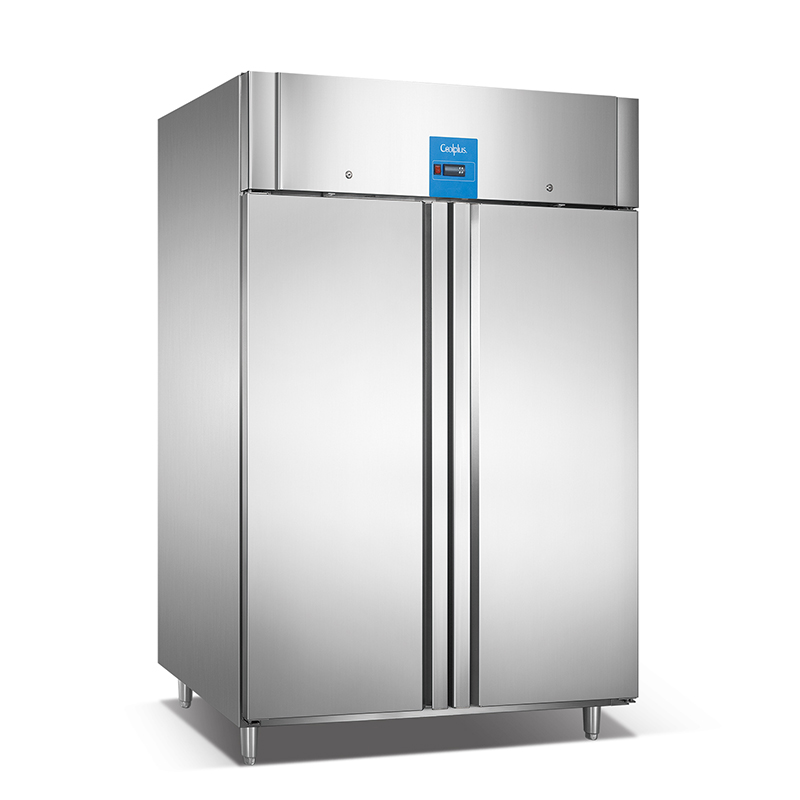
The configuration of refrigeration equipment in supermarkets is a complex system engineering project. The core challenge lies in finding the optimal balance between display effectiveness, food safety, and energy costs, based on the stringent temperature requirements of different products. Considering your interest in the technical details of refrigeration equipment, the following provides a comprehensive overview of professional supermarket refrigeration equipment from three dimensions: front-of-house display, back-of-house storage, and core temperature control technology.
This is an area that directly faces consumers, and the equipment must not only meet the needs of food preservation, but also have a strong visual marketing capability.
Air curtain cabinets (open/semi-open): the "face" of supermarkets, mainly used for high-frequency turnover goods such as dairy products, beverages, pre-cut vegetables, and fresh meat.
Technical features: Utilizes air-cooled circulation technology, ensuring uniform temperature inside the cabinet and automatic defrosting. The open design facilitates access but consumes relatively more energy; the semi-open design (with glass doors or night curtains) achieves a better balance between display and energy conservation.
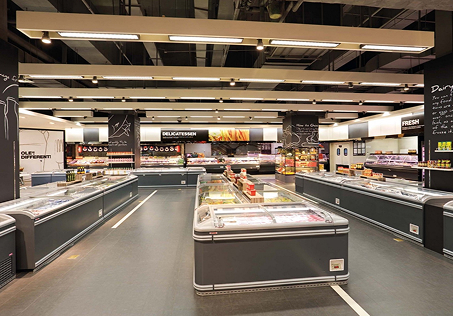
Island display cases (horizontal freezers): These are typically placed in the main aisles of supermarkets and used to display frozen dumplings, ice cream, frozen meat, etc.
Technical features: Mostly direct cooling or a combination of direct and air cooling, with thick insulation layers and strong cold storage capacity. Some high-end models adopt a dual-temperature zone design, which can simultaneously meet freezing and refrigeration needs.
Vertical refrigerated/frozen display cases: used for displaying beverages, beer, or premium ice cream.
Technical features: Typically equipped with double-layered hollow anti-condensation glass doors and LED lighting, it allows for long-term preservation of goods at a comfortable refrigeration temperature of 2℃ to 10℃, with excellent visual transparency.
Cooked food display case/order display case: used for ready-to-eat foods such as cold dishes, braised food, and cut fruit.
Technical features: Mostly adopt a front-opening or sliding door design, and are equipped with ultraviolet germicidal lamps and independent temperature control systems to ensure food safety.
Seafood ice display/refrigerated display case: specially designed for displaying fresh fish and shellfish.
Technical features: By cooling the bottom or laying crushed ice, the countertop temperature is maintained at around 0℃, which not only preserves the freshness of the seafood, but also creates a visual effect of "freshly caught".
Back-end equipment is the "back office" of supermarket cold chain, mainly solving the problems of storage and rapid turnover of bulk commodities.
Modular cold storage (refrigerated/frozen storage): used for storing large quantities of food .
Technical features: It is assembled with polyurethane (PU) double-sided color steel insulation panels. The refrigeration unit usually adopts parallel unit or screw compressor, which has strong cooling capacity and stable temperature control capability.
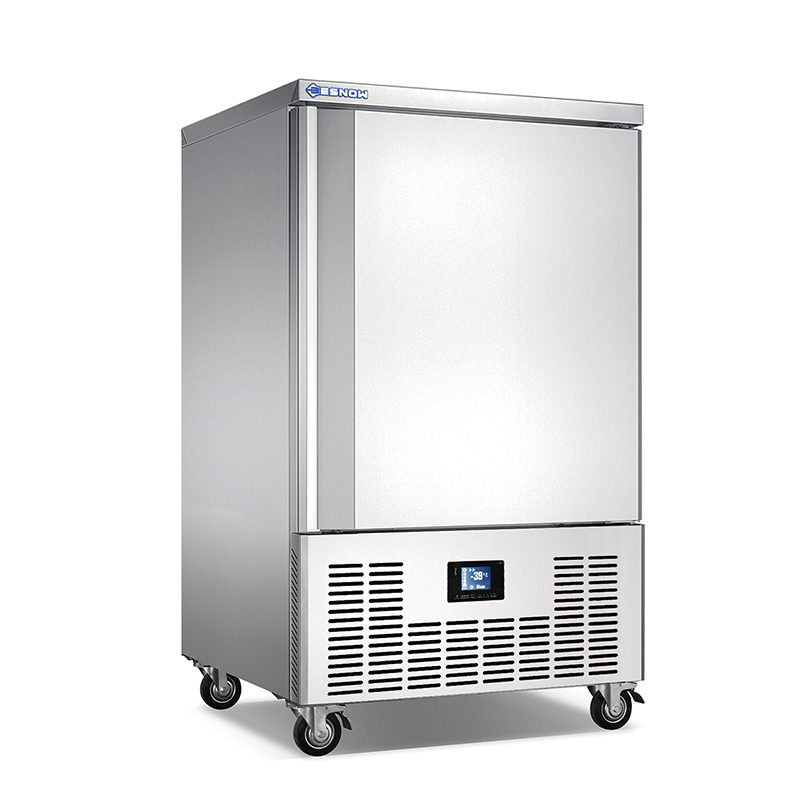
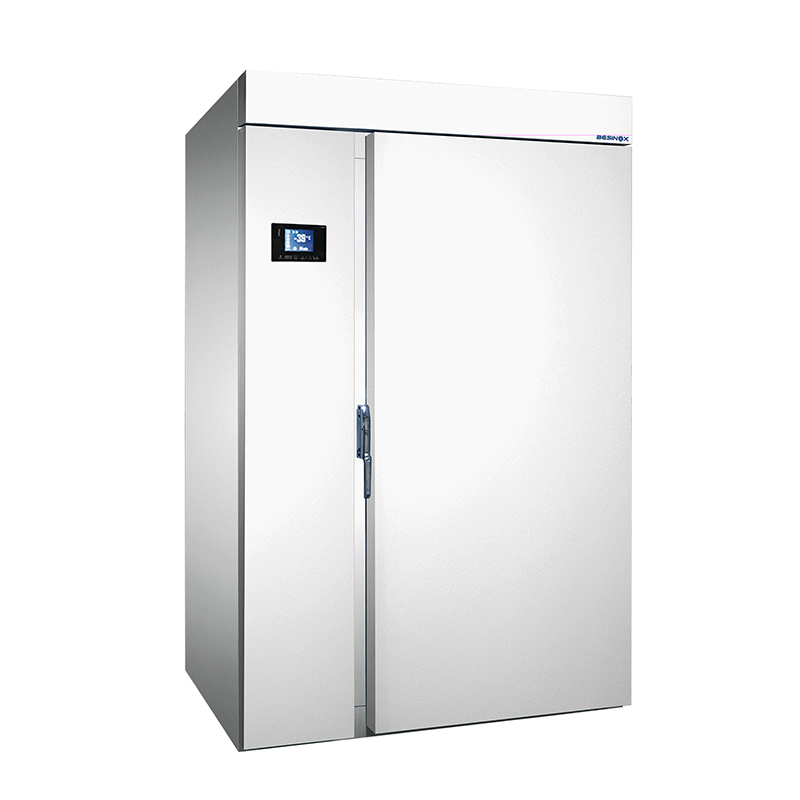
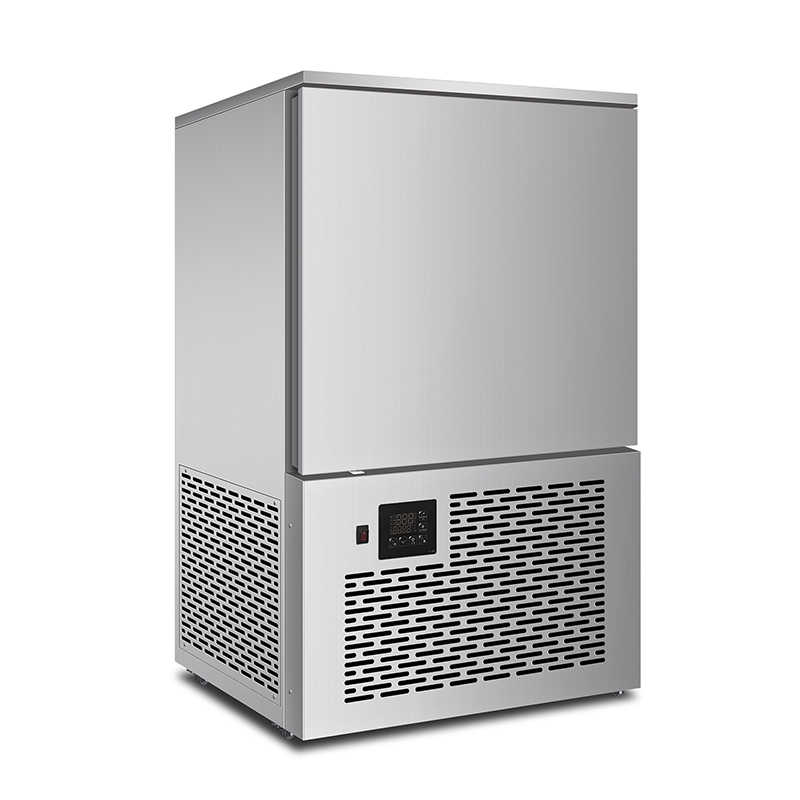
Quick-freezing storage: Used for rapidly freezing fresh meat, seafood, or pastries.
Technical features: The storage temperature must be able to drop rapidly to -30℃ or even below -40℃, so that the ingredients can quickly pass through the "maximum ice crystal formation zone" to lock in cell moisture and flavor to the greatest extent.
Stainless steel refrigerators (workbench refrigerators) for kitchen use: used for temporary storage in fresh food processing areas or kitchens.
Technical features: The upper layer is a stainless steel work surface, and the lower layer is a refrigerator or freezer, which makes it convenient for chefs to take out ingredients at their fingertips and improves processing efficiency.
From the perspective of refrigeration technology, the rational selection of refrigeration methods and core components can significantly reduce the long-term operating costs of supermarkets.
Selection of refrigeration method:
Air cooling (forced circulation): It cools down quickly, has a uniform temperature, and is frost-free. It is suitable for display cases and equipment that requires frequent opening and closing of doors, but its energy consumption is relatively high and it may slightly dry out food.
Direct cooling: Simple structure, low energy consumption, good moisture retention, suitable for kitchen storage cabinets or freezer islands, but requires regular manual defrosting.
Core components and energy-saving technologies:
Variable frequency compressor: High-end models generally adopt variable frequency technology, which can automatically adjust the power according to the actual heat load and automatically enter the energy-saving mode at night or during low passenger flow periods, significantly reducing energy consumption.
Electronic expansion valve: Compared with traditional thermostatic expansion valves, electronic expansion valves can control refrigerant flow more precisely, especially in low-temperature ranges (such as -40℃ blast freezers), where they can significantly improve cooling efficiency and stability.
Microcomputer temperature control and automatic defrosting: For commercial equipment, it is recommended to choose a temperature controller with a microcomputer LCD display, which supports precise temperature adjustment and automatic defrosting (such as defrosting once every 2 hours), which can significantly reduce manual maintenance costs.
Clearly define temperature zone requirements: Different products have vastly different temperature requirements (e.g., ice cream requires -18℃, while fresh meat requires 0-4℃). It is essential to select equipment for the corresponding temperature zone based on the characteristics of the product to avoid energy waste and food spoilage caused by "using one cabinet for multiple purposes".
Pay attention to energy efficiency labels: Refrigeration equipment in supermarkets and shopping malls is a "power hog." Prioritize models with a Level 1 energy efficiency rating. Although the initial investment is slightly higher, the long-term electricity savings are substantial.
Reserve space for heat dissipation: Commercial refrigeration equipment generates a lot of heat. When installing, be sure to reserve at least 60cm of heat dissipation and maintenance passage at the back and top of the equipment, otherwise it will lead to a decrease in refrigeration efficiency and a surge in energy consumption.
Regular maintenance: Supermarket environments are dusty, so it is recommended to clean the condenser and filter once a month to ensure smooth heat dissipation and extend the compressor's lifespan.
You can combine the above solutions based on the specific area of the supermarket, its main product categories (how much fresh produce is sold), and the demand during peak hours.
To visit Guangzhou BEU Electric Appliance Co., Ltd. (called as BEUEA below) website, you are agreeing the terms and conditions within this policy.
BEUEA respects your privacy and will protect your information remains confidential.
We will not lease, sell, or rent your information to the third party for their independent use under any circumstances.